
There is something quietly powerful about the way nature appears in Indian art. It is rarely just a background or a decorative filler. A river is never just water. A tree is never just shade. A bird is not simply part of a scenic composition. Each element carries memory, mythology, and meaning that runs deeper than the visible surface.
For collectors, enthusiasts, and culturally curious viewers exploring platforms like Mojarto, this layered storytelling opens a new way of experiencing art. It shifts the question from “What do I see?” to “What does this mean?” This is where the idea of the symbolic nature in Indian art becomes essential. It is not about landscapes alone. It is about how artists have used nature as a language to express belief systems, emotions, and spiritual truths across centuries.
When Nature Becomes a Narrative
In Indian artistic traditions, nature has always been intertwined with life, philosophy, and ritual. From ancient temple carvings to contemporary canvases, natural elements are rarely neutral. They are active participants in the story.
A lotus blooming in a muddy pond reflects purity emerging from chaos. A banyan tree stands for continuity and shelter. Flowing rivers often symbolise time, change, and spiritual cleansing. These are not accidental choices. They are deliberate visual metaphors that artists rely on to communicate complex ideas without words.
This is why the nature symbolism in Indian paintings often feels deeply intuitive even to someone unfamiliar with the context. The symbols speak to something universal, while still being rooted in Indian cultural consciousness.
The Cultural Memory of Trees
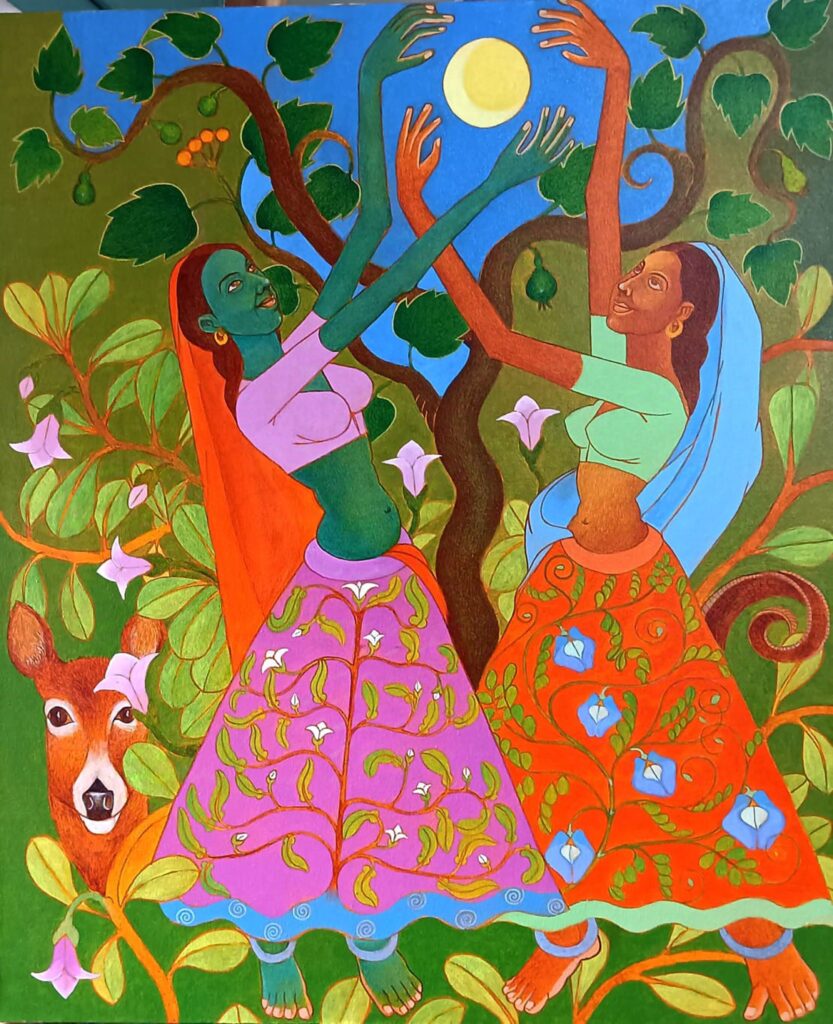
Trees occupy a special place in Indian art. They are not just botanical subjects but living embodiments of philosophy and folklore.
Take, for instance, the idea behind the Tree of Life symbolism in Gond art. Gond artists, belonging to one of India’s largest indigenous communities, depict trees as intricate, pulsating forms filled with animals, birds, and patterns. These are not static objects. They represent the interconnectedness of all living beings.
In these works, the tree becomes a universe in itself. It reflects how life branches out, how everything is connected, and how balance sustains existence. The visual rhythm of lines and dots used by Gond artists enhances this sense of life in motion.
Across other traditions too, trees hold meaning. The banyan tree is associated with immortality and wisdom. The neem tree often symbolises healing. These associations are not random. They come from centuries of lived experience and oral storytelling.
Animals as Symbols of Power and Protection
Animals in Indian art are rarely portrayed as mere wildlife. They are carriers of divine attributes, moral values, and cosmic roles.
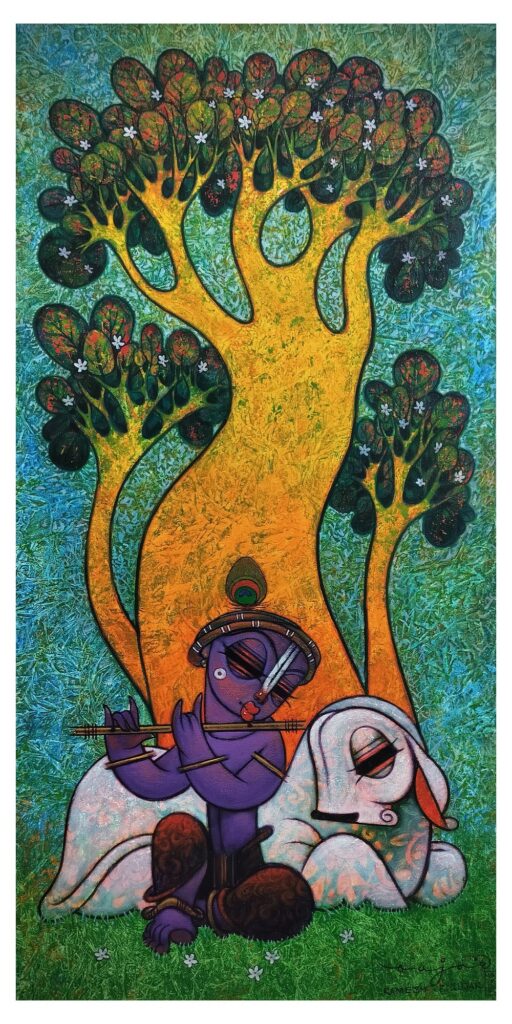
The phrase Sacred animals Indian mythology art captures this beautifully. Each animal carries a distinct identity shaped by mythology. The elephant is associated with wisdom and the remover of obstacles. The lion represents strength and courage. The cow stands for nurturing and abundance.
In many miniature paintings and folk traditions, animals are depicted alongside deities or as their companions. This is not a decorative pairing. It reflects a belief system where humans, animals, and the divine coexist in a shared ecosystem.
Peacocks, for example, are more than visually striking birds. Through Peacock motifs immortality Indian folk art, they symbolise beauty, grace, and the idea of renewal. Their association with monsoon and fertility further deepens their meaning.
When viewers begin to recognise these symbolic layers, the artwork transforms. It becomes a story waiting to be decoded rather than just admired.
The Spiritual Weight of the Bodhi Tree
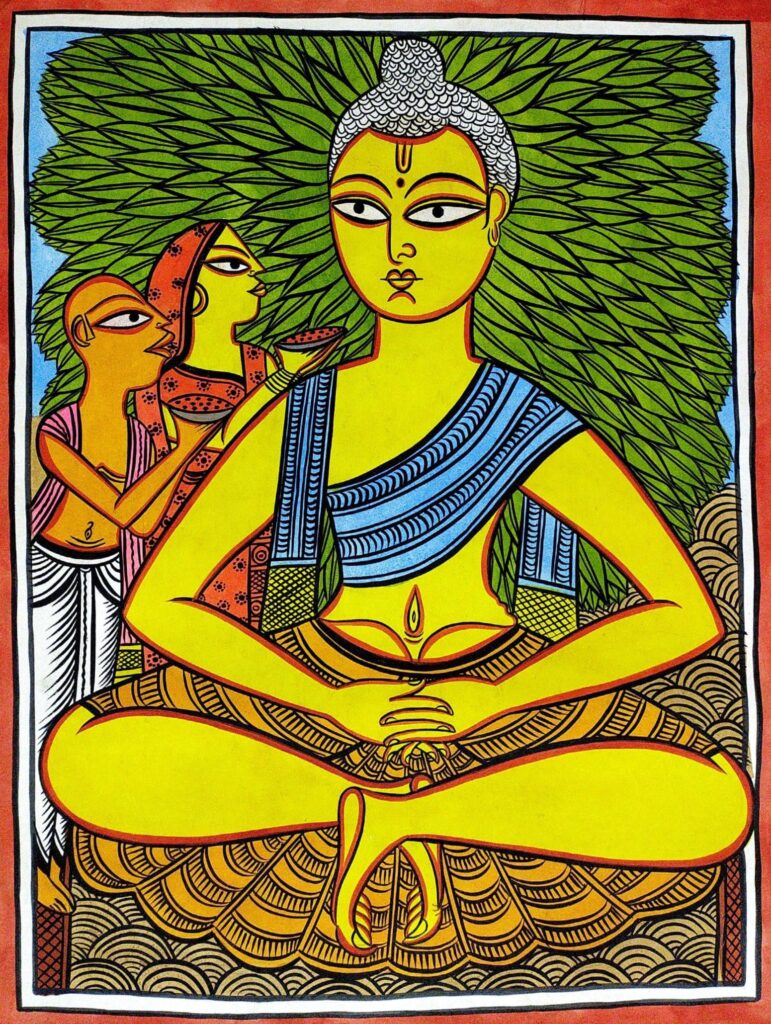
Few natural elements carry as much spiritual depth as the Bodhi tree. Known for its association with enlightenment, it holds a revered place in Indian visual culture.
The idea of the Bodhi tree’s spiritual significance art is rooted in the moment when Siddhartha Gautama attained enlightenment under this tree. Since then, it has come to symbolise awakening, inner peace, and the pursuit of truth.
Artists often depict the Bodhi tree in serene compositions, sometimes with minimal human presence. The focus is on stillness, suggesting that transformation happens within. The tree becomes a silent witness to spiritual evolution.
Even in contemporary interpretations, the Bodhi tree continues to inspire. Artists experiment with form and texture while retaining its core symbolism. For collectors, such works offer more than aesthetic value. They resonate on a philosophical level.
The Lotus: A Symbol That Transcends Time
Few symbols in Indian art are as enduring as the lotus. Its presence spans religious manuscripts, temple murals, miniature paintings, and modern artworks.
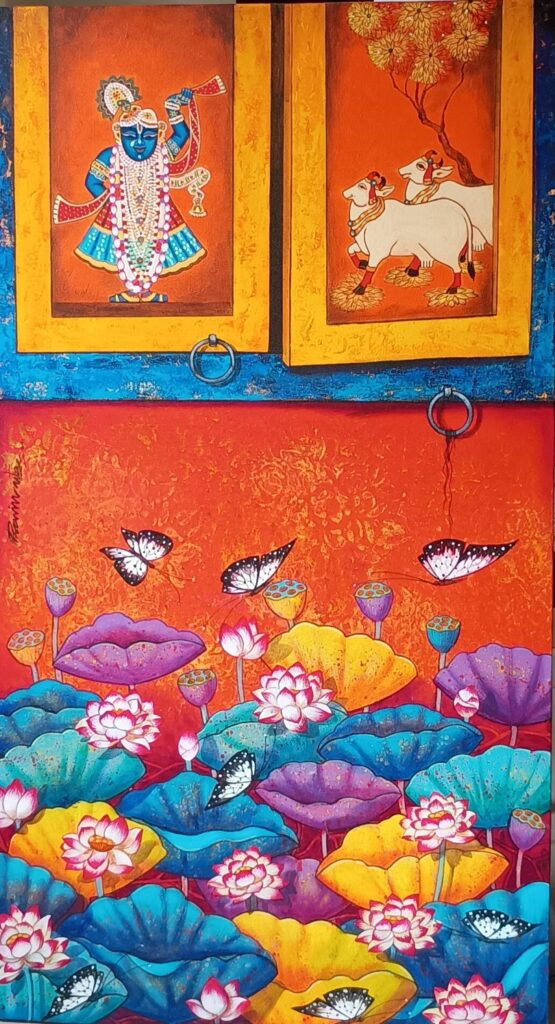
Through Lotus flower symbolism in Hindu paintings, the lotus represents purity, creation, and divine beauty. Its ability to rise above muddy waters and bloom untouched makes it a powerful metaphor for spiritual growth.
In many depictions, deities are shown seated on lotus flowers. This is not a stylistic choice alone. It signifies detachment from worldly impurities and a state of higher consciousness.
The lotus also carries feminine energy and is often associated with prosperity and fertility. Its layered petals and symmetrical form make it visually captivating, while its symbolism adds depth.
For viewers and collectors, the lotus offers a familiar yet profound connection. It bridges the gap between tradition and contemporary interpretation.
Water, Sky, and the Language of Elements
Beyond specific symbols, broader natural elements also carry meaning in Indian art. Water, sky, fire, and earth are often used to express emotional and spiritual states.
Rivers are depicted as lifelines. They symbolise movement, purification, and continuity. The Ganga, for example, is often portrayed as both a physical river and a divine entity.
The sky represents vastness and possibility. In miniature paintings, changing skies often reflect the mood of the narrative. Stormy clouds can suggest conflict while clear skies indicate peace.
Fire is associated with transformation and energy. It appears in ritual scenes and mythological narratives, symbolising both destruction and renewal.
These interpretations align with the broader idea of the spiritual meanings of natural elements in India, where each element is part of a larger philosophical framework. Together, they create a visual language that is both symbolic and experiential.
Folk Traditions and Their Unique Visual Codes
Indian folk art brings a distinct perspective to nature symbolism. Unlike classical traditions, folk artists often rely on bold colours, repetitive patterns, and stylised forms.
Madhubani paintings, for example, depict nature in vibrant detail. Fish, birds, and plants are arranged in dense compositions, each carrying symbolic meaning related to fertility, prosperity, and harmony.
Warli art, on the other hand, uses minimalistic forms to represent everyday life and nature. Trees, animals, and human figures are interconnected, reflecting a balanced ecosystem.
Pattachitra art from Odisha often combines mythological narratives with intricate natural motifs. Flowers, trees, and animals are integrated into the storytelling, enhancing both visual appeal and symbolic depth.
These traditions show how nature is not just observed but interpreted through cultural lenses. Each region brings its own understanding, making Indian art incredibly diverse yet unified in its symbolic richness.
Why Symbolism Matters for Today’s Collector
In a world driven by fast visuals and fleeting attention, symbolic art offers a slower, more meaningful experience. It invites viewers to pause, reflect, and engage.
For collectors browsing Mojarto, understanding the symbolic nature in Indian art can transform the way they choose artworks. It shifts the focus from surface appeal to deeper resonance.
An artwork featuring a tree is no longer just about greenery. It becomes a statement about life, growth, and connection. A painting with a lotus is not just decorative. It carries spiritual undertones that can influence the atmosphere of a space.
This depth adds lasting value. It creates a personal connection between the viewer and the artwork. Over time, these pieces become more than visual assets. They become part of one’s narrative.
Contemporary Artists and Evolving Interpretations
Modern Indian artists continue to draw from traditional symbolism while experimenting with new forms and ideas. They reinterpret age-old symbols to reflect contemporary realities.
A tree might be depicted with fragmented branches to represent environmental concerns. A river might appear polluted to comment on ecological issues. Animals might be stylised to reflect changing relationships between humans and nature.
Despite these changes, the core symbolism remains intact. This continuity allows viewers to connect with the artwork while also engaging with modern themes.
For platforms like Mojarto, this blend of tradition and innovation offers a rich selection for diverse audiences. It caters to those who appreciate heritage as well as those seeking contemporary expression.
A Deeper Way to Experience Art
Engaging with symbolic art is not about having all the answers. It is about asking better questions. What does this element represent? Why has the artist chosen it? How does it relate to my own experiences?
This approach transforms art viewing into a dialogue. It makes the experience more personal and immersive.
Indian art, with its deep-rooted symbolism, offers endless possibilities for exploration. Each artwork is layered with meaning, waiting to be discovered.
Closing Thoughts
Nature in Indian art is never just a backdrop. It is a storyteller, a philosopher, and a bridge between the physical and the spiritual.
From the intricate patterns of Gond paintings to the serene presence of the Bodhi tree, from the symbolic grace of the lotus to the powerful imagery of sacred animals, every element carries significance.
For those exploring Mojarto, this understanding opens up a richer way to connect with art. It allows viewers to see beyond the obvious and appreciate the deeper narratives that make Indian art truly timeless.
In the end, the Symbolic nature in Indian art is not just an artistic approach. It is a reflection of how a culture sees the world. Interconnected, meaningful, and full of stories waiting to be told.
FAQs
1. What is the symbolic nature in Indian art?
Symbolic nature in Indian art refers to the use of natural elements like trees, animals, rivers, and flowers to represent deeper spiritual, cultural, and philosophical meanings rather than just visual beauty.
2. Why is nature symbolism important in Indian paintings?
Nature symbolism adds layers of meaning to artwork. It helps artists convey ideas about life, spirituality, and human emotions in a way that connects with viewers on a deeper level.
3. What does the lotus symbolise in Indian art?
The lotus represents purity, spiritual growth, and detachment. It is often shown in Indian paintings as a symbol of rising above challenges and achieving higher consciousness.
4. How are animals used symbolically in Indian art?
Animals are often linked to mythology and belief systems. They represent qualities like strength, wisdom, protection, and prosperity, making them powerful symbolic elements in artworks.
5. Are these symbolic meanings still relevant in modern Indian art?
Yes, contemporary artists continue to use traditional nature symbolism while adapting it to reflect modern themes such as identity, environment, and cultural continuity.