
By P Abigail Sadhana
There is always something happening somewhere.
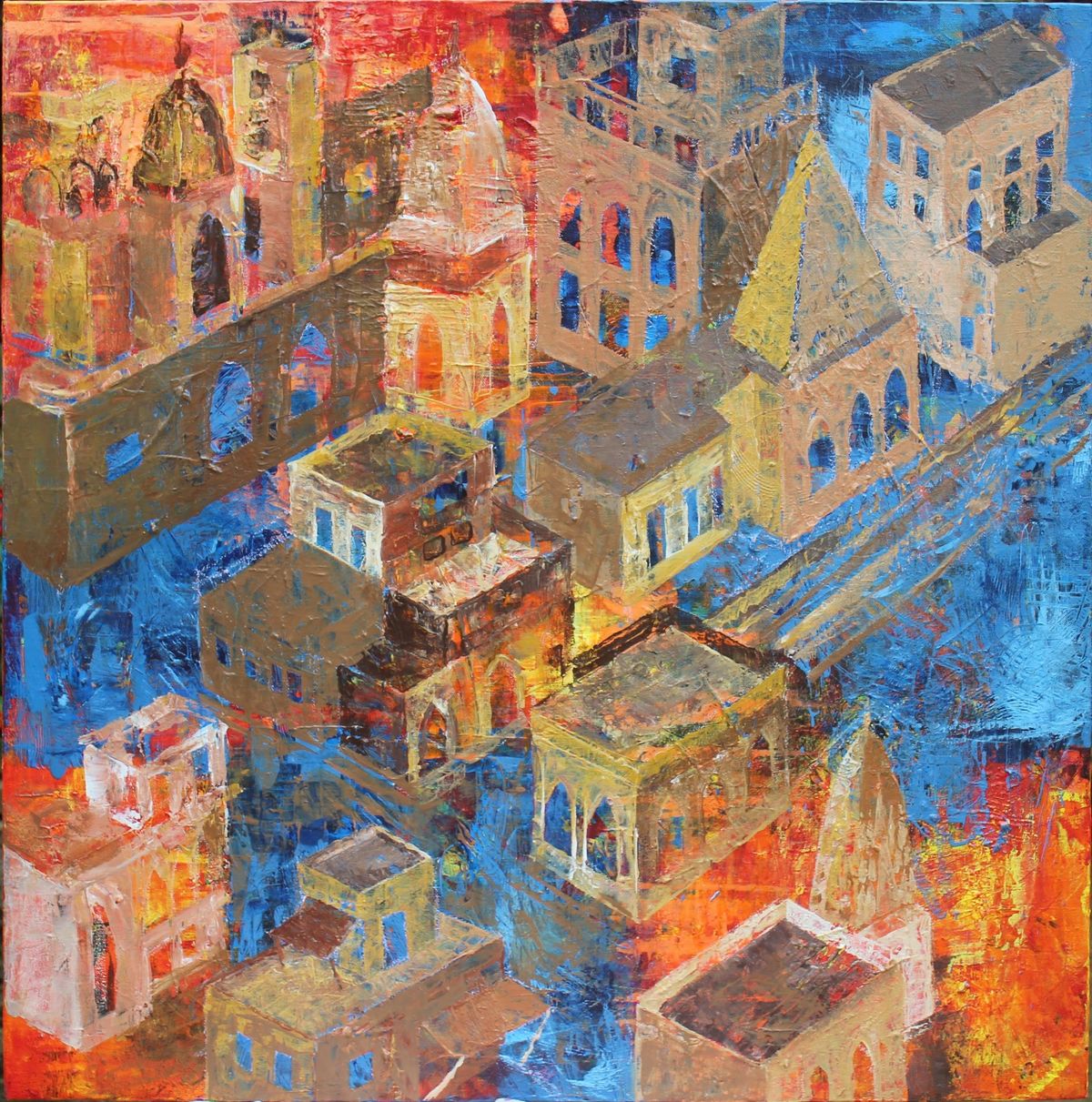
A message waiting to be answered. A reel we have not watched. A conversation unfolding without us. A new exhibition, a new trend, a new piece of information arriving before we have had the chance to absorb the last one. We live with the peculiar sensation that if we pause for too long, we might miss something.
Perhaps this is why we seem to be living at the speed of information.

For centuries, however, we have been enchanted by the passage of time. Withered leaves quiver along the bare, twisting branches of trees. Tiny grains descend slowly through the slender passage of an hourglass. A fragile ledge of snow hangs suspended above a mountain slope, poised on the brink of collapse. These fleeting images of changing seasons, passing moments and the traces they leave behind evoke our bittersweet relationship with time – a force we cannot see or hold, and yet continually measure our lives against.
There is a particular wistfulness in our relationship with time; the awareness of its omnipresence, hovering quietly over everything we do, coupled with the knowledge that it is forever slipping beyond our grasp.
Yet something about that relationship seems to have changed.
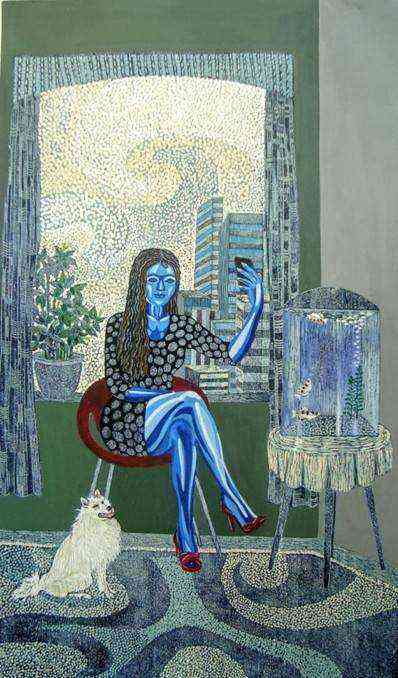
Across generations, there seems to be a growing urgency woven into everyday life. We are always preparing for the next thing, anticipating what comes after this moment rather than inhabiting the moment itself. Even when we have time, we feel its rush without any apparent reason. The rate at which we are living seems to mirror the pace at which our brains are consuming information.
The art of pausing seems to be trending. The need for a digital detox is absolute, and yet we find ourselves scrolling from one reel to another, some lasting thirty seconds or less. Even when we pause, are we actually resting our minds, bodies and souls? Or do we dread stillness so much that we reach for our black mirrors, rather than doing something that might appease and feed our minds beyond the entertainment our screens offer?
Perhaps this is where the question of stress relief becomes more complicated. We know that we need to rest, but have we forgotten what it actually means to rest?
The term “brain fog” has become increasingly familiar as a way of describing that feeling of being exhausted, slowed down, scattered, or unable to quite grasp the thought that was there a moment ago. Perhaps what we are experiencing is not simply a lack of time, but a lack of mental rest. And so, before we learn how to move faster, we need to relearn how to pause.
The Difference Between Pausing and Resting
Perhaps the difficulty with rest is that we have begun to confuse stopping with restoration. We stop working, but continue scrolling. We leave the office, but remain tethered to notifications. We lie down, but our minds continue moving from one piece of information to another. The body may have paused. The mind has not.
There is another strange consequence to this constant stimulation: it can alter the way we experience time itself. Hours spent scrolling can disappear almost without a trace. Twenty minutes become an hour; an evening somehow vanishes. Yet when we try to remember what happened, there may be very little to hold on to. It is almost as though the hours have fallen into a temporal black hole.
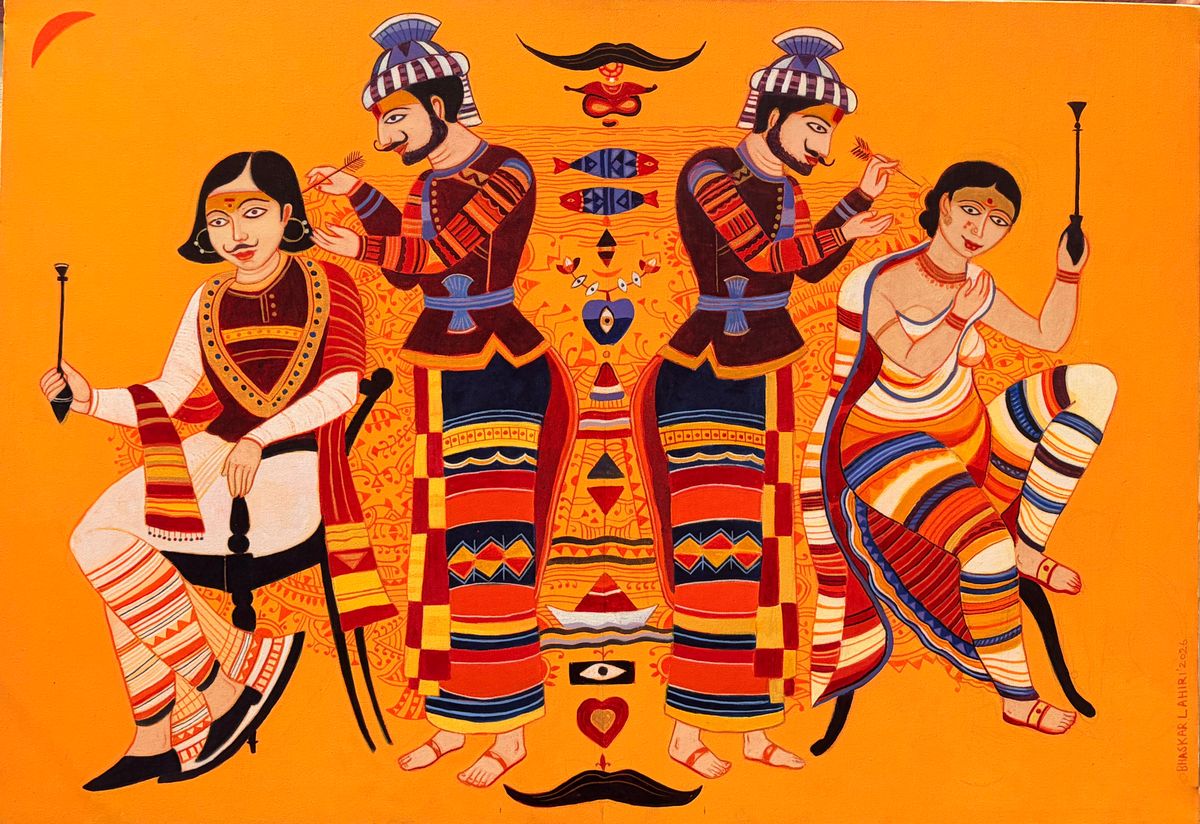
Our experience of time is not simply a matter of watching a clock. In retrospect, time is also shaped by what we remember from it. Experiences containing novelty, emotion and attention can leave behind richer memories. But when one stream of images replaces another before we have properly absorbed it, there may be little to distinguish one moment from the next.
Scroll. Watch. Swipe. Repeat.
The content changes constantly, but the experience can become strangely featureless. We consume an enormous amount of information, yet some days can feel as though nothing much happened at all. The weeks begin to blur together.
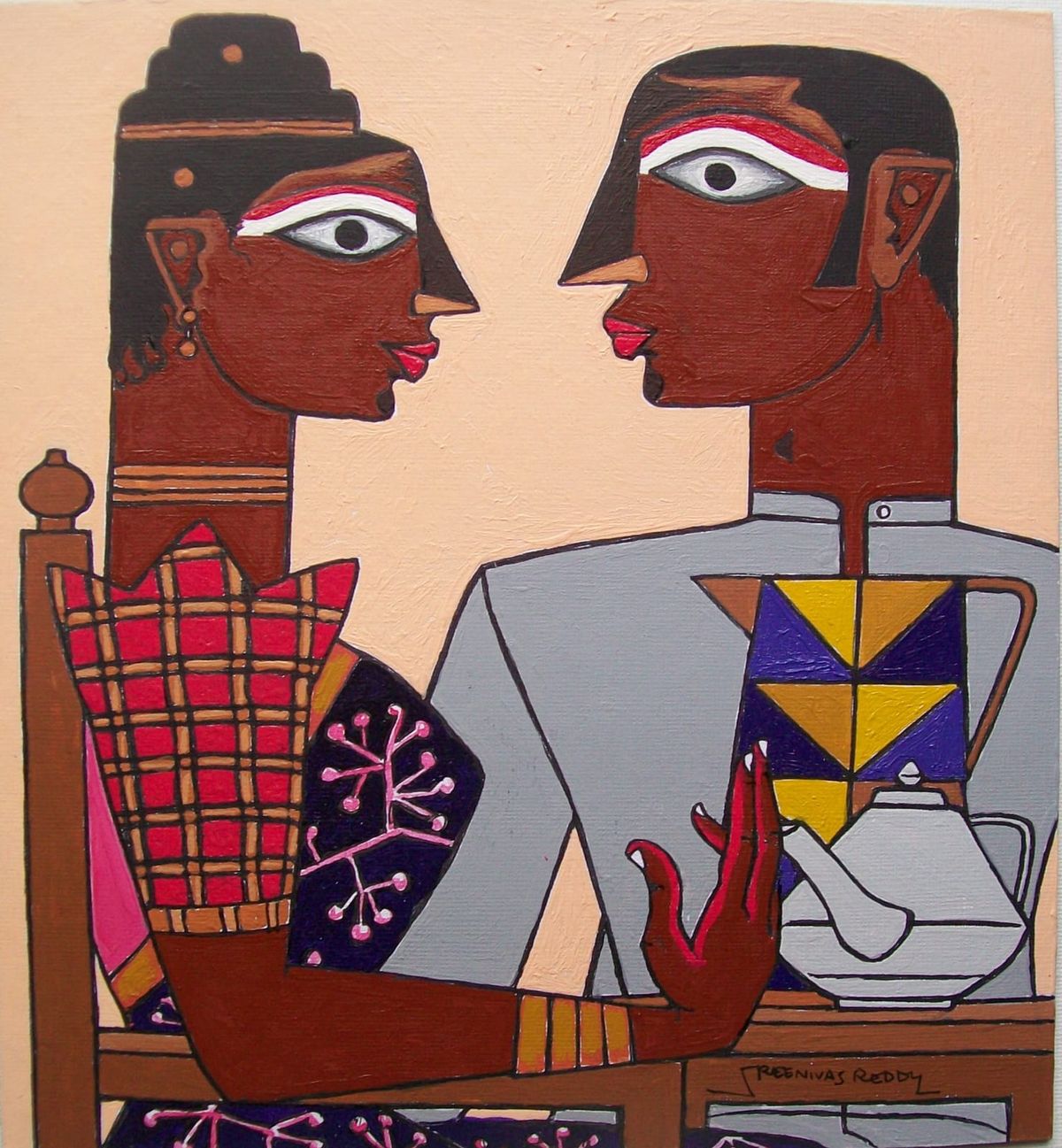
Digital stimulation leaves little room for boredom, but boredom is not necessarily the enemy we have made it out to be. An empty moment can create space for the mind to wander, notice, remember and make connections. Novelty can come from somewhere other than a screen: a different street, the sound of rain, a painting we have never seen before, the unfamiliar shape of a tree against the evening sky.
These experiences ask something different of our attention.
They ask us to be there.
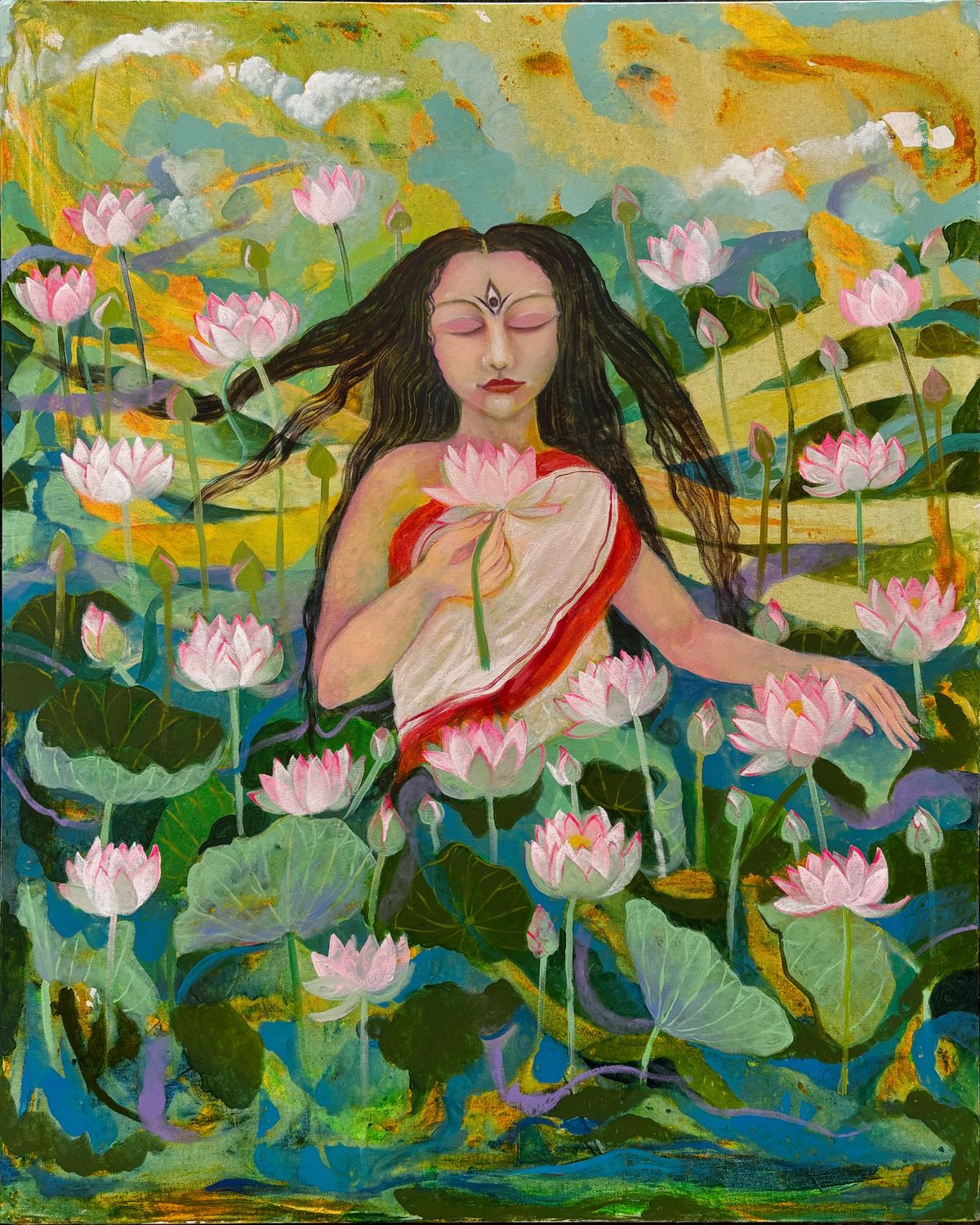
Amaar Durga (The Divine Mother As I See Her) by Sumita Maity
This is where mindfulness becomes more than another item on a list. It can simply mean returning to the experience in front of us instead of immediately searching for the next one.
Perhaps genuine stress relief begins there – not with filling the pause more efficiently, but with allowing the pause to remain a pause. Because when every empty moment is immediately occupied, we may be losing something more subtle than time.
We may be losing our experience of it.
Turning to Art
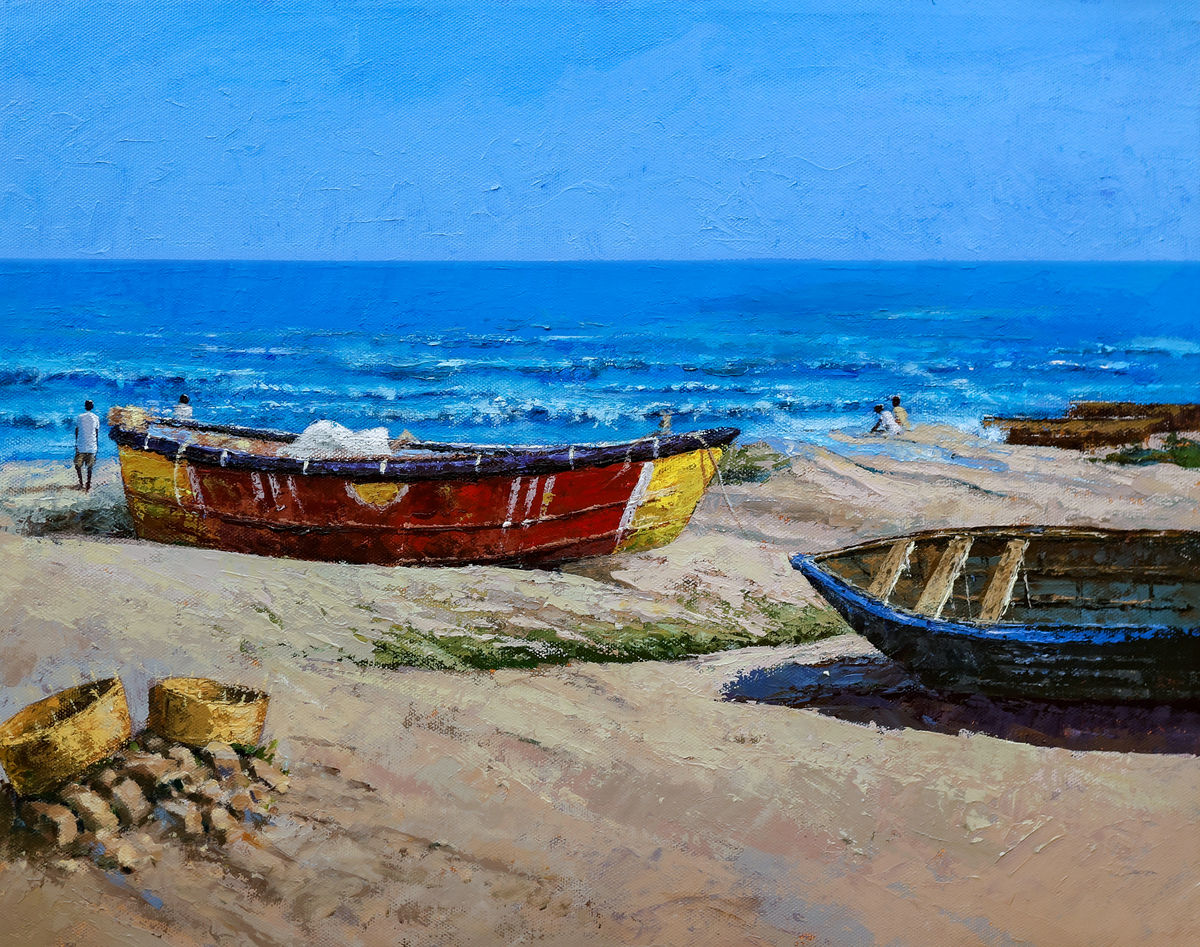
So, what do we turn to when we finally put the phone down? Perhaps, we can turn to art.
A painting does not ask us to scroll, react, respond or move on. It stays where it is, waiting for us to look. We can notice the colours, the movement of a line, the expression on a face, the texture of a surface or a detail we might otherwise have missed. Slowly, looking becomes less about understanding what we see and more about allowing ourselves to experience it.
Perhaps this is where mindfulness becomes more than another item on a list of things we are supposed to practise. Psychologically, mindfulness is less about forcing the mind to become empty and more about noticing where our attention has gone, and gently bringing it back to the present. Even something as simple as paying attention to the rhythm of our breathing can give the mind an anchor: the movement of the breath, the sensation of air entering and leaving the body, the brief pause between one breath and the next.
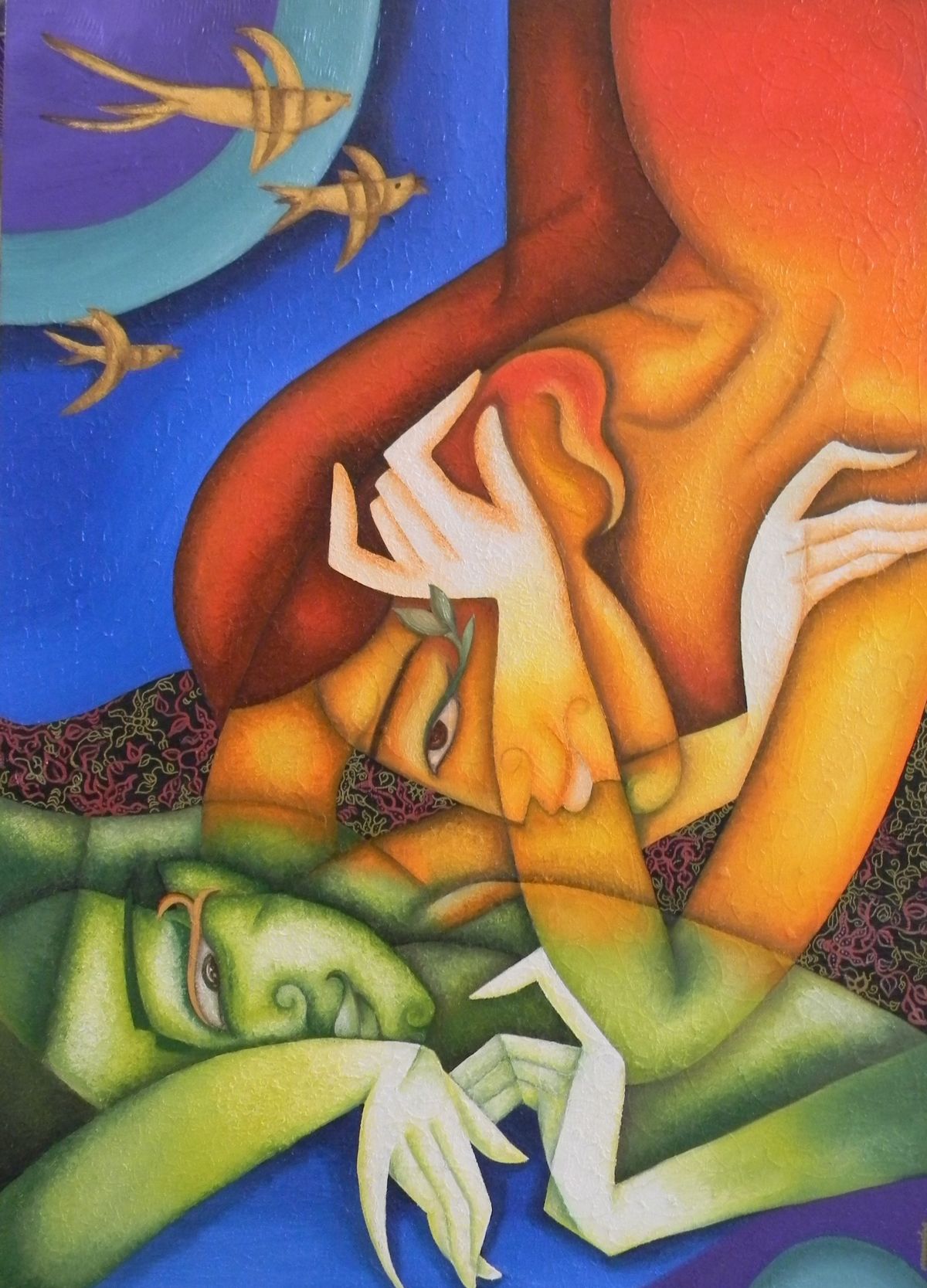
The mind will wander. That is not a failure of mindfulness; noticing that it has wandered is part of the practice. Each time we return our attention to the breath, a sensation, a sound, or the experience directly in front of us, we are practising the ability to stay with one thing rather than immediately reaching for the next.
This can become a quiet form of stress relief. Not because art magically removes stress, but because it interrupts the habitual movement of attention that keeps us constantly consuming. A painting can slow us down enough to notice something within the artwork, and perhaps something within ourselves.
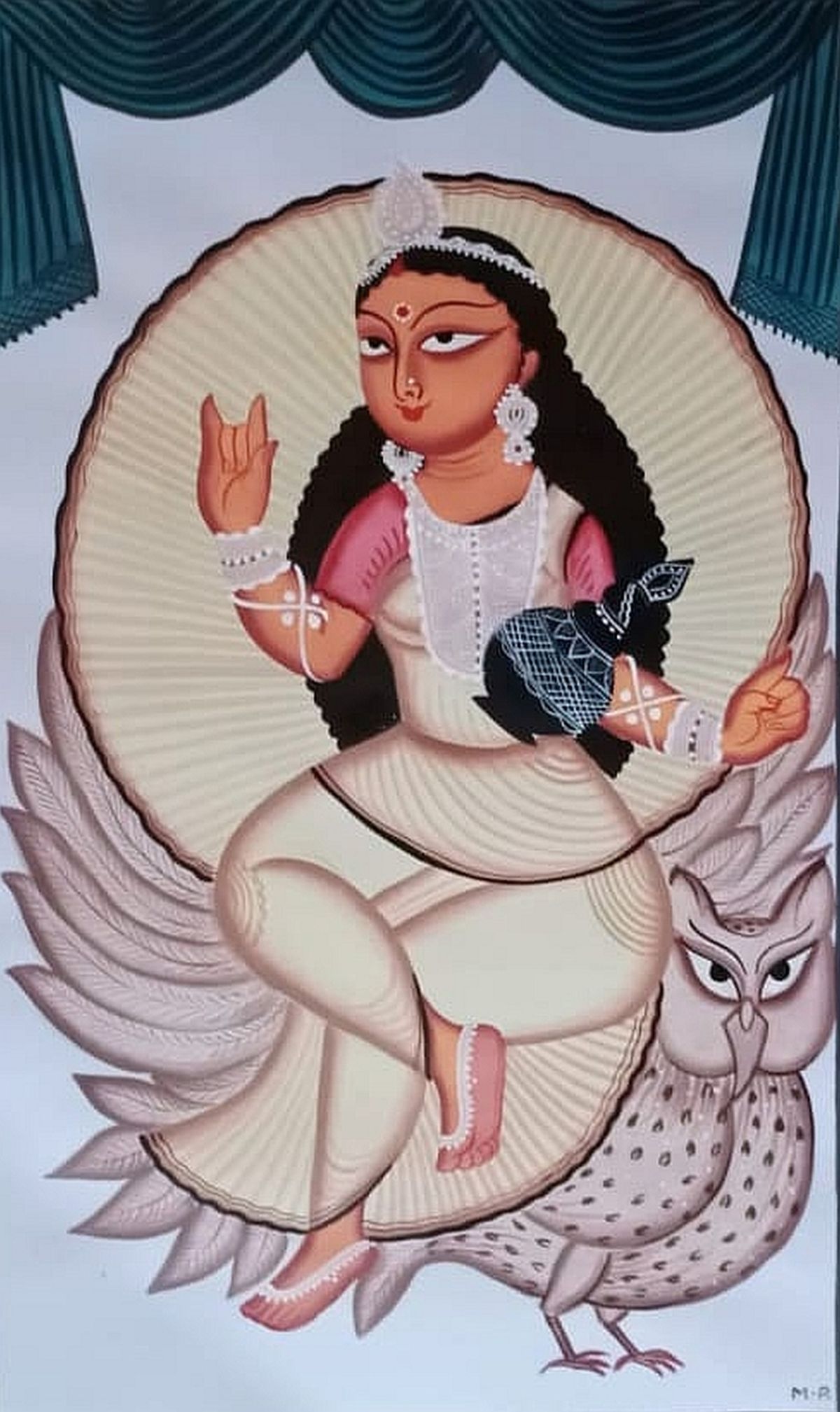
And there is a whole world of artists and art waiting to be discovered. On Mojarto, you can wade through works by artists across styles, mediums and sensibilities, finding pieces that speak to you and bringing them into your own spaces. Sometimes, choosing a painting for your home is not simply about filling an empty wall. It is about choosing something you want to return to, to live with, look at and notice differently over time.
When Attention Settles
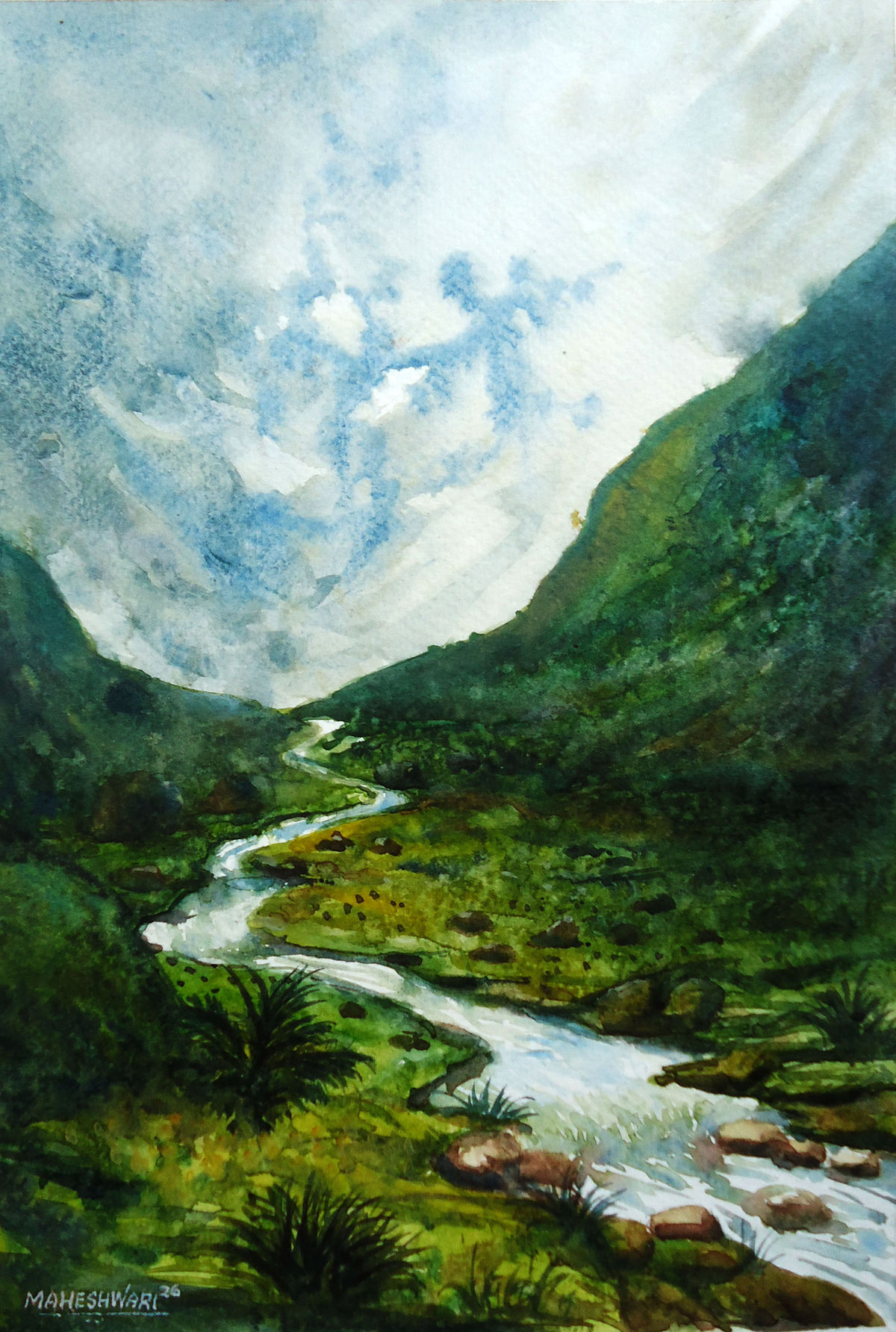
There is also something quietly liberating about looking at art without asking it to give us an answer. We do not have to decide whether we like it immediately. We do not have to know the artist, understand the symbolism or arrive at the “right” interpretation. We can simply notice what holds our attention. Perhaps it is a colour we keep returning to, a small detail in the corner, a particular expression, or even something we cannot quite explain.
In that sense, looking at art can become an exercise in staying with uncertainty. We live in a world that constantly asks us to react, decide and move on. A painting gives us permission to remain undecided. To look again. To change our minds. To notice something we missed the first time.
And perhaps that is part of what makes returning to art feel restorative. It gives our attention somewhere to settle without demanding that it produce anything in return.
Bring Art Home
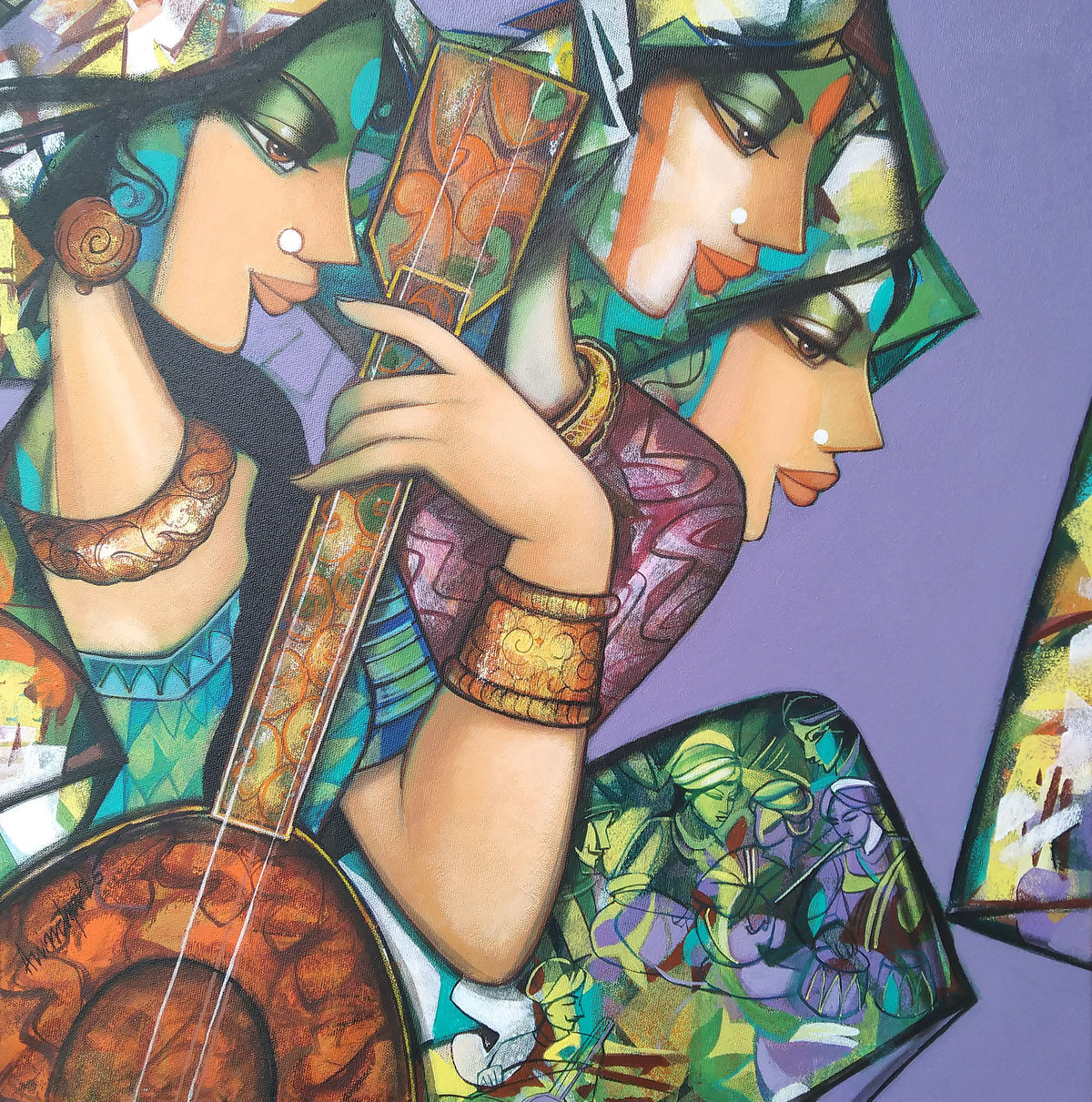
Art does not always need to be understood immediately. Sometimes, it simply asks us to stay. And perhaps, in an age of constant stimulation, learning to stay with something is itself a way of learning how to rest.
The next time you find yourself scrolling without really looking, pause instead. Give yourself a few minutes to look at something slowly, and let your attention settle.
And if an artwork stays with you, bring it home.
Explore art on Mojarto and find something you would like to live with, look at and return to, again and again.