
Walk into any contemporary art gallery in India today, and you’ll notice something remarkable. The canvases no longer belong to one world or one influence. They belong to many. They tell stories where Indian mythology meets modern abstraction, where the vibrancy of street culture blends with techniques born in faraway studios. This new wave of Indian contemporary art fusion is redefining what it means to be both Indian and global at once.
At Mojarto, we see this transformation unfold every day through the artists who display their work on our platform. Their art doesn’t imitate; it reinvents. It borrows inspiration from movements like Surrealism and Pop Art, but filters them through the lens of lived Indian experience: its colours, textures, contradictions, and spirit.
A Changing Canvas: When Cultures Meet
India’s art history has always been one of exchange. Trade routes brought pigments and ideas, travellers shared stories, and generations of artists learned by looking both inward and outward. But the last two decades have accelerated this dialogue. The internet, global exhibitions, and cultural mobility have opened the floodgates for cross-pollination.
Today’s painters and sculptors don’t see themselves in isolation. They are part of a wider global conversation. Yet their identity remains rooted. This is the essence of the fusion of traditional and contemporary Indian art, a meeting point of heritage and innovation. An artist might use the vibrant colours of Rajasthani miniatures to portray futuristic cityscapes, or reinterpret a surrealist dream through the metaphors of Indian spirituality.
This blend feels organic, not forced. It mirrors India itself: diverse, layered, and continuously evolving.
Surrealism in Indian Art: Dreams Shaped by Culture
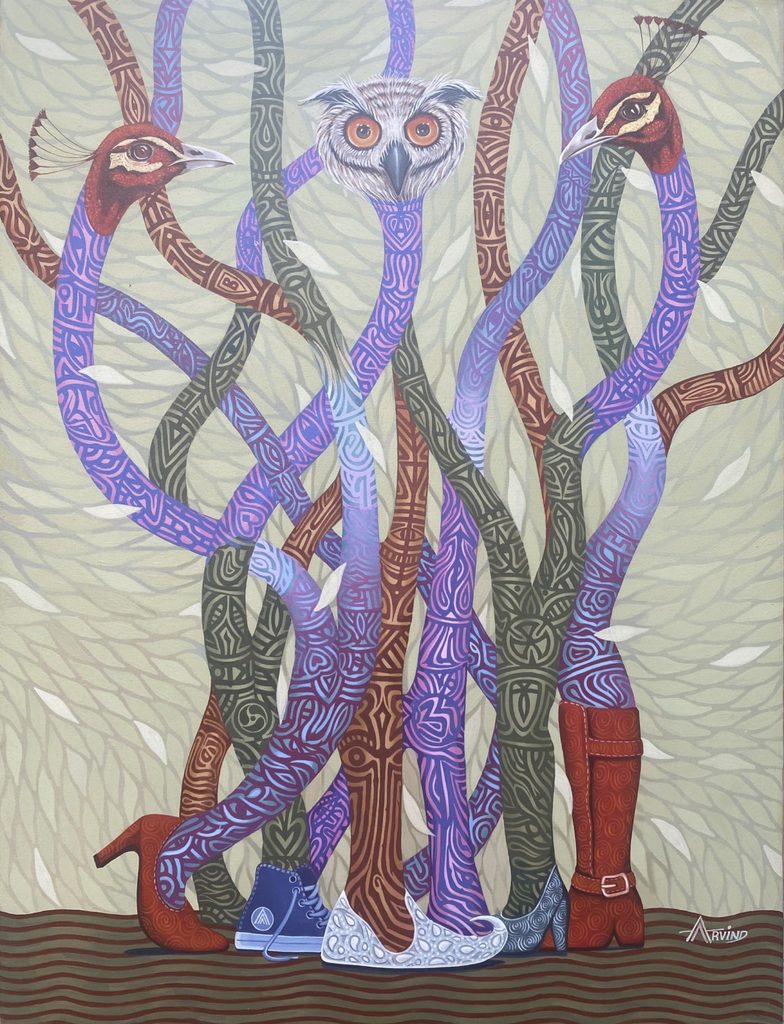
Surrealism, as imagined by artists like Dalí and Magritte, once explored dreams, the subconscious, and illogical juxtapositions. In India, those ideas take on a different flavour. Surrealism in Indian art feels less about rebellion and more about introspection. Here, mysticism and mythology have always blurred the line between what is real and what lies beyond.
Artists such as Anjolie Ela Menon, G.R. Iranna, and Surendran Nair have taken surrealism in unexpected directions. Their works often merge divine symbols with everyday imagery: a god walking through a crowded marketplace, a lotus blooming in the middle of an urban skyline, a bird carrying fragments of memory. Each image feels familiar yet otherworldly, much like India itself.
These creations aren’t only visually captivating; they invite viewers to question their own perceptions. For collectors, they represent a deeper journey, one that connects modern sensibilities with India’s timeless storytelling traditions.
On Mojarto, this surrealist impulse appears across paintings and mixed media works that balance fantasy with meaning. Each piece is a conversation between thought and dream.
Pop Art in India: Where Icons Become Everyday Stories
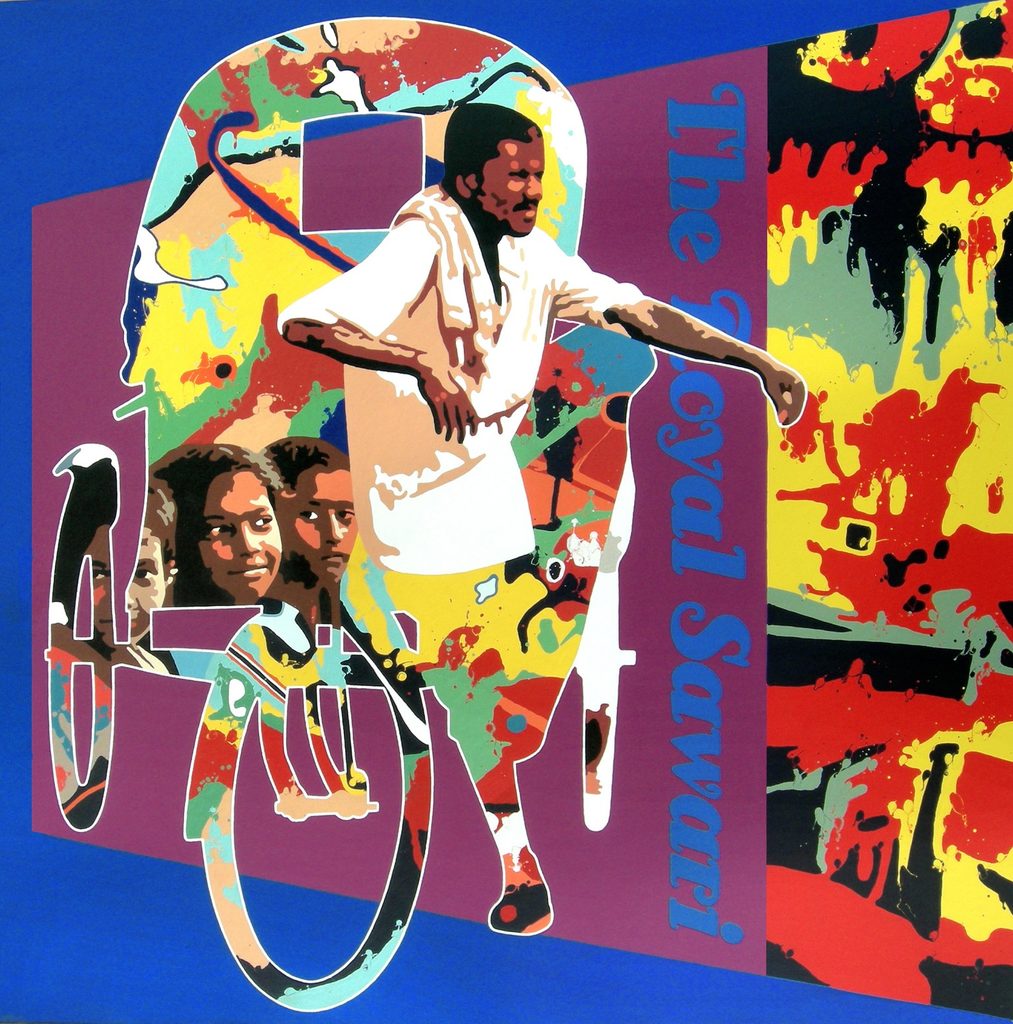
If surrealism explores the subconscious, Pop Art celebrates the surface, the glamour, chaos, and irony of modern life. When Indian artists discovered Pop Art, they didn’t merely replicate Warhol’s soup cans or Lichtenstein’s comics. They made it their own.
Pop art in India artists use the language of mass culture- Bollywood posters, religious symbols, advertisements, and even social media imagery to tell stories that are playful yet profound. Think of Thukral & Tagra’s bright depictions of consumerism and desire, or Manjunath Kamath’s witty visual mashups. These works pulse with energy, reflecting India’s crowded visual culture where devotion, entertainment, and commerce collide.
This pop culture in Indian contemporary painting resonates strongly with younger audiences. It feels current, alive, and deeply familiar. Every image carries humour, colour, and commentary, a reflection of a society that lives between tradition and the modern spectacle.
Collectors are drawn to this genre not only for its visual appeal but for its ability to capture the pulse of India’s cultural moment. In a world where global icons dominate, Indian Pop Art reclaims the narrative, transforming local imagery into international language.
Cultural Hybridity: India’s Global Identity on Canvas
Cultural hybridity has always been India’s strength. From Mughal miniatures that combined Persian and indigenous styles to colonial-era painters who blended European realism with local themes, India has never been afraid to merge influences. Today’s artists carry that legacy forward, consciously exploring cultural hybridity in art India as a statement of identity.
This hybridity is visible in technique, material, and theme:
- A digital artist merges hand-drawn sketches with augmented reality.
- A sculptor uses temple architecture as inspiration for minimalist modern forms.
- A painter layers Indian textile patterns beneath global abstract compositions.
Through this synthesis, Indian artists are no longer merely responding to global trends—they are contributing to them. The result is a fresh visual language that appeals to audiences from Delhi to Dubai, from London to New York.
At Mojarto, this cultural exchange in Indian visual arts is at the heart of many collections. The artworks represent conversations between time periods, geographies, and philosophies. They embody what happens when openness becomes the new tradition.
What Makes Indian Contemporary Art Fusion So Appealing to Collectors
For collectors and enthusiasts, Indian contemporary art fusion offers something rare: authenticity wrapped in global appeal. Each artwork tells a layered story, one that can be appreciated both for its craftsmanship and for its cross-cultural resonance.
Here’s why these artworks are gaining attention worldwide:
- A Reflection of Modern Identity – In a rapidly globalising world, fusion art expresses the tension between the local and the universal.
- Investment Value – As Indian artists gain international recognition, their fusion works are becoming valuable assets in global art markets.
- Emotional Depth – The blend of traditional themes with contemporary methods evokes nostalgia and curiosity simultaneously.
- Versatility in Display – Whether hung in a minimalist apartment or a traditional home, these artworks complement every space.
Mojarto’s curated collections make it easier for collectors to explore this diversity, whether they seek surrealist dreamscapes or pop-infused commentaries.
Indian Artists Reimagining Pop Art: Humour with a Message
Indian artists reimagining pop art often use humour as their weapon and irony as their tool. Their canvases may sparkle with bold colours, but beneath the playful tone lies sharp observation. They speak about consumerism, gender, politics, or faith, not with confrontation, but with wit.
Artists like Jagannath Panda and Baiju Parthan, for example, use everyday symbols to challenge the viewer’s assumptions. Their work transforms the familiar into the thought-provoking. By doing so, they remind us that pop culture isn’t just entertainment; it’s a mirror reflecting who we are and what we value.
The digital era has amplified this movement. Social media aesthetics, brand imagery, and memes have all become part of visual storytelling. On Mojarto, this energy translates into artworks that are instantly recognisable yet deeply meaningful, a combination that appeals to both seasoned collectors and first-time buyers.
The Business of Fusion: Why Global Audiences Are Paying Attention
From a marketing perspective, fusion art holds an undeniable advantage. It speaks across languages. It looks contemporary yet feels personal. It fits seamlessly into both Indian and international collections.
For galleries and online platforms like Mojarto, this means a broader audience and deeper engagement. Global buyers searching for “Surrealism in Indian art” or “Pop Art in India” aren’t just looking for styles; they’re looking for authenticity with global relevance. And that’s exactly what fusion artists deliver.
These artworks also perform well in digital spaces. Their visual boldness catches the eye, while their layered storytelling keeps audiences invested. In a world where attention is fleeting, this balance of immediacy and depth is marketing gold.
Moreover, the demand for artworks that embody a fusion of traditional and contemporary Indian art is growing among international interior designers, luxury brands, and corporate collectors who seek cultural sophistication in their spaces.
A New Frontier: The Future of Fusion Art in India
The future of Indian fusion art looks incredibly promising. With global residencies, digital platforms, and collaborative exhibitions, Indian artists are stepping into international dialogues more confidently than ever.
Emerging trends include:
- Digital reinterpretations of tradition: Artists are merging classical Indian motifs with AI-generated imagery and digital surrealism.
- Sustainable narratives: Eco-art and recycled materials are giving traditional craftsmanship a new purpose.
- Cross-border collaborations: Indian artists are partnering with counterparts from Japan, Africa, and Europe, leading to unprecedented cultural exchange in Indian visual arts.
As these movements grow, Mojarto continues to provide the stage where innovation meets visibility. Artists get to tell their stories, and collectors get to own a part of this ongoing artistic revolution.
Why Mojarto Is the Home of Contemporary Art Fusion
Mojarto has become the preferred destination for discovering and collecting Indian art that speaks to both local roots and global sensibilities. Every artist showcased here brings a unique narrative, whether it’s a reinterpretation of surrealist philosophy or a bold take on modern pop culture.
When you browse through Mojarto:
- You connect directly with the artists.
- You discover verified, authentic artworks.
- You find pieces that resonate with your aesthetic and your worldview.
Whether you are building your first collection or expanding an established one, Mojarto offers a curated space that bridges cultures, styles, and eras. Each painting or sculpture on the platform tells a story of cultural hybridity in art India, a dialogue between tradition and innovation.
Final Reflections: India’s Art Renaissance
The story of Indian art has never been static. It evolves, reinvents, and redefines itself with each generation. The current chapter, driven by Indian contemporary art fusion, is perhaps its most dynamic yet. It proves that creativity thrives at intersections: between myth and modernity, between local and global, between what we inherit and what we imagine.
This is more than an artistic movement; it’s a cultural renaissance. Through their work, Indian artists are not just painting pictures; they’re painting identities, rethinking how India converses with the world.
At Mojarto, we invite you to explore this journey. Discover artworks that blur boundaries, challenge conventions, and celebrate diversity. Because when cultures meet on canvas, they don’t just coexist; they create something entirely new.