
By P Abigail Sadhana Rao
“I do not paint what I see, but what I saw in my mind. Nature is not only all that is visible to the eye… it also includes the inner pictures of the soul.”
— Edvard Munch
For centuries, Western art operated under strict, predictable rules. From the harmonious proportions of the High Renaissance to the precise anatomical realism of 19th-century Academic art, painters were expected to capture the physical world as it appeared to the human eye. At the dawn of the 20th century, a radical shift occurred. Artists began asking a fundamental question: What if art was never meant to mirror what we see, but rather what we feel?
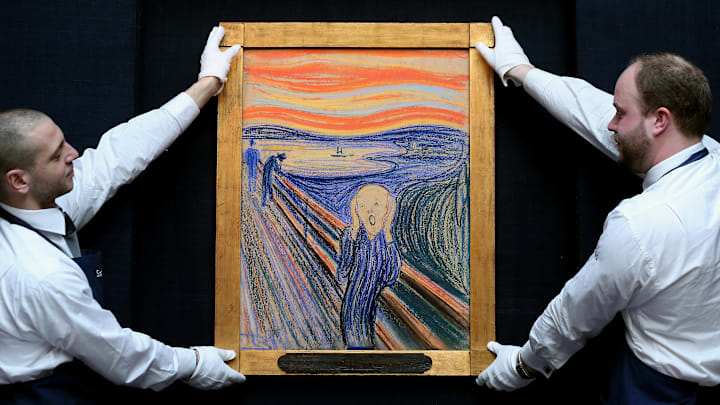
This pivotal shift marked the birth of Expressionism, an artistic movement that rejected objective reality in favor of raw, subjective emotion, throwing out the traditional rulebook of art in the process.
The Rebellion Against Realism
Before Expressionism, movements like Impressionism had already begun loosening the grip of strict realism. However, while Impressionists captured the fleeting effects of light on the physical world, Expressionists turned their lenses inward. They believed that the modern world, marked by rapid industrialization, urban alienation, and impending war, could not be adequately captured through harmonious compositions or pleasant landscapes.
Instead of harmony, Expressionists chose distortion. Perspective was flattened or twisted, figures were elongated or grotesquely simplified, and color was liberated from its naturalistic duty. Grass no longer had to be green, nor skies blue; colors were chosen purely for their emotional intensity.
Expressionism versus Fauvism
Roughly around the same time Expressionism was emerging in Germany, a parallel movement called Fauvism was developing in France. Led by artists like Henri Matisse, Fauvism also embraced bold, non-naturalistic colors. However, Fauvism was short-lived and remained largely focused on decorative, dreamy aesthetics. Unlike Expressionism, Fauvist artists generally avoided heavy political conflicts or psychological distress, choosing instead to celebrate color for its visual beauty rather than its capacity for deep social commentary.
The Pioneers of Expressionism
Expressionism was not a single rigid organization, but a collective state of mind that took shape through key artistic groups, primarily across Germany.
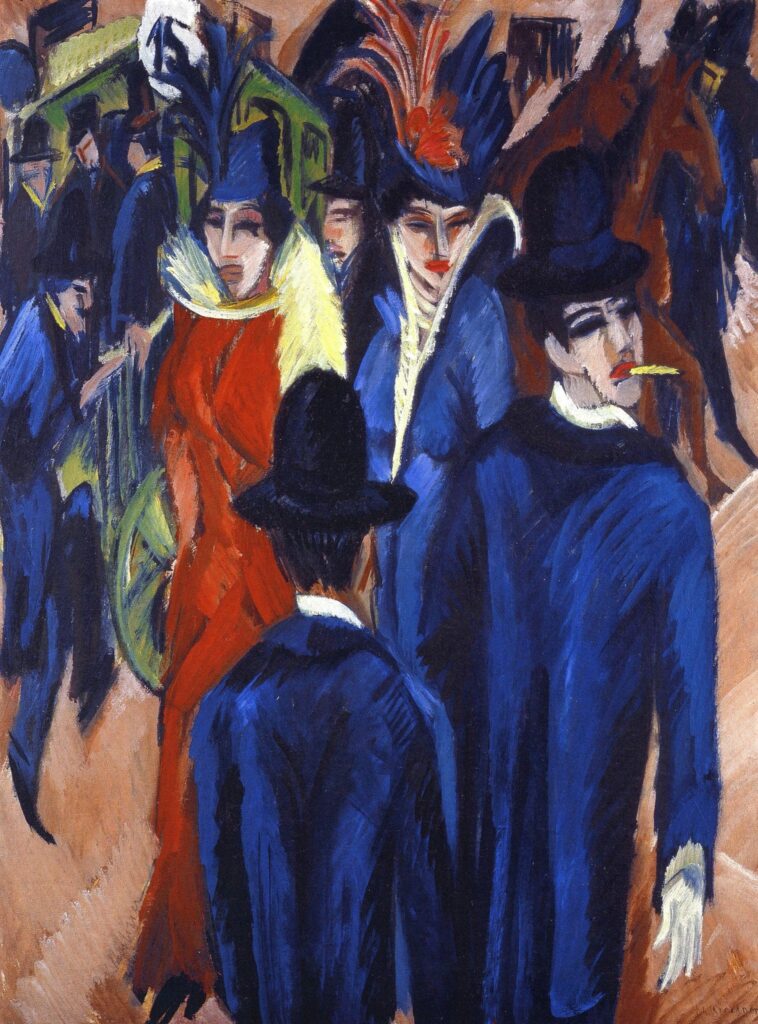
Formed in Dresden in 1905, the group known as Die Brücke (The Bridge) sought to build a bridge between traditional German heritage and modern innovation. Led by artists such as Ernst Ludwig Kirchner and Karl Schmidt-Rottluff, they utilized jagged outlines, harsh contours, and clashing tones to reflect the isolation of city life. Kirchner’s Street, Berlin demonstrates this approach, using claustrophobic spatial framing and sharp angles to express urban detachment.
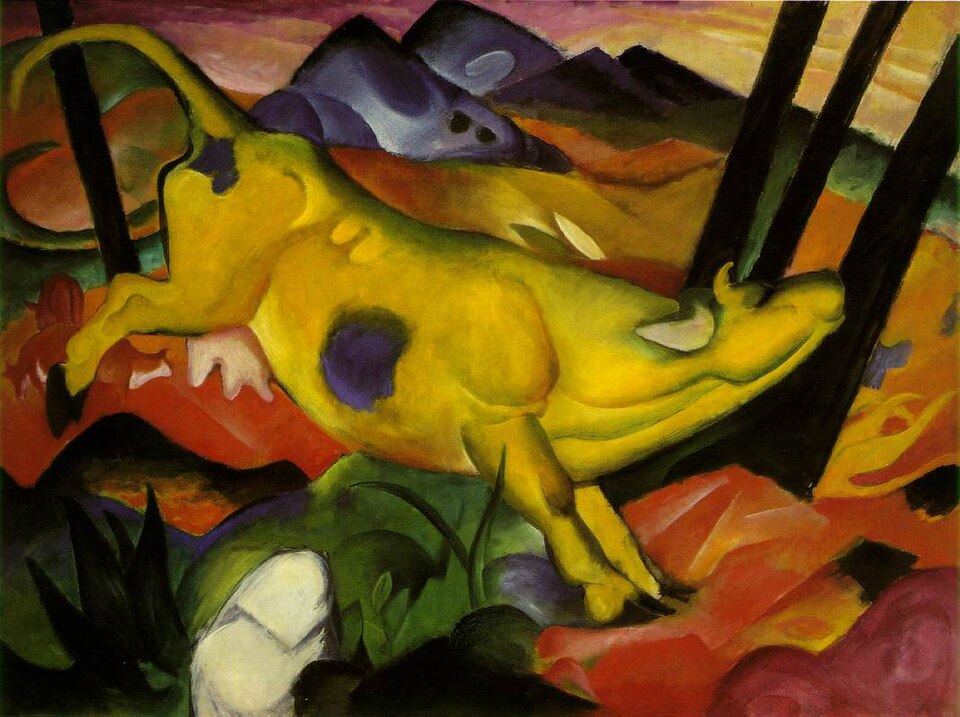
A few years later in Munich, Der Blaue Reiter (The Blue Rider) emerged under the guidance of Wassily Kandinsky and Franz Marc. This branch approached Expressionism from a spiritual standpoint, proposing that color and form possessed intrinsic qualities capable of transcending physical reality. Marc utilized non-naturalistic color choices to depict animal purity, while Kandinsky’s early works pioneered the transition into full abstraction. Marc’s famous work The Yellow Cow showcases this philosophy, using bold, unnatural colors to symbolize emotional and spiritual purity rather than literal appearance. Other masters, including Oskar Kokoschka and Käthe Kollwitz, used their work to confront grief, human vulnerability, and the harsh realities of the post-war period.
These groups drew heavy inspiration from 19th-century predecessors like Edvard Munch and Vincent van Gogh. Munch’s masterwork The Scream serves as an iconic bridge into the movement, using swirling, unstable lines and an intense blood-orange sky to visually translate internal panic.
Art Style and Technique
At its core, Expressionism revolutionized the physical execution of painting by transforming the canvas from a window into reality into an arena for internal psychological turmoil. Rather than aiming for smooth surfaces or invisible handiwork, Expressionist painters embraced visible, highly physical brushwork as an active component of their narrative. They heavily favored techniques like impasto, applying paint in thick, dense layers using heavy brushes or palette knives. This technique gave their work a raw, sculpted texture. These energetic, violent, and often jagged strokes served as a direct visual record of the artist’s physical state, allowing the audience to feel the urgency and emotional friction behind every gesture.
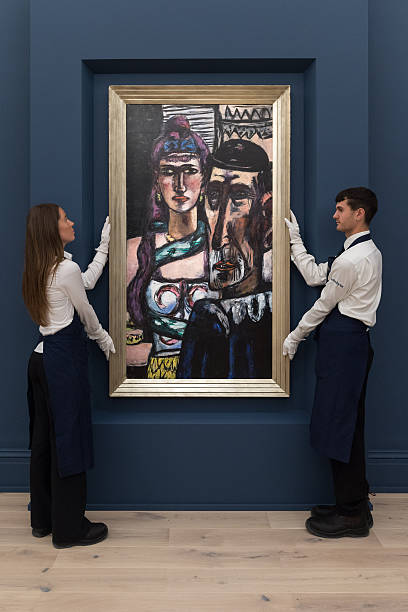
Beyond physical texture, Expressionism shattered traditional color theory. Abandoning the usual color and natural hue an object possesses in realistic light, artists liberated color to serve a purely emotional and symbolic function. Inspired by color theories developed within Der Blaue Reiter, hues were assigned distinct psychological weights. A face might be rendered in sickly, acidic greens to denote moral decay or inner sickness, while a street scene might be saturated with clashing reds and purples to provoke an instinctive feeling of hostility or spatial disorientation. By intentionally pairing complementary colors in harsh, unblended juxtapositions, artists created visual dissonance that made their canvases physically demanding to view.
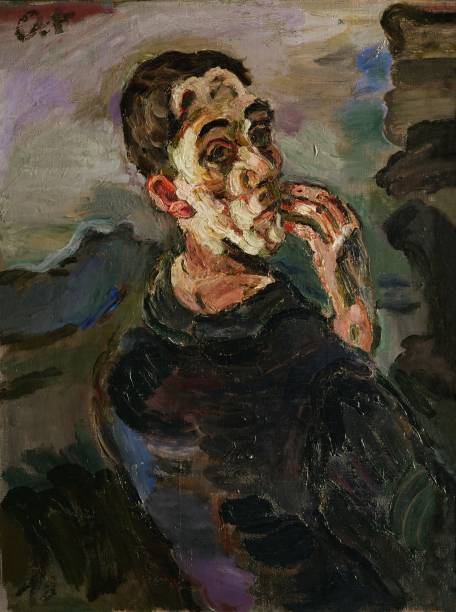
Furthermore, Expressionists completely reworked spatial composition and human anatomy to amplify feelings of claustrophobia and existential dread. Spatial perspective was deliberately flattened or tilted forward, stripping the viewer of a stable vanishing point and forcing them directly into the scene’s emotional atmosphere. Human figures were systematically distorted, elongated, or reduced to sharp, angular geometric forms that mirrored the harshness of an increasingly mechanized world. Facial features were often simplified into mask-like expressions, stripping away individual identity to symbolize the universal human experience of alienation, isolation, and psychological vulnerability in a modernizing society.
The Lasting Legacy
Though Expressionism as a formal era was relatively brief, its impact remains immense. By proving that art did not need to follow strict academic rules or serve purely aesthetic purposes, Expressionist artists liberated future generations. They fundamentally proved that art’s highest calling is to evoke genuine feeling and reflect the complex human spirit.
References
- Munch, Edvard.The Diary of Edvard Munch. Primary source writings detailing the emotional origins of early Expressionist imagery.
- Kandinsky, Wassily.Concerning the Spiritual in Art (1911). A primary theoretical text explaining the psychological and spiritual impact of color and non-objective painting.
- Elger, Dietmar.Expressionism: A Revolution in German Art (Taschen, 2002). Historical analysis covering Die Brücke, Der Blaue Reiter, and post-WWI art developments.
- Academy of Fine Art. Expressionism – An Era without Rules. Historical overview of early 20th-century German Expressionism, socio-political backdrops, and key representatives.