
Why Indian Contemporary Art Is Gaining Global Attention Without Losing Its Roots
There’s a tendency in the art world to describe certain regions as “emerging” when they begin receiving international attention. Indian contemporary art has often been placed in that category. But that label no longer feels accurate.
What is happening today is not a gradual rise; it is a recalibration. The global art ecosystem is expanding its lens, and in doing so, it is recognising a body of work that has long existed with depth, complexity, and independence.
Indian contemporary art is not trying to catch up with the world. It is offering the world a different way of seeing.
The Shift Is Not About Visibility, It’s About Relevance
For years, inclusion in international exhibitions was seen as a marker of success for artists outside Western art centres. Today, that dynamic is evolving.
Indian artists are no longer being featured simply to represent geographic diversity. Their work is being engaged with, critically discussed, collected, and curated for its conceptual strength.
This distinction matters. Visibility can be temporary. Relevance reshapes conversations.
What’s striking is that many of these works do not attempt to universalise themselves in obvious ways. Instead, they remain specific: culturally, emotionally, and historically. And paradoxically, that specificity is what allows them to resonate across borders.
A Different Relationship With Time
One of the more subtle qualities that sets Indian contemporary art apart is how it engages with time.
In many global art practices, there is a strong emphasis on the present moment, responding to current events, trends, or socio-political shifts in real time. Indian artists often operate differently. Their work tends to exist across multiple timelines at once.
A single composition might carry references to ancient mythology, colonial history, and contemporary urban life, all without feeling fragmented.
This layered temporality creates a viewing experience that is less immediate but more immersive. It asks the viewer not just to look, but to spend time decoding.
For collectors and curators, this adds a different kind of value, one that unfolds gradually rather than instantly.
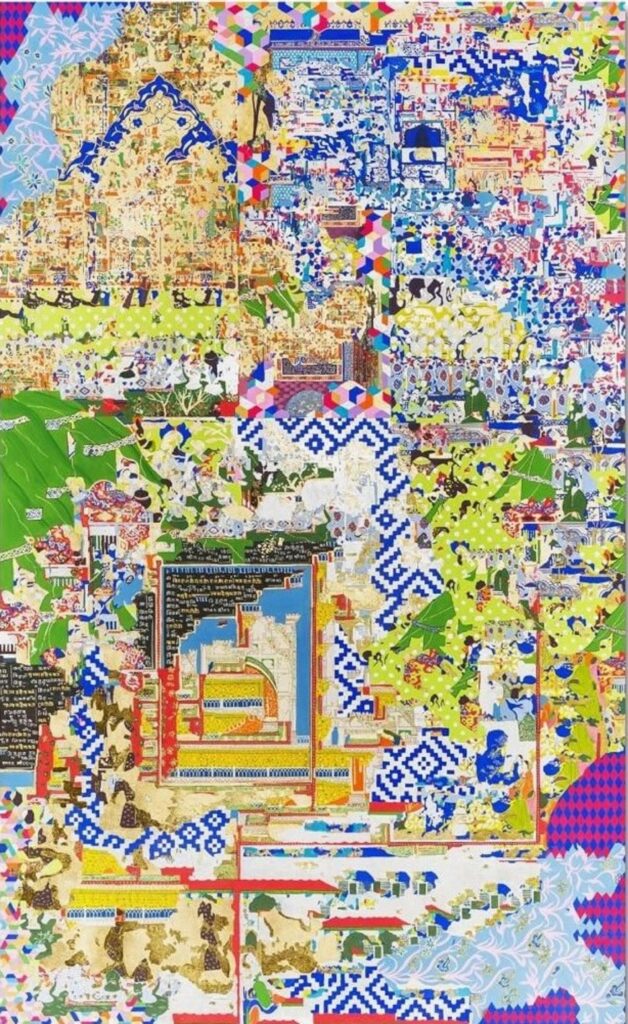
Material Is Not Just Medium, It’s Memory
In many contemporary practices globally, material experimentation is often tied to innovation: new technologies, new surfaces, new techniques.
Indian artists certainly experiment, but the choice of material frequently carries additional meaning.
Textiles, handmade paper, natural pigments, found objects- these are not just aesthetic decisions. They often connect the work to specific regions, crafts, or histories.
Even when artists use industrial or digital mediums, there is often an underlying dialogue with traditional practices. The result is not nostalgia, but continuity.
This approach challenges a common assumption in contemporary art that progress requires detachment from the past. In the Indian context, progress often includes reinterpretation rather than rejection.
Urban India as a Complex Muse
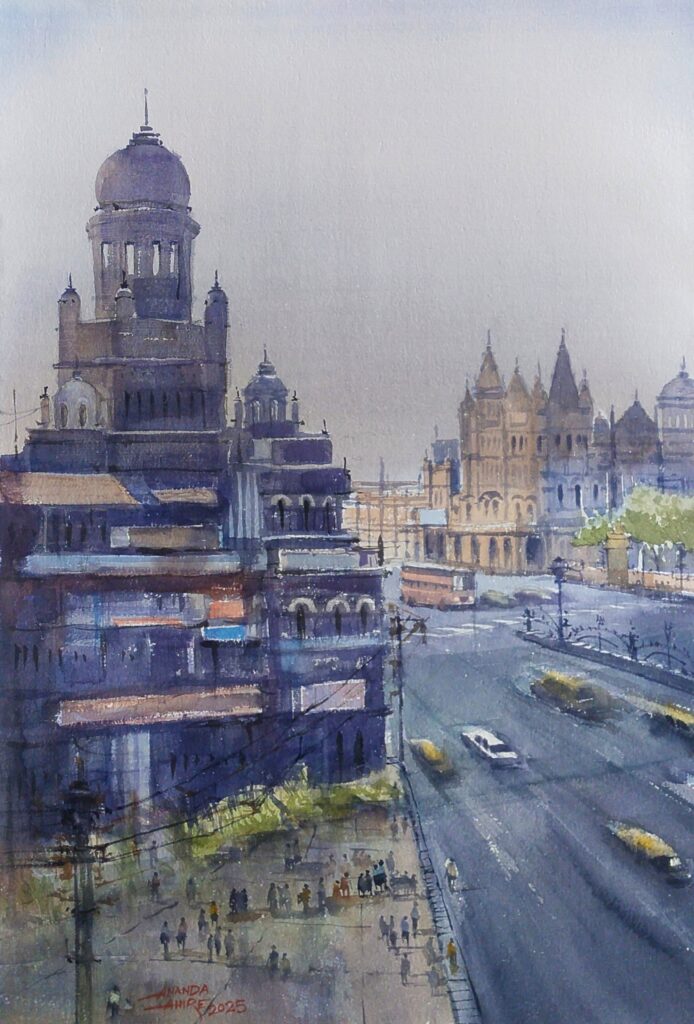
A significant portion of contemporary Indian art draws from the experience of rapidly changing cities.
But unlike conventional urban art narratives that focus solely on expansion or modernity, Indian artists often highlight contradiction.
Cities are depicted as spaces where tradition and transformation coexist, where informal economies operate alongside global infrastructure, where sacred rituals take place in hyper-modern environments.
This duality becomes a recurring visual language. It reflects a society negotiating multiple identities at once, rather than moving linearly from one state to another.
For international audiences, these works offer insight into a kind of urban experience that differs from Western models of development. It is less about replacement and more about layering.
The Personal Is Deeply Cultural
In many contemporary art movements, there has been a strong emphasis on personal narratives: identity, memory, and individual experience.
Indian artists engage with these themes as well, but often through a collective lens.
Personal stories are rarely isolated. They are shaped by language, community, religion, and social structures. Even introspective works tend to carry traces of shared experience.
This creates a different kind of intimacy. The work feels personal, but not private. It invites connection rather than observation.
For collectors, this quality can be particularly compelling. The artwork becomes a bridge between individual perspective and cultural context.
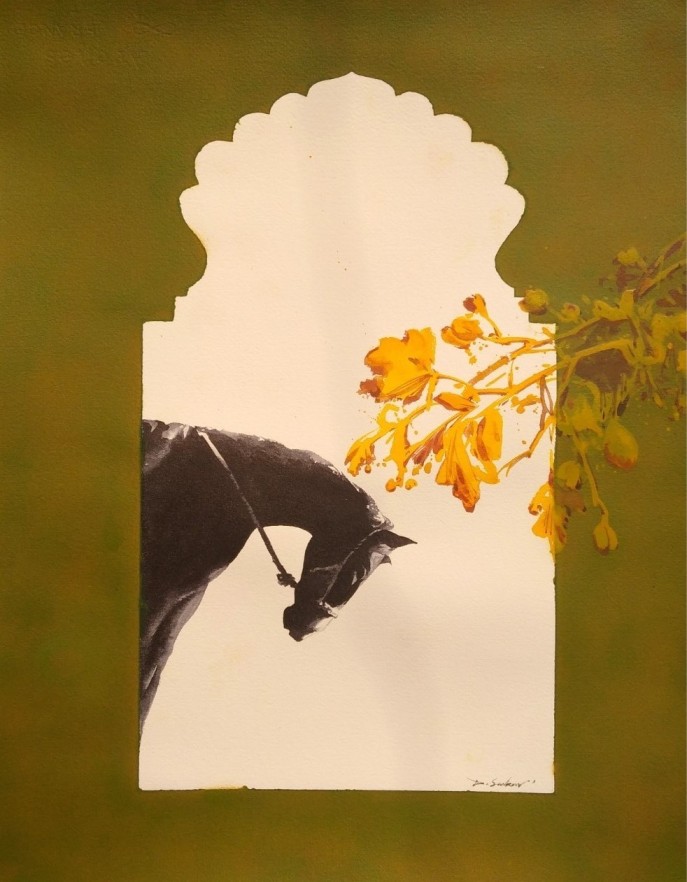
Why Global Collectors Are Paying Attention Now
The growing interest in Indian contemporary art is not happening in isolation. It reflects broader changes in how art is being consumed and valued.
Collectors today are increasingly moving away from purely aesthetic acquisition. There is a desire for work that offers depth: intellectual, cultural, and emotional.
At the same time, there is a noticeable fatigue with homogenization. As global art markets expanded, certain visual languages became dominant, leading to repetition.
Indian contemporary art offers an alternative. It brings diversity not just in style, but in thought.
This does not mean every work is rooted in tradition or cultural symbolism. But even the most abstract or experimental pieces often carry an underlying sensibility shaped by context.
That subtle difference is enough to shift perception.
The Role of Access in Changing Perception
Another factor that cannot be ignored is accessibility.
A decade ago, discovering Indian artists required physical proximity, visiting galleries, attending regional fairs, or relying on limited international representation.
Today, digital platforms have removed many of those barriers.
Collectors can explore portfolios, understand artistic processes, and make informed decisions from anywhere in the world. This has democratised not just access, but awareness.
Importantly, this visibility has not forced artists to dilute their work for a global audience. If anything, it has encouraged greater authenticity.
When artists know that their work can reach viewers directly, without multiple layers of mediation, there is more freedom to stay true to their vision.
Beyond Categories and Labels
One of the challenges in discussing Indian contemporary art is the tendency to categorise it too neatly by region, by style, by influence.
In reality, the movement resists simple classification.
Artists working in metropolitan centres may engage with entirely different themes than those in smaller towns. Some may draw heavily from classical traditions, while others operate in purely conceptual frameworks.
What connects them is not a unified aesthetic, but a shared willingness to navigate complexity.
This diversity is not a limitation. It is precisely what makes the landscape so dynamic.
For global audiences, it requires a shift in approach from trying to define the movement to experiencing it in parts.
The Quiet Confidence of Today’s Artists
Perhaps the most defining characteristic of this moment is confidence.
There is less urgency to align with global expectations, and more emphasis on developing individual voices.
This confidence is not loud or declarative. It is visible in the choices artists make, what they include, what they leave out, and how they position their work.
It also reflects a broader cultural shift. As India asserts itself in various global arenas- economic, technological, creative- its artistic community is doing the same.
The result is work that feels assured without being rigid, experimental without being disconnected.
What This Means for the Future
If current trends continue, Indian contemporary art will not just occupy more space in the global market; it will influence how that market evolves.
It challenges certain long-held assumptions:
- That innovation must look a certain way
- That cultural specificity limits global appeal
- That tradition and contemporaneity exist in opposition
By quietly dismantling these ideas, Indian artists are contributing to a more expansive definition of what contemporary art can be.
For collectors, this presents an opportunity not just to invest, but to engage with a body of work that is still unfolding.
A Different Kind of Global Presence
What makes this moment particularly interesting is that Indian contemporary art is not losing itself in the process of becoming global.
There is no clear shift toward uniformity. No overwhelming pressure to conform.
Instead, the movement seems to be expanding outward while remaining anchored.
This balance is not easy to achieve. Many art forms, when exposed to global markets, gradually adapt to dominant tastes.
Indian contemporary art, at least for now, appears to be doing the opposite. It is inviting the world to slow down, to look closer, to engage more deeply.
And that may be its most powerful contribution.
Closing Thought
The global attention surrounding Indian contemporary art is not a trend; it is a response.
A response to work that feels grounded yet exploratory, specific yet open-ended.
As more collectors, curators, and audiences engage with it, the conversation is likely to evolve further. But one thing is already clear:
This is not a story about arrival.
It is a story about recognition: long overdue, and still unfolding.
FAQs
1. Why is Indian contemporary art gaining global attention?
Because it blends modern themes with strong cultural identity, offering a unique and authentic perspective.
2. Who are contemporary Indian artists?
They are artists working in the present day who explore current ideas while often drawing inspiration from Indian traditions.
3. How does it differ from traditional Indian art?
Traditional art follows established forms, while contemporary art experiments with new styles, materials, and interpretations.
4. Is it a good investment?
Many collectors see strong potential due to increasing global demand and recognition.
5. Where can I explore Indian contemporary art online?
Platforms like Mojarto offer curated access to a wide range of artworks and artists.