
There is something quietly powerful about Indian art. It does not always reveal itself at first glance. You may notice a vibrant palette, intricate patterns, or divine figures, but beneath that visual richness lies a deeper language. A language made of symbols. These symbols are not accidental. They are deliberate, layered, and rooted in centuries of cultural memory.
For collectors, art enthusiasts, and curious viewers, understanding Symbolic elements in Indian artworks opens up an entirely new way of seeing. It turns observation into discovery. It transforms a painting into a conversation that stretches across time.
This blog explores how Indian artists have embedded meaning into the smallest details, why those details matter, and how recognising them can deepen your connection with art.
Why Symbolism Matters in Indian Art
Indian art has always been more than decorative. From temple murals to miniature paintings, from folk traditions to contemporary canvases, art in India has carried stories, beliefs, and philosophies.
Unlike surface-level aesthetics, Indian art symbolism invites the viewer to pause and interpret. A lotus is never just a flower. A peacock is not simply a bird. Even colours and gestures carry intention.
This symbolic approach has its roots in ancient texts, spiritual traditions, and regional narratives. Artists were not merely painters. They were storytellers, philosophers, and observers of life.
For today’s audience, this creates a richer experience. When you begin to notice Hidden symbols in Indian art, the artwork becomes more than something to look at. It becomes something to feel and understand.
The Language of Symbols: Where Meaning Begins
To truly appreciate Indian art, one must learn to see beyond the obvious. Symbols often appear in recurring forms, each carrying its own significance.
The Lotus
One of the most recognised symbols, the lotus represents purity, enlightenment, and rebirth. It grows in muddy water yet blooms untouched by it. In paintings of deities like Lakshmi or Saraswati, the lotus signifies spiritual elevation and inner beauty.
The Peacock
Often associated with grace and beauty, the peacock also represents pride, love, and immortality. In certain contexts, it is linked to monsoon and fertility.
The Elephant
A symbol of strength, wisdom, and royalty, the elephant frequently appears in both religious and royal themes. In many artworks, it signifies power balanced with intelligence.
The Fish
In several Indian traditions, fish symbolise prosperity and abundance. They are also associated with life and fertility.
These are just a few examples. What makes Indian art fascinating is how these symbols shift slightly in meaning depending on region, context, and artistic style.
Hidden Narratives in Traditional Paintings
When exploring Symbolic details in Indian paintings, one quickly realises that every inch of the canvas can hold meaning.
Take miniature paintings from Rajasthan or Mughal courts. At first glance, they depict royal life or romantic scenes. But look closer.
A flowering tree in the background may indicate the season or emotional tone of the scene. A specific bird perched nearby might symbolise longing or communication. Even the positioning of figures can reflect hierarchy, intimacy, or tension.
Similarly, in Pattachitra or Madhubani art, patterns are never random. Repeated motifs often represent cycles of life, protection, or divine presence.
This layered storytelling is what gives rise to Hidden meanings in Indian art. It rewards patience. The more time you spend with a piece, the more it reveals.
Symbolism in Indian Folk Art
Indian folk art carries symbolism in its most vibrant and accessible form. Rooted in rural traditions and community practices, these artworks reflect daily life, rituals, and beliefs.
Madhubani Art
Originating from Bihar, Madhubani paintings are known for their bold colours and intricate patterns. Fish, peacocks, and the sun frequently appear, each symbolising fertility, love, and energy. The use of double lines and filled patterns often represents protection and continuity.
Warli Art
From Maharashtra, Warli paintings use simple geometric forms to depict human life and nature. Circles, triangles, and lines are not just shapes. They represent cosmic balance, human connection, and the rhythm of life.
Gond Art
Gond artists use dots and lines to create detailed forms of animals, trees, and deities. These elements often symbolise harmony between humans and nature.
In these traditions, Symbolism in traditional Indian art is not hidden in complexity. It is woven into everyday expression. It reflects a worldview where nature, spirituality, and community are deeply connected.
Colours That Speak Without Words
Colour plays a crucial role in conveying meaning in Indian art. It is rarely chosen for aesthetic appeal alone.
Red often symbolises passion, power, and auspiciousness. It is frequently used in depictions of weddings or divine energy.
Yellow represents knowledge, learning, and happiness. It is commonly associated with spring and spirituality.
Blue is linked to divinity and the infinite. Many depictions of Krishna and Vishnu feature blue tones to represent their cosmic nature.
Green signifies life, growth, and renewal.
Black, while sometimes associated with negativity, can also represent protection and the unknown.
Understanding colour symbolism adds another layer to interpreting Symbolic elements in Indian artworks. It helps decode the emotional and spiritual tone of a piece.
Gestures and Postures: Silent Storytelling
In Indian art, body language carries as much meaning as objects and colours.
Hand gestures, known as mudras, are especially significant in depictions of deities and classical dance-inspired art. Each mudra conveys a specific message.
A raised hand with the palm facing outward often represents protection and reassurance. A hand pointing downward may symbolise generosity or blessing.
Postures also matter. A relaxed seated position can indicate calmness and meditation, while dynamic poses may represent action or divine intervention.
These subtle cues contribute to the broader narrative, enriching the viewer’s understanding of Hidden symbols in Indian art.
Nature as a Symbolic Framework
Nature is deeply embedded in Indian artistic expression. Trees, rivers, animals, and celestial elements are not just background details. They are active participants in the story.
The banyan tree often symbolises longevity and wisdom. Rivers like the Ganga represent purity and life. Mountains can signify stability and spiritual ascent.
Animals, too, carry layered meanings. Cows represent nurturing and abundance. Lions symbolise courage and authority. Snakes can represent both danger and transformation.
By observing these elements, viewers can uncover Hidden meanings in Indian art that might otherwise go unnoticed.
Contemporary Interpretations of Symbolism
Modern Indian artists continue to draw from traditional symbolism while reinterpreting it for today’s context.
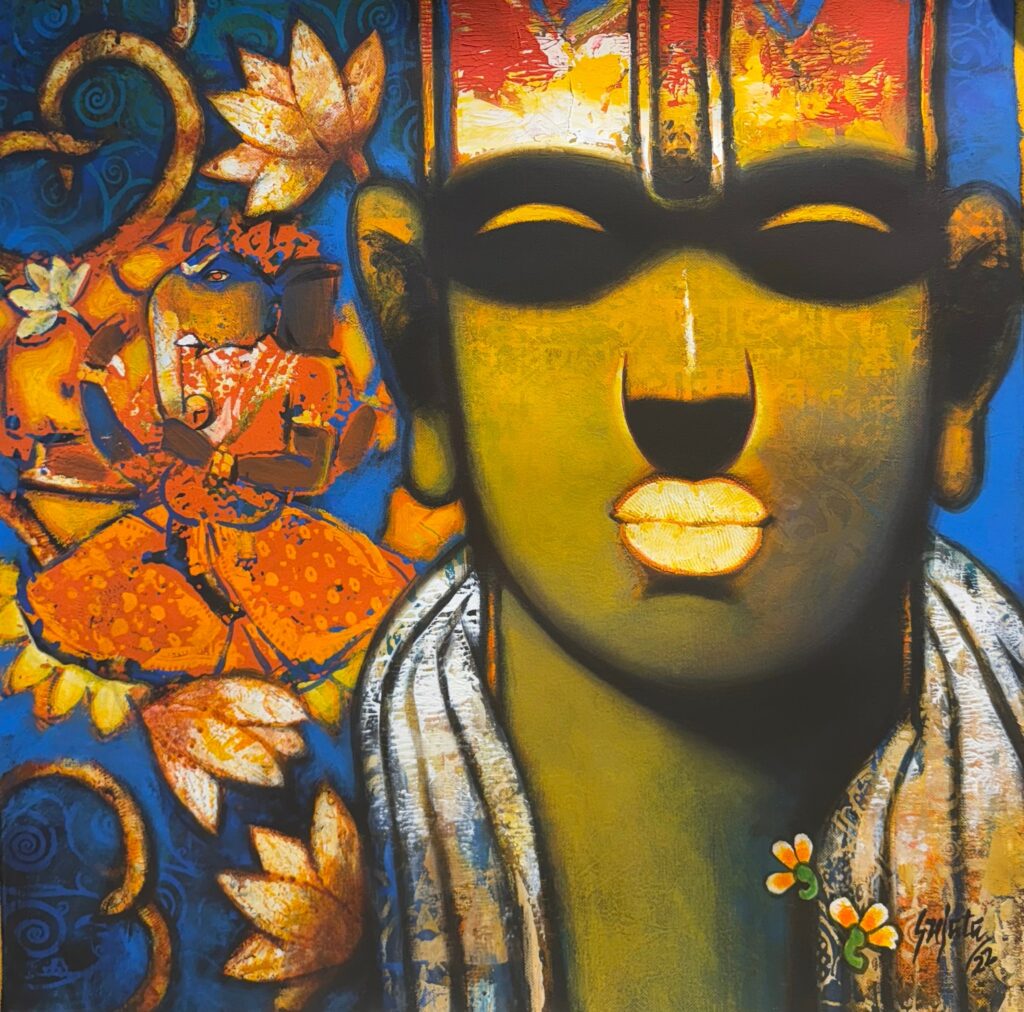
A lotus might appear in a contemporary painting not just as a spiritual symbol but as a reflection of resilience in modern life. Urban elements may be blended with traditional motifs to comment on cultural transitions.
This evolution keeps Indian art symbolism relevant. It bridges the past and present, allowing new audiences to connect with age-old ideas in fresh ways.
For collectors and buyers, this makes contemporary Indian art particularly compelling. It offers both aesthetic appeal and intellectual depth.
Why Symbolism Enhances the Value of Art
From a sales and marketing perspective, symbolism adds intangible value to an artwork.
When a piece carries meaning, it becomes more than a decorative object. It becomes a conversation starter, a reflection of identity, and a source of inspiration.
Buyers today are looking for authenticity and connection. Understanding Symbolic elements in Indian artworks allows them to make more informed and meaningful choices.
For platforms like Mojarto, this creates an opportunity to engage audiences not just through visuals but through stories. When viewers understand the symbolism behind a piece, they are more likely to connect with it emotionally.
Building a Deeper Connection with Art
Art appreciation is a personal journey. The more you learn, the more you see.
Start by spending time with a piece. Notice the details. Ask questions. What do the colours suggest? What might the objects represent? How do the figures interact?
Over time, patterns begin to emerge. You start recognising recurring symbols. You begin to understand the language of the artwork.
This process transforms passive viewing into active engagement. It allows you to experience the richness of Symbolic details in Indian paintings in a more profound way.
The Mojarto Perspective
At Mojarto, art is not just curated. It is contextualised. Each artwork carries a story, and often, that story is told through symbols.
By bringing together a diverse range of Indian artists and styles, Mojarto offers viewers an opportunity to explore the depth of Indian art in all its forms.
Whether you are drawn to traditional motifs or contemporary interpretations, understanding Symbolic elements in Indian artworks can enhance your journey.
It allows you to see beyond the surface and connect with the essence of the piece.
Final Thoughts
Indian art is a universe of meaning waiting to be explored. Its beauty lies not just in what is visible but in what is implied.
The smallest details can carry the deepest messages. A flower, a colour, a gesture, or a pattern can open doors to history, culture, and philosophy.
By paying attention to these elements, you begin to uncover the richness of Hidden symbols in Indian art. You move from simply looking at art to truly experiencing it.
In a world that often values speed and surface, Indian art invites you to slow down. To observe. To interpret. To connect.
And in doing so, it offers something rare. A sense of meaning that stays with you long after you have looked away.