
There is something unforgettable about watching an artist bring an animal to life on canvas. A single brushstroke can capture the alertness in a deer’s eyes, the stillness of a prowling leopard, or the calm power of an elephant crossing a forest trail. In a country as rich in biodiversity as India, it feels natural that Indian wildlife has become one of the most loved themes for collectors and art lovers. The growing interest in indian wildlife paintings is not a trend that arrived overnight. It comes from a deep cultural relationship with nature, one that stretches across centuries of storytelling, folklore, and visual tradition.
At Mojarto, this relationship takes a vibrant shape through the works of artists who see animals not just as subjects but as characters with energy, emotion, and presence. Their canvases often feel like windows to wild landscapes where humans rarely step. For many collectors, this category of art becomes a way to stay connected with forests, grasslands, and rivers that are slowly disappearing from daily life. It transforms walls into spaces that breathe with movement and colour.
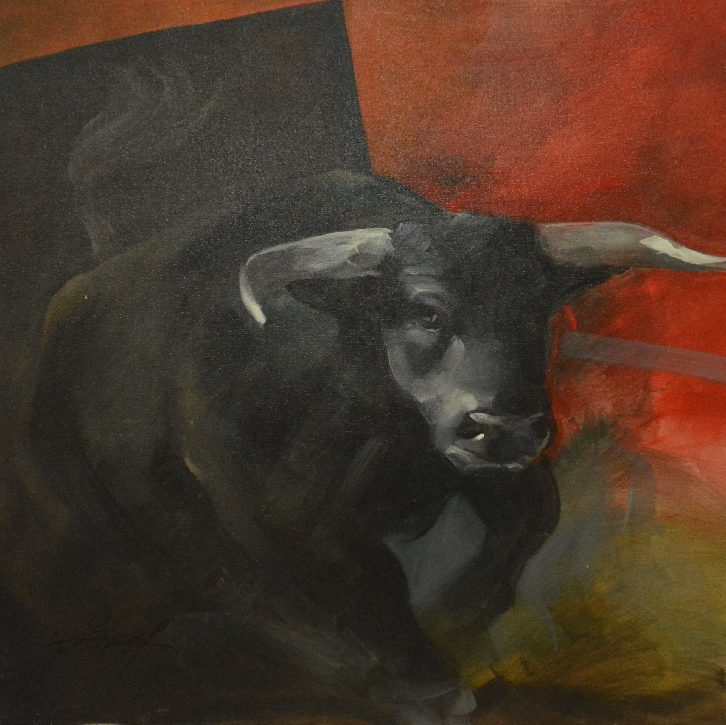
Bull (Indian Wildlife) By Gopal Sharma
A Long History of Animals in Indian Art
Before modern studios and galleries existed, animals played an important role in Indian creative expression. They appeared in cave paintings, temple carvings, textiles, manuscripts, and folk narratives handed down through generations. This legacy continues today through traditional Indian animal art, which still influences many of the pieces seen on Mojarto.
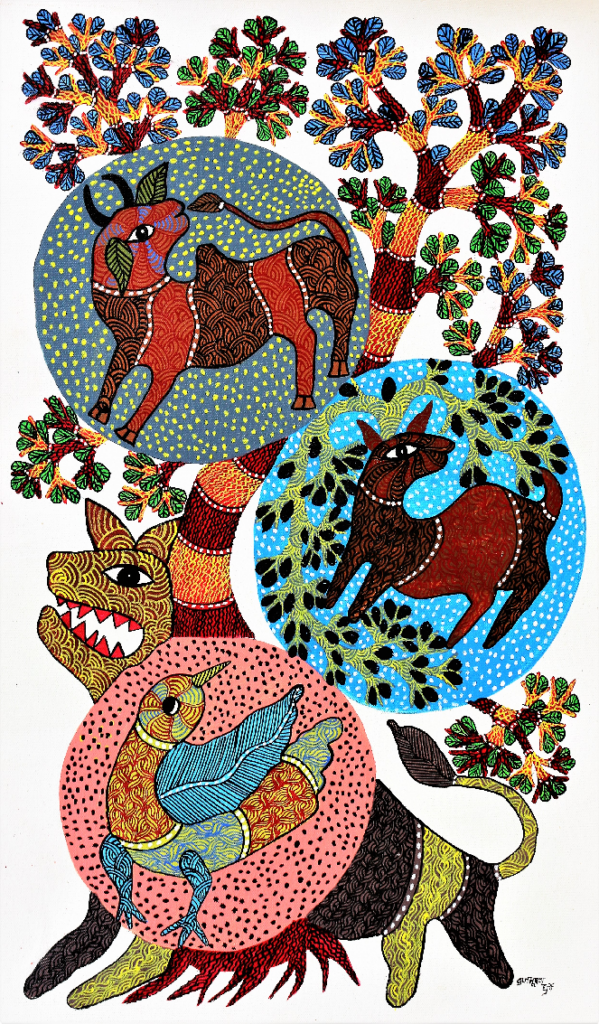
Each region has its own style of interpreting wildlife. Artists from central India may depict tigers through rhythmic line work, while painters from eastern India portray elephants with ornate patterns. These expressions are not just decorative. They reflect the beliefs, rituals, and ecological realities of each community. When these traditional voices meet modern sensibilities, something entirely new begins to take shape. This is where the story of contemporary Indian wildlife painting begins.
Contemporary Wildlife Art and Its Growing Audience
Many collectors today want artwork that feels rooted in Indian identity but still carries a fresh and modern personality. Wildlife art fits this perfectly. It brings a sense of place and authenticity, while also offering room for experimentation in technique, composition, and colour.
A growing number of Indian wildlife artists focus on themes that speak to both nostalgia and modern relevance. They portray species people grew up hearing about in stories. They highlight animals that define India’s natural heritage. Sometimes, they even blend realism with abstraction to spark curiosity and conversation.
When looking at these paintings, viewers often recognise the influence of nature-based storytelling. They also notice the shift happening in the way animals are represented. Artists today use wildlife not only as a symbol of beauty but also as a way to reflect emotion, movement, and even the fragility of ecosystems.
Collectors appreciate this shift. They like artwork that brings quiet energy into a room. They like pieces that hold a story even without words. These are the qualities that make Indian wildlife art so desirable for living spaces, workspaces, and personal collections.
Why Wildlife Connects So Deeply with Collectors
Most people have fond memories tied to nature. A childhood trip to a national park, a school project featuring the Bengal tiger, a peacock sighting on a monsoon morning, or even a distant fascination with forests and rivers that feel out of reach today. Wildlife-themed art revives these personal memories.
The presence of animals in a space creates an emotional anchor. A painting of a tiger can add a sense of strength and quiet confidence. A pair of cranes can bring calm. A vibrant peacock can add a festive mood to a room. The meaning of each piece changes with the viewer, which is one reason wildlife art appeals to a wide audience.
On Mojarto, you’ll find works that capture the boldness of predators, the grace of birds, the playfulness of primates, and the mystery of nocturnal species. Each artwork shows the artist’s interpretation rather than a literal representation. This freedom gives wildlife art a unique character. It also aligns perfectly with the tastes of modern collectors who want their spaces to reflect their personality rather than be predictable.
The Art of Technique: How Artists Bring Wildlife to Life
Animals are not easy to paint. Their movements are fast. Their expressions change with the slightest turn of the head. Their fur, feathers, and textures demand precision, observation, and patience. Artists who specialise in wildlife study these details extensively. Many spend hours sketching, travelling to national parks, observing behaviour, or using reference material that helps them understand posture, shadow, light, and anatomy.
Some artists prefer realism, capturing every detail of a tiger’s coat or a bird’s wingspan. Others follow Indian wildlife animal illustration styles that highlight patterns, symbols, and the relationship between animal and environment. This range of artistic interpretation gives wildlife art enormous diversity.
Whether traditional or modern, each technique reflects the artist’s experience with the natural world. These elements combine to create the distinct visual richness that defines Indian wildlife on canvas today.
Indian Fauna: A Treasure Trove of Inspiration
India is home to species found nowhere else on the planet. This diversity gives artists an endless selection of subjects. The most popular themes include:
- The Bengal tiger, a favourite for collectors who appreciate intensity and striking visual impact
- Elephants, symbolising wisdom and emotional depth
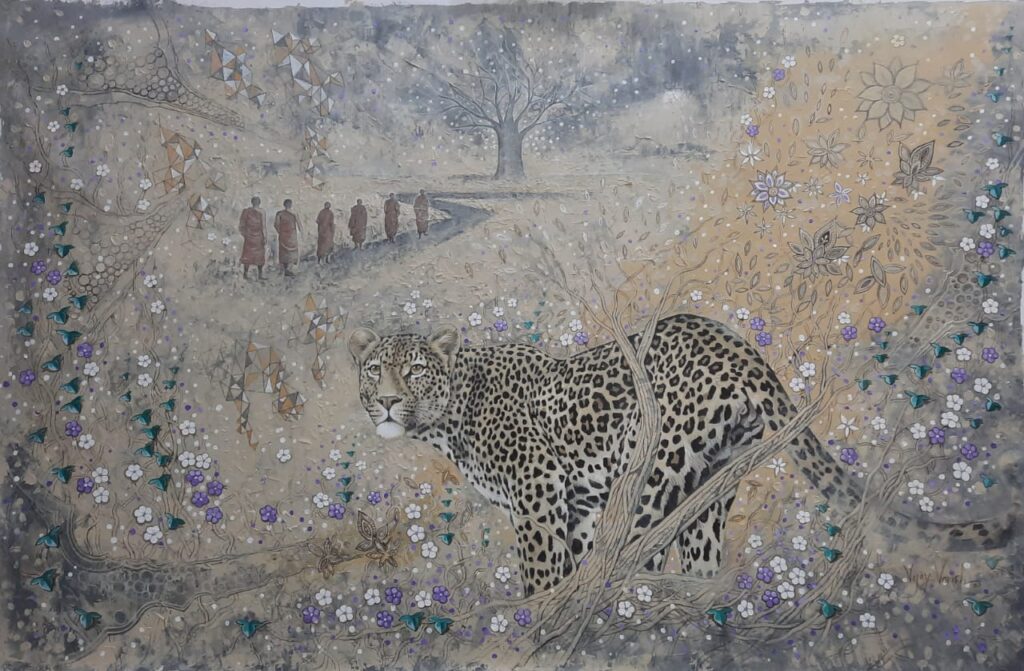
- Leopards and black panthers, which bring a sense of drama and mystery
- Birds such as peacocks, hornbills, eagles, and bulbuls
- Marine species from coastal regions
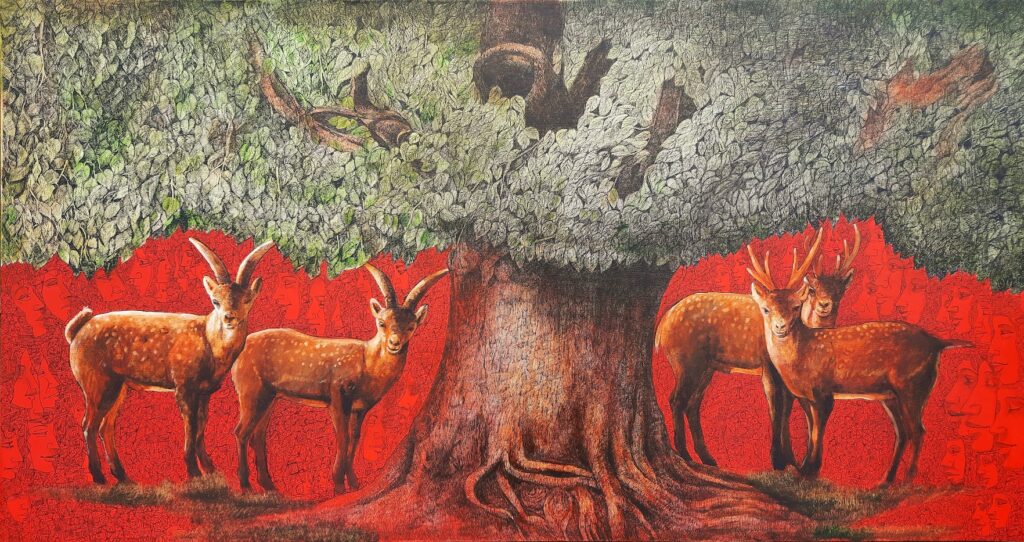
- Deer, antelope, and herbivores are painted in calm or pastoral settings
Including Indian fauna in art allows artists to bring segments of the country’s natural heritage into indoor spaces. For buyers, it becomes a way to reconnect with the landscapes they cherish.
Wildlife as Narrative: The Emotional Story Behind Each Canvas
Great wildlife art does more than depict an animal. It creates a story, even if the viewer is encountering it for the first time. One canvas may show a tiger emerging from the shadows. Another may feature a flock of birds rising over a wetland at dusk. A third might portray an elephant mother guiding her calf along a riverbank.
These moments feel intimate because they reflect scenes that are rarely seen closely in real life. The canvas becomes a storyteller. The animal becomes a protagonist. And the viewer becomes part of the scene.
This is the charm of animal art in India. It does not rely on loud colours or heavy symbolism. Instead, it draws audiences into a deeper relationship with nature.
How Wildlife Art Enhances a Living Space
People choose Indian wildlife art for many reasons. Some want a bold focal point. Others want a calm and earthy atmosphere. Many want a piece that reflects personal values, such as love for nature or admiration for a particular species.
Indian Wildlife art fits easily into spaces because it feels timeless. It blends with minimal, traditional, rustic, or modern interiors. It can stand alone or become part of a larger collection. Its themes are universal, yet deeply rooted in Indian identity.
Mojarto’s curated selection allows collectors to explore these possibilities with confidence. Each piece is chosen for its artistic quality, storytelling, and authenticity. For many buyers, discovering Indian wildlife-inspired art becomes a journey in itself. They explore genres, styles, and regions they may not have known before.
Why Mojarto Is a Trusted Destination for Indian Wildlife Art
Mojarto brings together some of India’s most talented Indian wildlife painters. Each artist has a distinct voice, and each artwork carries a level of sincerity that is becoming rare in mass-produced prints found in commercial markets.
Collectors appreciate Mojarto because they can explore art that is meaningful, original, and crafted with care. Whether someone is looking for a piece that celebrates a favourite species or wants to express a deeper connection with Indian landscapes, the platform offers pieces that resonate emotionally as well as aesthetically.
This makes Mojarto an important space for anyone interested in supporting artists and bringing wildlife stories into their homes.
A Final Thought
When animals move from forests to canvas, they don’t lose their spirit. They continue to remind us of the world beyond our walls. They remind us that India’s natural heritage is rich, alive, and full of beauty. And through art, these stories continue to live, inspire, and connect us across generations.
For collectors and art lovers, Indian wildlife art becomes more than décor. It becomes memory, emotion, and identity. It becomes a celebration of nature in its purest form.
If you are drawn to the charm of Indian fauna, the energy of wild landscapes, or the quiet power of animal stories, Mojarto offers a thoughtful collection of Indian wildlife art that speaks to every taste and sensibility.
Explore the artwork, discover new artists, and let your walls come alive with the spirit of the wild.