
Across India, art has always lived close to everyday life. It has appeared on mud walls during harvest season, on the floors of courtyards during celebrations, on household tools, and on the ceilings of temples. These village art traditions that India continues to nurture hold stories that pass from one generation to the next. Today, these very stories have found a fresh vocabulary on modern canvases. They have shaped a wave of contemporary Indian art that blends handcrafted heritage with present-day imagination.
For anyone exploring artworks that feel rooted yet fresh, this cultural shift has opened a remarkable chapter. At Mojarto, we witness this creative transformation every day as artists reimagine folk narratives with colours, textures, and compositions that feel both familiar and incredibly current.
Why Contemporary Audiences Are Turning Toward Folk-Inspired Visual Language
Art lovers today look for something that feels real and emotionally grounded. Many feel drawn to pieces that remind them of their own histories. Others want artworks that celebrate India’s cultural diversity. Folk-inspired contemporary art has stepped into this need with an honesty that resonates instantly.
Patterns once found on the walls of village homes now appear in curated collections of contemporary Indian art. Tribal art of India, with its symbolic power and rhythmic forms, brings a depth that modern interiors often lack. The raw, hand-drawn quality of Indian folk motifs adds warmth to spaces that feel too polished. Most importantly, these artworks carry cultural memory. They connect the past and present in a way that is not nostalgic, but alive.
The Many Voices Within India’s Folk Heritage
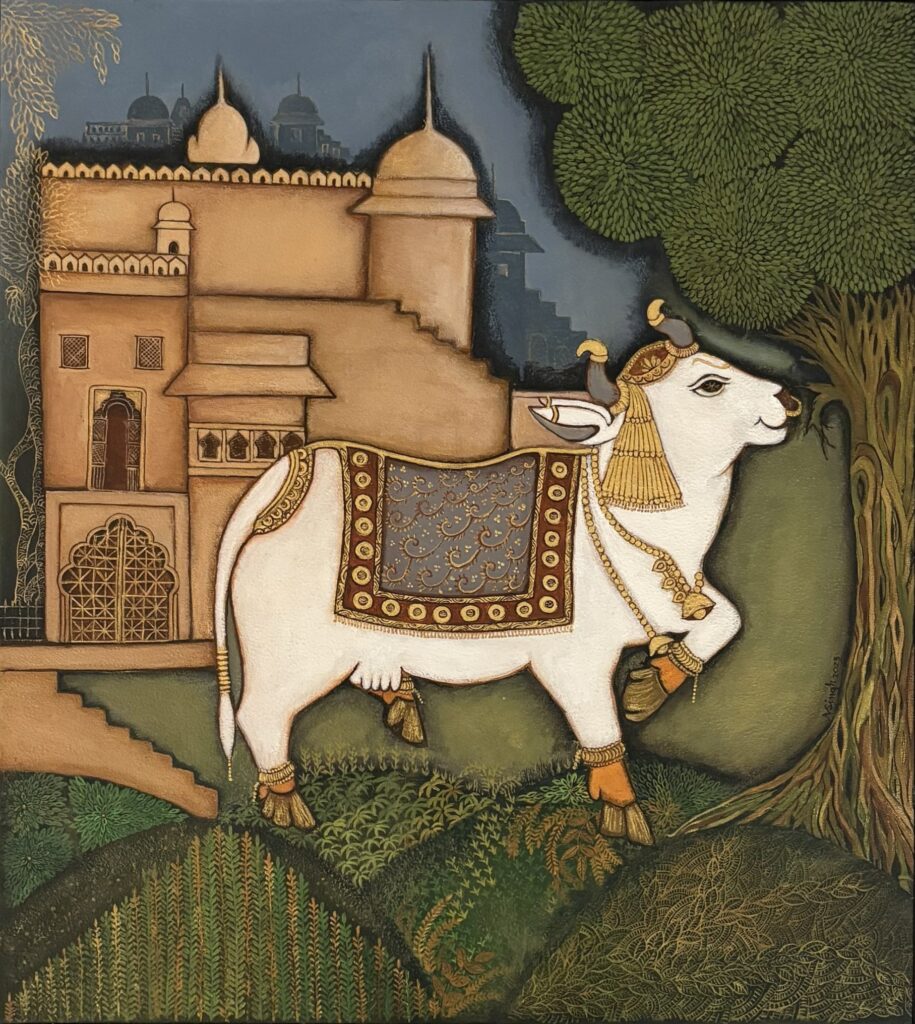
India’s folk and tribal communities have given the world an astonishing variety of visual traditions. Each region has something unique, shaped by climate, soil, local mythology, and way of life. These regional art styles India offers form the backbone of many modern reinterpretations.
Madhubani and the Language of Symmetry
Madhubani, practised primarily in Bihar, is known for its fine lines, bold borders, and devotion to nature and mythology. What began on freshly plastered walls during ceremonies now appears in contemporary settings. Many modern Indian artists reinterpret these elements with softer palettes, layered backgrounds, or experimental compositions that maintain the spirit of the form without repeating the past.
Warli and Its Connection to Community Life
Warli, one of the oldest tribal traditions from Maharashtra, communicates entire life cycles through simple geometric forms. The charm of Warli lies in its ability to turn minimal strokes into powerful narratives. In the hands of present-day creators, Warli has grown into a versatile style that can express themes of urban change, environmental concerns, migration, and even modern social structures.
Gond and its Fluid Storytelling
Gond artists from central India have long painted animals, forests, and daily life with vibrant colours and intricate textures. Their patterns carry a rhythm that feels almost musical. When the style enters the world of contemporary Indian art, artists often retain the signature textures but experiment with scale, abstraction, and unusual colour pairings. The result is an artwork that feels both rooted in Indian folk art and perfectly suited for modern collections.
Pattachitra and the Craft of Fine Detailing
From Odisha and West Bengal comes Pattachitra, known for its bold outlines, delicate shading, and storytelling traditions. Many younger artists reinterpret this technique on canvas, using elements of its fine line work to create modern themes while keeping the essence of the craft intact.
These are only a few examples. India is home to dozens of traditional Indian painting forms, each with its own history and creative vocabulary. The growing interest in these forms has encouraged more artists to revisit their cultural roots.
How Traditional Forms Shape Modern Ideas
One of the most fascinating aspects of this artistic shift is how seamlessly folk practices adapt to contemporary thought. Artists look to the visual codes of the past not to replicate them, but to build something entirely new.
Some incorporate only the patterns. Others borrow the symbolic language. Many explore how simple, rural imagery can comment on modern digital life, social change, or environmental issues. This infusion of heritage into modern storytelling gives contemporary Indian art an authenticity that sets it apart on the global stage.
Certain artists take inspiration from Indian folk motifs but express them through abstract geometry. Others retain figurative elements but change the mood, colour, or framing to fit the pulse of today. This freedom allows a traditional vocabulary to grow in ways that feel natural and not forced.
Why Folk-Inspired Works Speak to Today’s Collectors
People who collect art today often look for pieces that reflect identity, belonging, and cultural depth. Folk-inspired contemporary art fills this space with sincerity.
Collectors appreciate how these works carry centuries of wisdom. The energy of the brushwork feels personal rather than mechanical. The stories are human and relatable. Every motif, whether from Gond, Warli, Madhubani, or any other lineage, carries meaning that goes beyond the surface.
There is also comfort in knowing that these regional styles continue to evolve. Purchasing such artworks supports a legacy that has survived through oral histories, community gatherings, and yearly rituals. When these traditions enter modern spaces, they keep cultural memory alive in a way that feels organic.
The New Role of Artists in Preserving Folk Traditions
Many modern Indian artists feel a responsibility to protect what their grandparents and ancestors passed down. Instead of copying older works, they study the principles behind them. They look at why certain forms existed, how they were used in celebrations, and what each pattern symbolised. Their aim is not imitation but translation.
Through this effort, they create works that feel alive. They preserve the spirit of the regional art styles India has nurtured, while opening doors to new audiences who may not have grown up with these traditions.
Mojarto and the Evolving Appreciation for Folk-Inspired Art
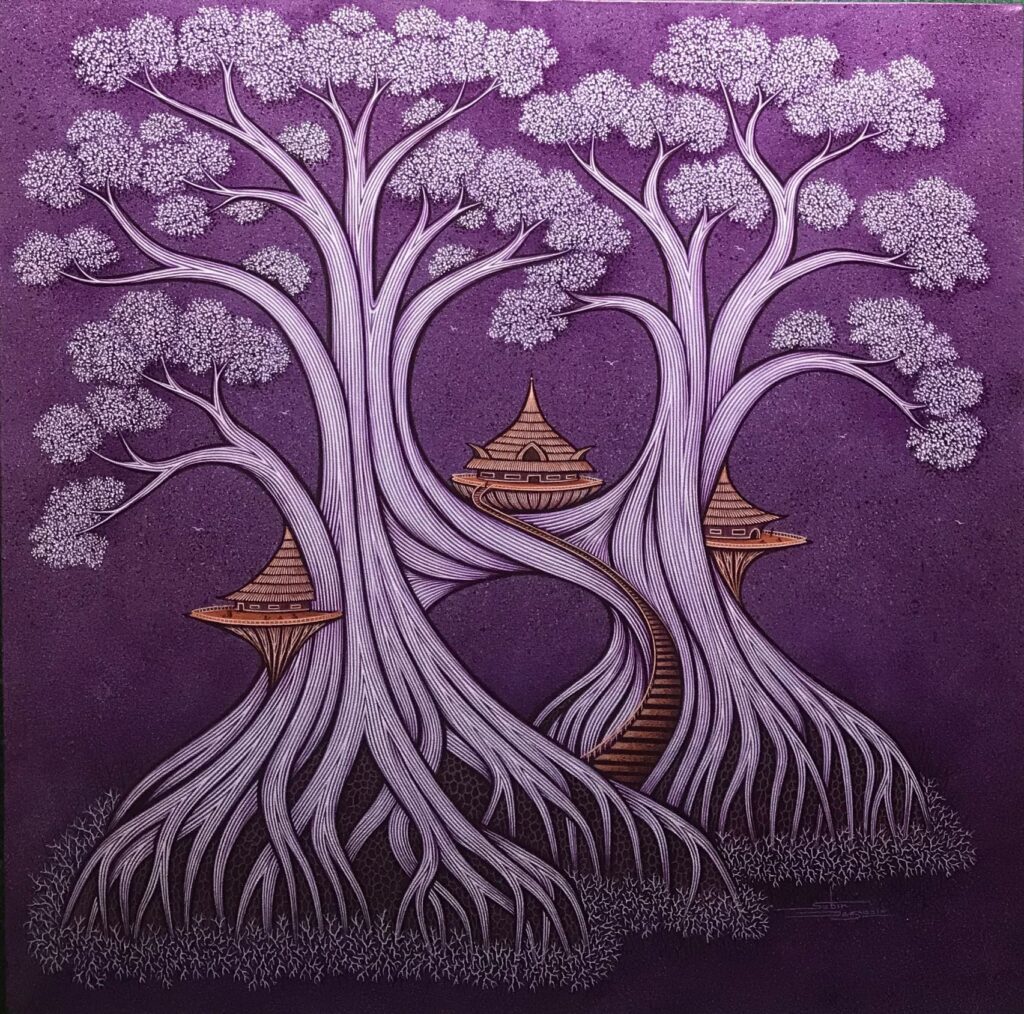
At Mojarto, we have seen a steady rise in interest for artworks that draw from traditional Indian painting forms. Buyers explore themes inspired by village art traditions that India has carried for centuries. They look for pieces that blend heritage with a sense of modern individuality.
Our platform brings together artists who celebrate these cultural roots in meaningful, contemporary ways. Shoppers discover artworks that honour Indian folk art while speaking to the tastes of a new generation. This balance is what makes our collections feel both timeless and relevant.
Whether someone is searching for a bold reinterpretation of Gond textures or a subtle, modern piece inspired by Warli, they can find creators who carry these traditions forward with respect and originality. Mojarto serves as a space where these creative voices can be seen, appreciated, and supported.
A Future Where Tradition and Modernity Stand Together
The conversation between past and present in Indian art is far from over. In fact, it is becoming richer with every passing year. As artists continue to explore different Indian art forms, they bring forward perspectives that keep culture alive in a changing world.
The evolution of folk-inspired styles shows that tradition is not something to preserve in a closed box. It is something that continues to grow through fresh interpretations and new hands.
In this journey, collectors, creators, and platforms like Mojarto all play a part. Together, they contribute to an ecosystem where cultural heritage stays vibrant and continues to inspire.
Contemporary Indian art thrives when it embraces the diversity of its roots. The lines once drawn on village walls now travel across canvases that reach homes across India and beyond. The stories that shaped communities for centuries now find their way into modern conversations.
This is more than a trend. It is a creative awakening. It is a reminder that art evolves, but its heart remains connected to the land and people who first gave it life.