
India remembers through stories. Through songs sung in courtyards. Through rituals whispered at dawn. Through patterns drawn in rice flour at the threshold of a home. Long before cameras and archives, culture lived in repetition. It lived in hands.
Today, many of these living traditions stand at a fragile edge. Urban migration, digital distraction, and changing economies have shifted the rhythm of rural and tribal life. Yet something remarkable is happening at the same time. Across studios in Madhubani, Baroda, Kolkata, Chennai, and countless smaller towns, artists are turning to canvas not merely to create beauty but to safeguard memory.
At Mojarto, this movement is not just observed. It is celebrated and supported. The rise of Cultural memory Indian art is not a passing trend. It is a powerful artistic response to disappearance.
When Memory Becomes a Medium
There was a time when Indian folk and tribal art existed almost exclusively in community spaces. Walls of mud homes in Mithila carried wedding murals. Scroll painters in Bengal sang stories as they unrolled painted narratives. Gond artists illustrated forest cosmologies passed down orally for generations.
Many of these forms were never intended for galleries. They were part of life itself.
But as lifestyles changed, so did the spaces that sustained them. What happens when the mud wall is replaced by cement? When oral storytelling competes with streaming platforms?
This is where the canvas steps in. It becomes a site of translation. It carries not just pigment but inherited wisdom.
The question many collectors now ask is not simply about style or technique. It is about meaning. It is about understanding how Indian artists preserve vanishing traditions on canvas while adapting them to contemporary contexts.
The Quiet Crisis of Vanishing Indian Folk Traditions
India has hundreds of visual traditions rooted in geography, caste histories, spiritual practice, and local ecology. Some are well documented. Many are not.
In regions of Odisha, patachitra painters once depended on temple pilgrimages for livelihood. In parts of Rajasthan, phad paintings narrated heroic ballads that shaped regional identity. In tribal belts of central India, Warli murals marked harvests and marriages.
Today, fewer young practitioners choose to continue these legacies full time. Economic pressures push them toward other careers. Climate change alters raw material availability. Tourist markets sometimes reduce complex traditions into decorative souvenirs.
The result is subtle erosion. Not dramatic extinction, but gradual thinning.
This is why the role of Indian artists preserving traditions becomes urgent. They are not merely repeating inherited motifs. They are documenting worldviews that may otherwise fade.
From Ritual Wall to Contemporary Canvas
A striking feature of contemporary Indian art is how seamlessly it absorbs tradition without fossilising it.
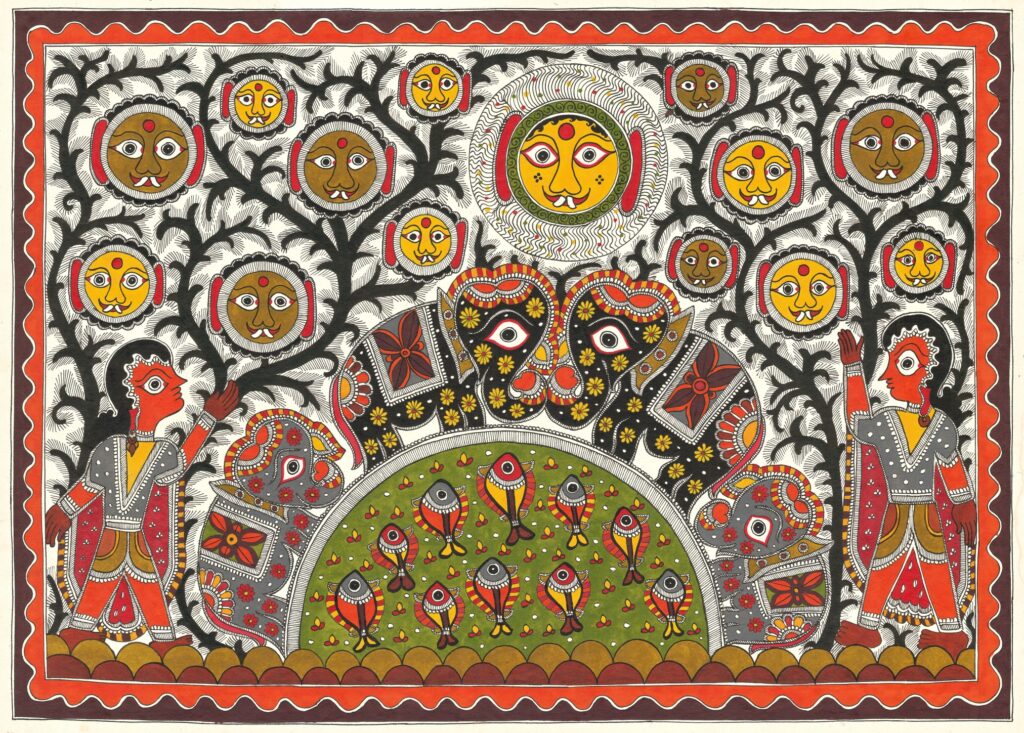
Take the evolution of Madhubani painting. Once limited to ritual wall art in Bihar, it now appears on canvas, paper, and even large-scale installations. Artists maintain iconography of deities, flora, and mythic scenes while experimenting with scale and colour palettes.
Similarly, Gond artists translate forest folklore into intricate dot and line compositions that feel both ancient and modern. Their animals breathe with symbolic life, carrying cosmology into urban homes and international exhibitions.
This dialogue between past and present defines Cultural memory in contemporary Indian paintings. The canvas becomes a meeting ground where ancestral voice and present reality speak together.
Why Cultural Memory Indian Art Matters Today
We live in a time when cultural homogenization feels inevitable. Global aesthetics circulate rapidly. Visual trends travel faster than ever. In such a climate, distinct regional identity becomes both vulnerable and valuable.
Cultural memory Indian art offers more than nostalgia. It offers rootedness.
For collectors and art lovers, owning such work is not about decoration alone. It is about participating in a larger story. It is about recognising that art can carry continuity.
When an artist from a tribal background paints a narrative of seasonal rituals, that painting is not just visual pleasure. It is testimony. When a contemporary painter reimagines folk motifs within urban themes, it becomes a bridge between generations.
At Mojarto, these works find audiences who understand that art can act as an archive.
The Artist as Archivist
Traditionally, archivists worked with manuscripts and documents. Today, many Indian artists serve as living archivists.
They gather oral histories from elders. They revisit fading festivals. They reinterpret symbolic patterns before they are forgotten. In some cases, artists return to their native villages after art school, combining academic training with inherited practice.
Their canvases often contain layered references. A seemingly simple composition may embed myth, agricultural cycle, local flora, caste memory, and spiritual symbolism.
This layered storytelling is central to preserving heritage through Indian canvas art. It transforms visual expression into cultural preservation.
A Marketplace with Meaning
There is a misconception that commerce dilutes authenticity. Yet thoughtful platforms can strengthen artistic survival.
When artists receive fair visibility and recognition, younger generations see viability in continuing tradition. When collectors seek depth rather than novelty, artists feel encouraged to maintain narrative integrity.
Mojarto plays a significant role here. By bringing together contemporary and folk-inspired artists under one digital roof, it allows cultural memory to circulate beyond regional confines.
This is not about romanticising the past. It is about ensuring that memory remains dynamic.
Beyond Imitation: Innovation Within Tradition
It is important to recognise that Indian artists preserving traditions are not frozen in time. They innovate boldly.
A Warli-inspired artist may incorporate themes of urban migration into traditional stick figure compositions. A patachitra painter might depict modern environmental concerns through mythological allegory.
Such works challenge the idea that tradition must remain static. Instead, they show that living culture evolves while retaining core identity.
This adaptive quality keeps Vanishing Indian folk traditions alive in ways that museums alone cannot.
Collectors as Custodians
Every serious art collector understands that acquisition carries responsibility. When you bring home a piece rooted in cultural memory, you become part of its journey.
Collectors who support such artists contribute directly to sustaining practice. They create demand for authenticity rather than imitation. They validate stories that might otherwise struggle for space in mainstream narratives.
Mojarto’s audience often includes individuals who value provenance, narrative depth, and regional specificity. These collectors are not simply purchasing art. They are investing in continuity.
Cultural Identity in a Global Age
Indian contemporary art has gained strong international attention over the past two decades. Biennales, art fairs, and global exhibitions frequently showcase works that draw upon indigenous vocabulary.
What distinguishes many Indian artists on the world stage is precisely this rootedness. Global audiences are drawn to authenticity. They seek stories that feel grounded rather than derivative.
Cultural memory: Indian art provides that grounding. It offers a visual language shaped by centuries of lived experience.
When such art travels internationally, it does more than represent India. It carries local histories into global dialogue.
The Emotional Weight of Memory
There is also a deeply personal dimension to this movement. Many artists speak of childhood memories as creative catalysts. Watching a grandmother paint ritual motifs. Listening to village songs during harvest. Observing seasonal ceremonies.
These memories often resurface years later in studio practice. They become visual anchors.
For viewers, this emotional authenticity is palpable. It cannot be manufactured. It resonates because it emerges from lived experience.
This is why Cultural memory in contemporary Indian paintings feels intimate even when displayed in metropolitan galleries. The paintings carry echoes of home.
Storytelling as Survival
Indian art has always been narrative-driven. From temple carvings to miniature painting traditions, storytelling has been central.
In today’s context, storytelling becomes a survival strategy. By embedding narrative into canvas, artists ensure that younger audiences encounter myths and rituals they might never witness firsthand.
A child growing up in a city apartment may not see a traditional wedding mural being painted. But through art, that visual language remains accessible.
This continuity is crucial in a country as diverse and layered as India.
Mojarto and the Living Archive
As a platform dedicated to Indian art, Mojarto occupies a meaningful position in this ecosystem. It connects artists rooted in tradition with collectors who value substance.
The digital format allows regional voices to travel widely. A viewer in Mumbai can discover an artist from Bastar. A collector in Delhi can encounter reinterpretations of Mithila iconography.
Such accessibility strengthens cultural exchange within the country itself.
More importantly, it affirms that heritage has contemporary relevance.
A Future Rooted in Memory
The preservation of Vanishing Indian folk traditions cannot rely solely on nostalgia. It requires participation. Artists must continue to create. Platforms must continue to showcase. Collectors must continue to engage thoughtfully.
Cultural memory: Indian art stands at the intersection of all three. It reminds us that tradition is not a relic. It is a living resource.
When you explore works that embody how Indian artists preserve vanishing traditions on canvas, you encounter more than aesthetic form. You encounter resilience. You witness adaptation without erasure.
In a rapidly shifting world, that balance feels rare and necessary.
Closing Reflection
Art has always been India’s quiet archive. It stores belief systems, ecological knowledge, social hierarchies, celebrations, and grief.
Today, as change accelerates, artists take on the role of guardians. Through pigment and line, they protect what cannot be digitised easily. Through reinterpretation, they keep memory fluid rather than frozen.
At Mojarto, this journey unfolds daily. Each painting rooted in heritage becomes part of a larger narrative about identity and endurance.
For collectors and cultural enthusiasts, engaging with such work is not simply appreciation. It is participation in safeguarding memory.
And perhaps that is the most powerful role art can play. It allows us to remember who we are, even as we move forward.
FAQs
1. What is Cultural memory Indian art?
Cultural memory Indian art refers to artworks that preserve and reinterpret traditional stories, rituals, symbols, and community histories through contemporary visual expression. It connects past practices with present-day artistic language.
2. How are Indian artists preserving traditions today?
Indian artists preserving traditions often draw from folk, tribal, and regional art forms, adapting motifs and narratives onto canvas while retaining their cultural meaning and symbolism.
3. Why are many Indian folk traditions considered vanishing?
Vanishing Indian folk traditions face decline due to urbanisation, reduced patronage, migration, and changing lifestyles that limit intergenerational transmission of skills and rituals.
4. What makes contemporary paintings rooted in heritage valuable?
Such works carry historical depth, regional identity, and storytelling. They represent continuity of culture while reflecting modern realities, making them meaningful for collectors and cultural enthusiasts.
5. How does Mojarto support heritage-based Indian art?
Mojarto provides a curated platform where artists inspired by traditional Indian forms can reach wider audiences, helping sustain cultural memory through contemporary practice.