
There is a quiet shift happening across studios, galleries, and online art platforms in India. It is not loud or theatrical, yet it is powerful enough to change how viewers experience stories on canvas. This shift is led by a new generation of Indian canvas artists who are reshaping visual language in ways that feel rooted in heritage yet boldly present. At Mojarto, we have watched this movement grow, twist, and evolve into something that is both contemporary and timeless.
Today, Indian canvas art is not just about technique or aesthetics. It has become a medium of conversation where personal memories, cultural rhythms, social transitions, and individual emotions merge into immersive narrative experiences. Artists are no longer only creating what they see. They are creating what they feel, what they fear, what they hope for, and what they believe matters.
The result is a rich landscape of visual storytelling that feels distinctly Indian, yet universal enough to speak to anyone who stands before it.
The New Language of Storytelling on Canvas
Across the country, artists are challenging the traditional boundaries of narrative art. Some are deeply influenced by folk traditions, others by city life, others by quiet internal worlds, and many by the questions that define a fast-changing India. This is where contemporary Indian canvas paintings thrive. They carry layers that invite viewers to pause and engage rather than simply observe from a distance.
Instead of straightforward depictions, artists are leaning into abstraction, symbolism, personal mythology, and fragmented narratives. This makes each piece open to multiple interpretations. A viewer might see social commentary, while another sees an emotional landscape.
This interpretive freedom is one reason collectors and first-time buyers have begun paying more attention to the evolving space of Indian narrative art. Storytelling in visual form feels familiar to Indian audiences, given our rich history of miniature paintings, mural traditions, and illustrated manuscripts. Yet the modern lens adds a refreshing dimension that feels relevant to the present moment.
Cultural Roots Meet Contemporary Expression
One of the most compelling aspects of this artistic shift is the marriage of old and new. Many artists are turning to indigenous stories, cultural motifs, and philosophical ideas but interpreting them through personal viewpoints. The result is a body of work that resonates with viewers who like art with emotional depth and cultural meaning.
Some artists draw from mythology. Others reimagine everyday scenes from their own lives. A few confront social tensions with subtle narrative cues. Many create visual poetry that sits somewhere between memory and imagination.
This complexity is what marks the new era of Indian canvas art. It does not simply illustrate a story. It asks you to participate in it.
Emotions at the Heart of Modern Indian Storytelling
Every era of art has its emotional signature. The current wave in India leans heavily toward atmospheric storytelling. The focus is on creating a mood before revealing detail. Instead of dramatic narratives, artists lean into quiet emotions and layered symbolism.
- A single gesture.
- A shift of light.
- A contrast in texture.
- A fragmented silhouette.
- A splash of unexpected colour.
These visual choices often hold the weight of the story.
Collectors drawn to emotion-led storytelling gravitate to artworks that feel personal, intimate, and reflective. Many find themselves returning to the same piece again and again, discovering new layers they did not notice before. That is the true hallmark of strong narrative art.
The Rise of Indian Figurative Canvas Art
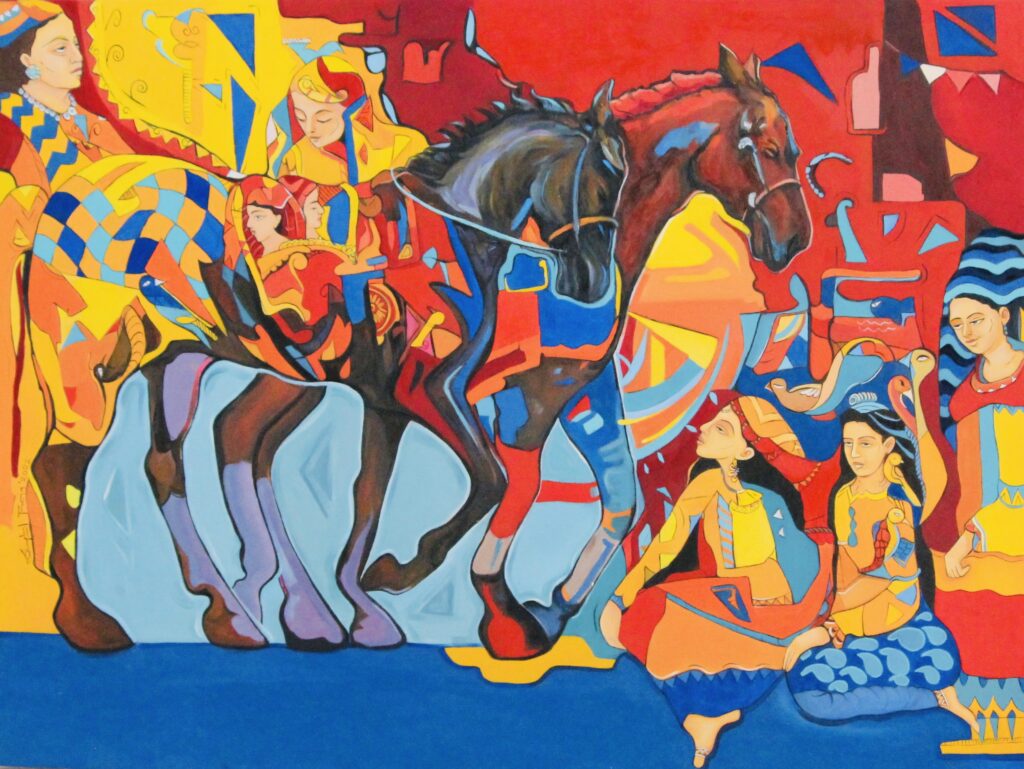
Among the many styles emerging today, one continues to hold a strong place in the hearts of viewers: Indian figurative canvas art. While abstraction and conceptual work are certainly growing, figurative storytelling remains one of the most expressive ways artists are connecting with audiences.
What sets this movement apart is the treatment of the human form. Instead of perfect proportions or traditional poses, artists explore psychological space. Figures are sometimes distorted, layered, simplified, or merged with symbolic elements. Their expressions, gestures, and surrounding environments tell stories that feel immediate and relatable.
Figurative work also bridges generational preferences. Younger collectors appreciate its contemporary edge, while seasoned art lovers enjoy its roots in classical Indian traditions.
Storytelling in a Digital Era
Even though canvas remains the primary medium, the digital climate has changed how stories travel. Artists today have wider exposure, more diverse audiences, and a platform to present work that reflects their true voice.
This has created a more democratic art ecosystem. Collectors are no longer limited to gallery visits. Art lovers explore, learn, connect, and engage through online platforms like Mojarto where storytelling has room to build momentum.
Digital visibility has also encouraged artists to experiment more freely. Rather than tailoring work to satisfy traditional expectations, they feel encouraged to explore their own interpretations of themes, identity, space, and transition.
This freedom shows in their work.
When Personal Stories Become Universal
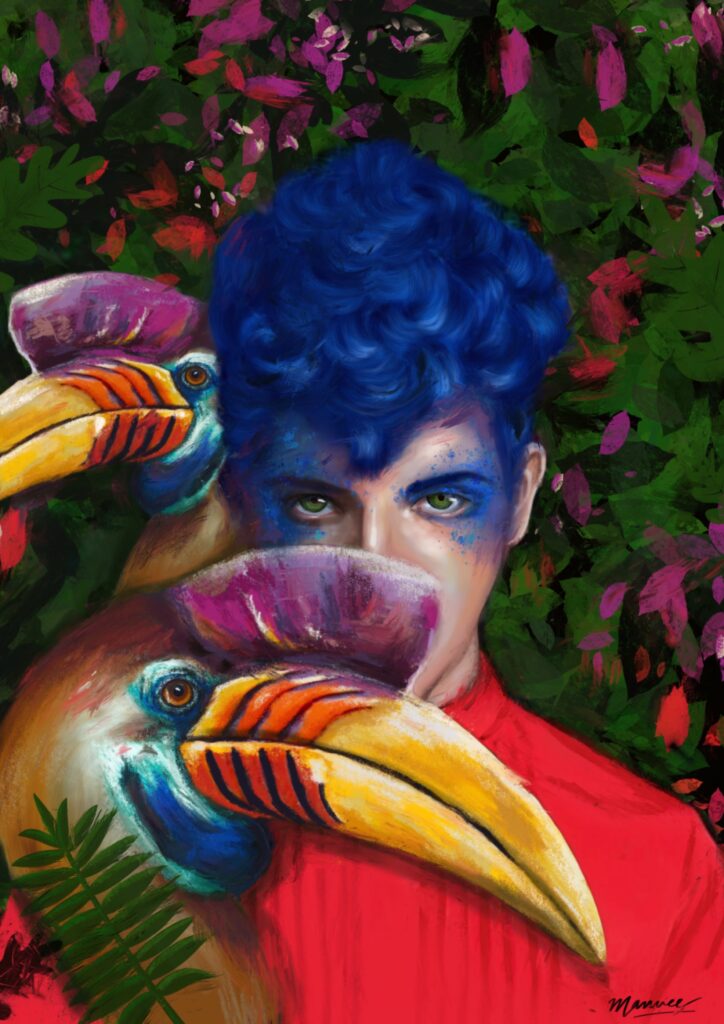
One of the beautiful qualities of Indian narrative art is how personal stories often carry universal resonance. Artists frequently use their own memories, fears, dreams, and lived experiences as raw material, but the final work feels inclusive.
- A quiet moment from childhood might reflect nostalgia shared by many.
- A layered depiction of city life can remind viewers of their own daily rhythms.
- A symbolic representation of identity struggles can resonate with multiple generations.
Collectors appreciate this relatability. It gives art depth and lasting value.
Modern Indian Art Storytelling and Its Growing Appeal
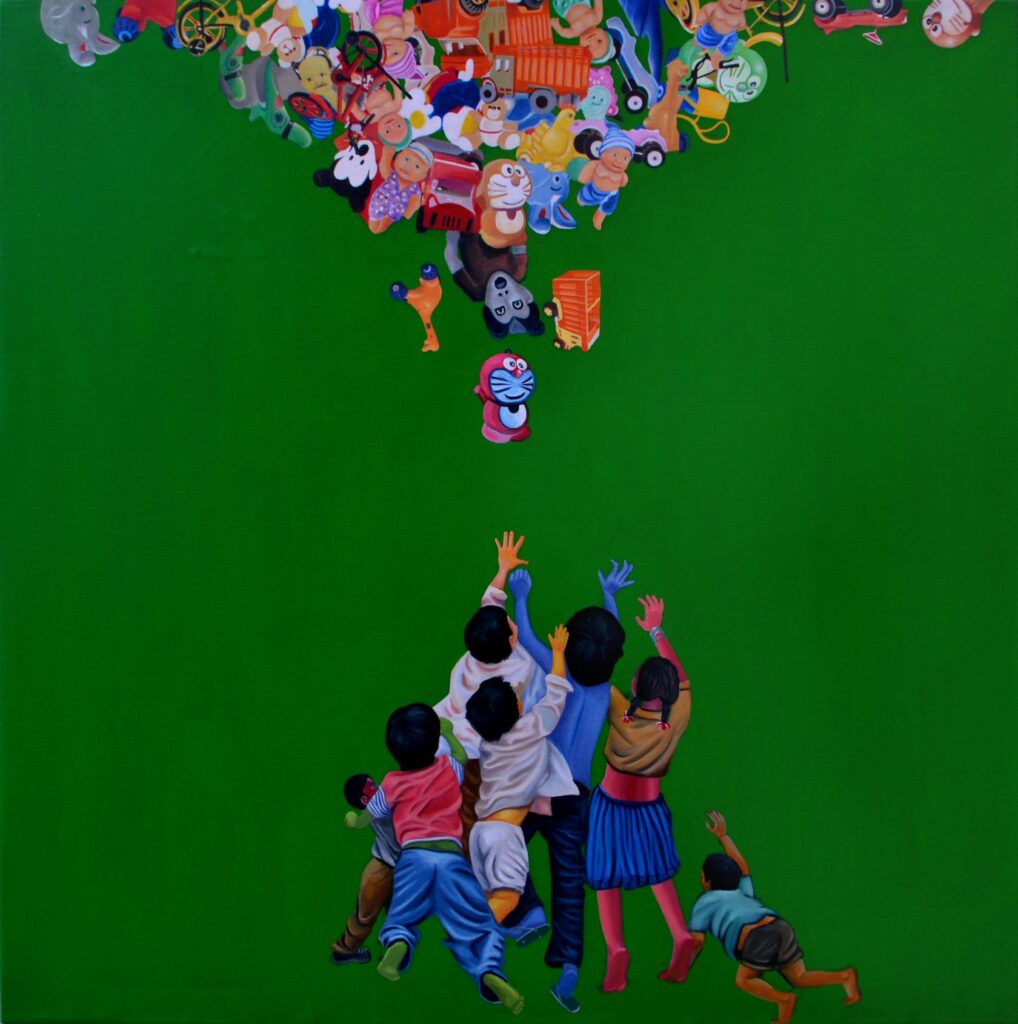
There is a growing audience for artworks that carry meaning rather than just decorative appeal. This is precisely why modern Indian art storytelling has become such a crucial part of the Indian art scene. Buyers want pieces they can connect with, talk about, and display with pride.
Narrative art does something unique. It invites curiosity. Visitors ask questions. Conversations grow around the piece. The artwork becomes part of the home’s identity rather than simply occupying wall space.
This emotional engagement is one reason Mojarto sees consistent interest in narrative-driven canvas works across price ranges. People want art with voice, not just visual appeal.
Why Collectors Are Drawn to Indian Canvas Art Today
While motivations differ, a few patterns stand out in how collectors respond to the new wave of Indian canvas art.
- Authenticity matters. Works that reflect genuine personal expression attract deeper interest.
- Cultural familiarity has strong appeal. Subtle Indian elements often resonate even with buyers who prefer contemporary styles.
- Emotional connection drives decisions. Collectors often choose pieces that evoke memories or moods.
- Narrative depth creates long-term value. Art with a story tends to maintain relevance over time.
These factors together explain why contemporary Indian canvas paintings continue to gain momentum among both seasoned collectors and first-time buyers exploring Mojarto.
The Future of Storytelling on Indian Canvas
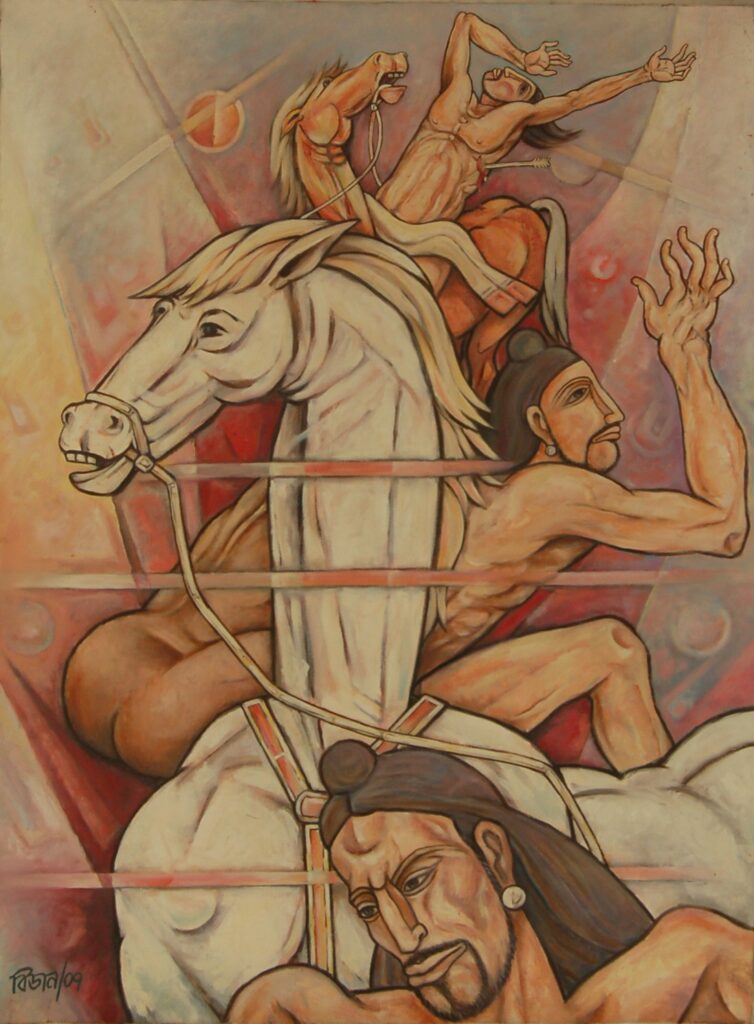
Looking ahead, it is clear that narrative-driven Indian art will keep growing in importance. As artists experiment with hybrid styles, layered compositions, symbolic frameworks, and new thematic lenses, viewers will have access to ever-evolving forms of storytelling.
The future will likely see more blending of personal narrative with cultural observation. More introspection. More emotional subtlety. More willingness to embrace ambiguity. And a stronger sense of individuality that reflects the diversity of India today.
Art is ultimately a reflection of the human condition. When artists tell stories that feel real and immediate, audiences respond with curiosity, empathy, and appreciation.
This is the magic of Indian canvas art today. It looks beyond the frame to capture something deeper and far more enduring.
Ending Note
Artists in India are rewriting the language of canvas storytelling. Their work is becoming more intimate, more introspective, and more willing to explore the complexities of modern life. For collectors, this offers a chance to engage with art that carries meaning and emotional weight. For viewers, it opens a doorway into stories that feel familiar yet entirely new.
At Mojarto, we continue to celebrate this evolution by bringing together diverse voices and artistic expressions that define the future of Indian canvas art. The journey is still unfolding, and the stories keep getting richer.
If you are exploring the world of narrative-driven Indian art, this is the perfect moment to discover how much emotion, imagination, and depth live beyond the frame.