
by P Abigail Sadhana Rao
Some art forms survive trends. Others survive generations.
Indian folk art has done both.
Long before the contemporary art market began speaking the language of investment, collectibility, and curation, folk art was already an intimate part of lived life. It belonged to mud walls washed with lime, temple rituals performed at dawn, courtyard celebrations, inherited memory, and stories retold through time.

These works were never created with the intention of fitting into pristine white galleries. They emerged from devotion, labour, mythology, ecology, and the deeply human instinct to leave meaning behind.
Perhaps that is precisely why folk art never goes out of style. Because authenticity rarely does.

Today, as contemporary Indian folk artists reinterpret inherited traditions for modern audiences, there is a growing recognition that these works possess something increasingly rare within the global art landscape: emotional permanence. In an age saturated with fleeting visual consumption, folk art still invites slowness. It asks the viewer to linger. To notice. To return.
And collectors are responding to that invitation.
Why Contemporary Indian Folk Art Feels More Relevant Than Ever
Over the last few years, I have noticed something deeply interesting within contemporary interiors and collecting spaces. People are no longer looking only for artworks that “match” a room. They are searching for works that alter the emotional atmosphere of a space entirely.
This is where contemporary Indian folk art quietly distinguishes itself.

Whether it is the rhythmic detailing of Gond paintings, the symbolic storytelling of Madhubani, the monochromatic elegance of Warli, or the intricate devotion embedded within Pattachitra traditions, these works possess an immediacy that transcends geography.
There is a certain gravitas to folk art that many hyper contemporary works struggle to sustain. Perhaps because these traditions were never built around trend cycles in the first place.
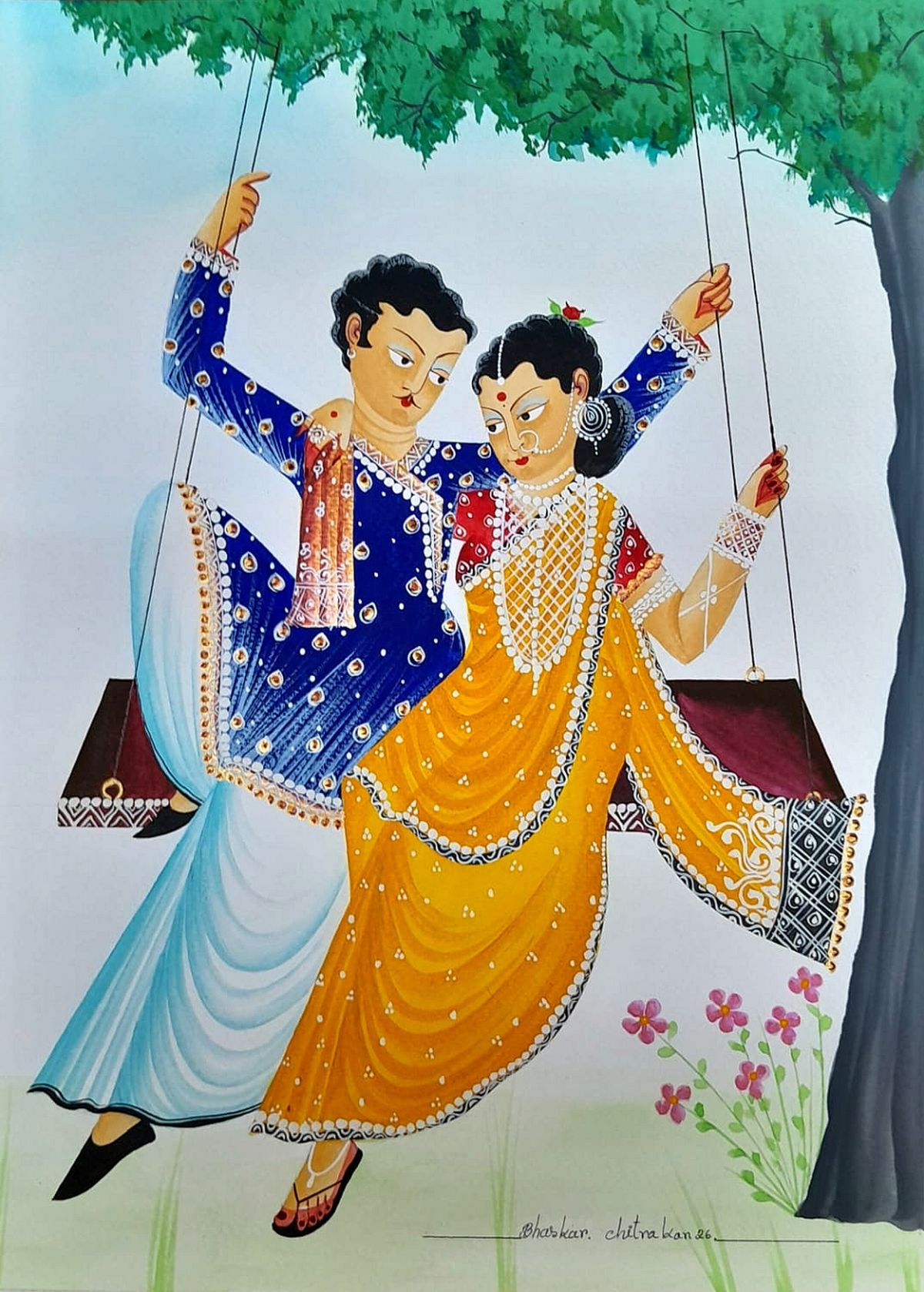
They were built around continuity. And continuity has become profoundly luxurious in the modern world. And in an increasingly mechanical world driven by speed, disposability, and constant reinvention, continuity itself has become profoundly luxurious. It represents something modern culture rarely allows us to experience fully: permanence.

Folk art carries the patience of repetition, the intimacy of inherited knowledge, and the quiet assurance that not everything meaningful needs to be endlessly updated to remain relevant. They remind us that beauty can evolve without severing itself from memory, lineage, and human touch since it was created to carry identity across generations.
The Global Rise of Contemporary Indian Folk Art
Contemporary Indian folk art has witnessed a significant rise in visibility among international collectors and galleries. Art enthusiasts are increasingly looking beyond conventional contemporary formats and investing in works that offer narrative richness and strong visual identity.

One of the greatest misconceptions surrounding Indian folk art is the assumption that it belongs entirely to the past. In reality, many contemporary Indian folk artists are creating some of the most compelling visual conversations within the current art landscape. You can sense it in the confidence of the line work, in the unapologetic symbolism, and in the way these works continue to carry echoes of land, ritual, folklore, migration, ecology, and collective memory even within modern settings.

What makes contemporary folk art especially appealing in today’s market is its ability to serve as both collectible fine art and meaningful cultural preservation. This emotional and cultural dimension often creates a far deeper connection between artwork and buyer, making folk art particularly compelling for long-term collectors seeking works with lasting relevance and value.
Why Folk Art Works Beautifully as an Art Investment
One of the strongest reasons behind the renewed demand for Indian folk art is its extraordinary adaptability within modern interiors.
Minimal homes, luxury apartments, hospitality spaces, boutique hotels, and curated offices increasingly rely on artworks that add warmth and narrative rather than simply functioning as decoration. Contemporary folk art achieves this effortlessly.

A large scale Gond work can introduce movement and intricate visual rhythm into a contemporary living room. A refined Warli composition can create quiet sophistication within minimal architectural spaces. Madhubani paintings often bring both colour and symbolism into interiors that otherwise feel emotionally neutral.

For many collectors, these works become conversational anchors within a space. Unlike art that is purely driven by trends, which can quickly lose its novelty, folk art possesses a timelessness rooted in narrative and human continuity.
This growing integration of folk art into luxury and contemporary design environments has also contributed significantly to its investment potential within the art market.
Why Folk Art Never Truly Leaves Us
Folk art survives because it remains connected to people.

It reflects rituals, memory, labour, celebration, mythology, migration, and everyday existence. Even when reinterpreted through contemporary practice, its emotional core remains intact.
That human connection is timeless.
In an era where digital imagery often feels temporary and endlessly replaceable, folk art offers something slower, richer, and more enduring. It invites viewers to pause, observe detail, and engage emotionally with the work.
Even for someone unfamiliar with the specific tradition, there is something instinctively human within these works. The recurring presence of animals, forests, rituals, women, music, harvest, devotion, mythology, and coexistence between humans and nature creates an emotional familiarity that travels across the world.
This is precisely why collectors across generations continue returning to folk art. The quiet brilliance of contemporary Indian folk art lies in how it manages to remain regionally rooted while connecting universally because it feels and is alive.
Explore Contemporary Indian Folk Art on Mojarto

Discover a thoughtfully curated collection of contemporary Indian folk artworks by artists who continue to reinterpret traditional visual languages for modern collectors, contemporary interiors, and evolving global audiences.
Whether you are beginning your collecting journey or searching for works with enduring cultural and aesthetic value, folk art remains one of the most rewarding spaces to explore.