
by P Abigail Sadhana Rao
“A painting is not a picture of an experience, but is the experience.” — Mark Rothko
There are some things we bring into our homes not out of necessity, but because of how they make us feel. Small, almost unassuming additions that slowly begin to change the way a space holds you. You are no longer just choosing art that looks good. At Mojarto, you will find affordable wall art that carries this emotional depth that feels rare and deeply personal for your space.
For me, paintings have always been those little luxuries. I have often found myself drawn to works that do more than just exist on a wall. They shift something. A room begins to feel softer, more lived in, almost like it is holding a story that existed long before I arrived. Some pieces feel minimal at first glance, while others carry a certain vintage quietness, a sense of time paused somewhere in the past.
And yet, they all seem to do the same thing. They transport. Sometimes, to a memory I recognise. Sometimes to a life I have never lived. It becomes less about the painting itself and more about the feeling it leaves behind. A kind of stillness. A sense of familiarity.
To collect art in India today is to stand at an interesting intersection. There is access like never before. The ability to buy art online has opened up spaces that were once limited to galleries and insiders. At the same time, it asks for a different kind of attention. Collecting, then, is not about ownership. It is about resonance. About finding pieces that quietly become part of your everyday life. These are the works that turn walls into something more than surfaces. They become little luxuries you return to. Again and again.
Where Memory Finds Form
A transparent cassette tape sits at the centre, fragile yet precise, holding within it the idea of sound, of stories once played and replayed. Perched gently on it, a sparrow introduces life into something otherwise mechanical, almost forgotten. In Rewind by Srinivasa Ram Makineedi, memory becomes visible. The juxtaposition is subtle but powerful. Obsolete technology meets something organic and alive, a dialogue often explored in contemporary Indian paintings with a minimalist sensibility. What was once used to store voices and music now becomes a resting place for a living being, as if time itself has shifted roles.
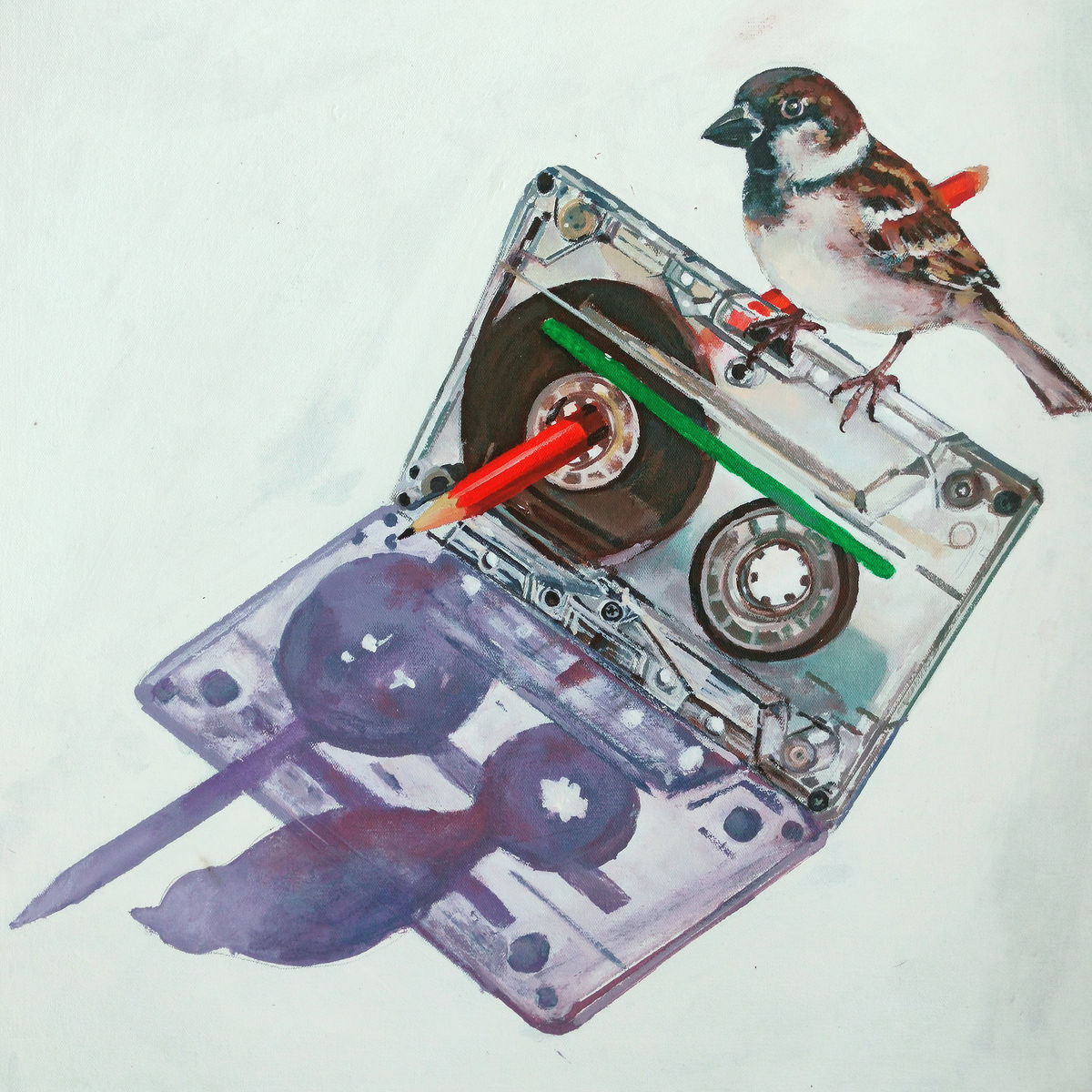
The colours remain soft and slightly muted, letting the details emerge slowly. The translucent cassette adds a sense of delicacy, while the gentle browns and whites of the sparrow bring warmth and familiarity. Small interventions of red and green quietly disrupt the stillness, like fragments of sound breaking through silence, echoing the layered storytelling seen in affordable contemporary art.
There is also a quiet playfulness in the pencil threading through the tape, almost like creation rewriting memory. This work does not feel loud or nostalgic in an obvious way. Instead, it invites you to pause. To think about what we choose to hold on to, and what fades without us noticing, a quality that resonates with those who look to buy art online in India, not just for décor, but for meaning.
A Ray That Finds Its Way
There is a quiet stillness in this piece that does not feel empty. An empty chair anchors the room, its shadow holding onto a sense of presence. Above it, fragments of paper hang across wires like suspended thoughts, unfinished moments that refuse to fade. And then, there is the window, not open, not closed, but glowing.

In Ray by Isha Bawiskar, light feels earned. The room appears enclosed, almost without escape, yet it does not feel suffocating. Instead, it leans into something more internal, a quality often seen in conceptual art, where meaning unfolds slowly rather than all at once. The colours deepen this feeling. Earthy browns and muted tones ground the space in stillness, while the stained glass introduces quiet interruptions of red, green, and yellow. The light does not flood the room, it arrives in fragments, much like hope itself, echoing the restraint found in minimalist interior art and modern Indian artworks that prioritise emotion over excess.
The scattered papers suggest effort and persistence, moments held rather than discarded. And on the floor, a paper airplane sits gently, almost like a dream folded into form. The artist’s idea of willpower becomes visible here. Even in stillness, there is possibility. For those drawn to thoughtful, affordable wall art, this becomes one of those little luxuries that stays with you, not because it is loud, but because it quietly reminds you to keep going.
Thresholds of Memory
This reminds me of the very first time I noticed doors, really noticed them, while walking through palaces in different parts of Rajasthan. I remember falling in love with them instantly. Their scale, their silence, the way they seemed to hold stories. Much later, when I began writing about art, it all started with what I called doortraits, an attempt to understand these thresholds that felt both inviting and distant at once.
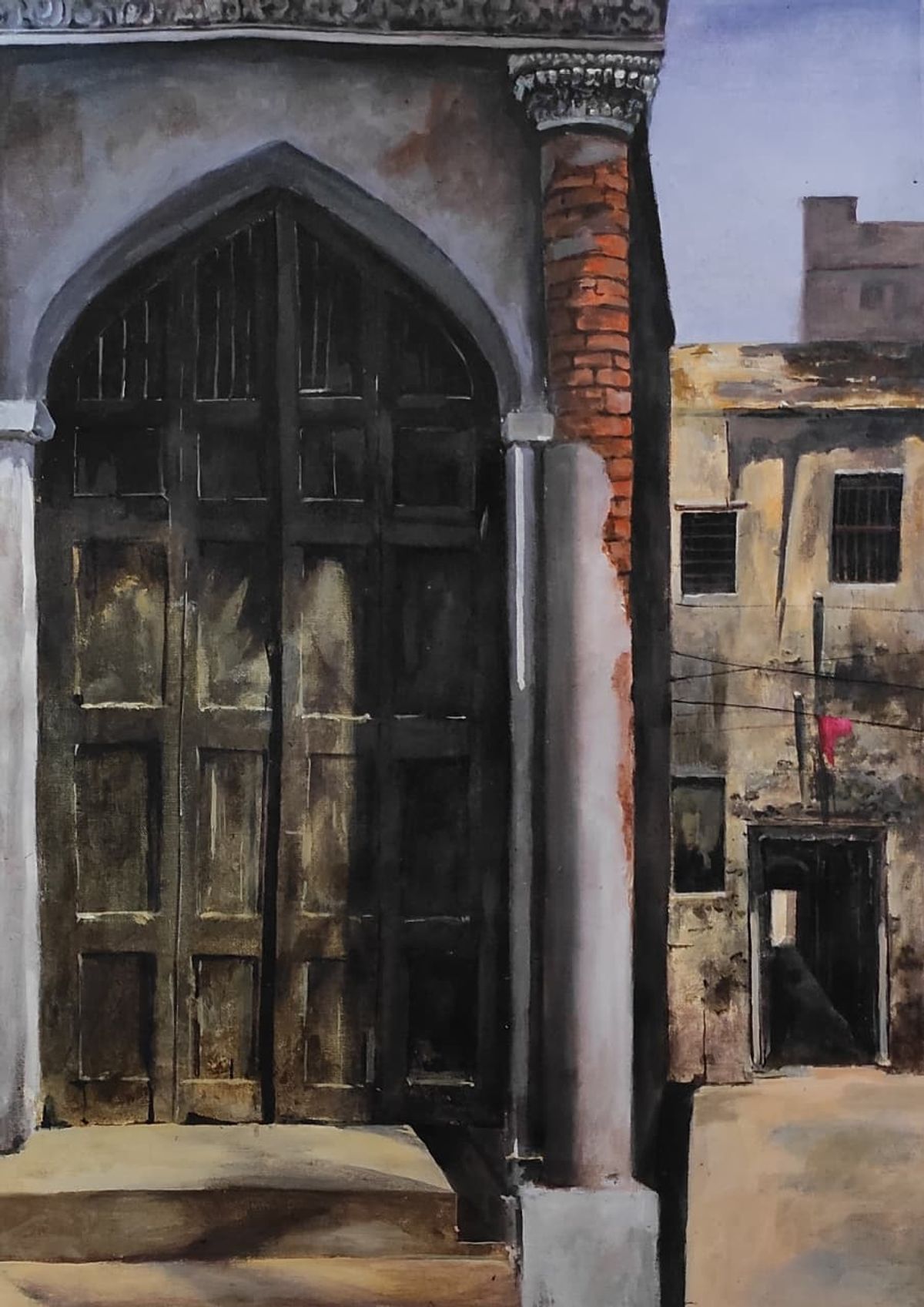
In The Black Door by Soyli Saha, that same feeling returns. A large, weathered doorway stands grounded in time, its dark surface absorbing years of passage and memory. The surrounding textures, chipped walls, exposed brick, and softened edges, echo the quiet beauty often found in architectural art in India and heritage-inspired paintings. Sunlight falls gently across the surface, revealing not just form, but endurance.
The palette remains muted and earthy, allowing the structure to speak. Browns, greys, and sun-washed tones create a sense of warmth and age, while the deep black of the door anchors the composition. It does not open, but it does not shut you out either. It simply exists, holding something within. There is a stillness here that feels deeply rooted in place, reminiscent of traditional Indian architecture and of spaces shaped by time rather than design. Works like this often emerge when exploring affordable wall art, especially for those drawn to wall decor that carries meaning and narratives into everyday spaces. It becomes less about filling a wall and more about choosing something that holds presence.
More Than Something on a Wall
What draws me most to contemporary Indian paintings is their ability to exist across time. They are rooted in the present, yet carry echoes of something older, fragments of stories that continue beyond the frame. Some feel like a pause in motion, others like a memory caught mid-fade or a place you have never been but somehow know. When choosing wall art for living room spaces or quieter corners, the question shifts. It is no longer what matches, but what stays. The right piece is rarely the most obvious one. It is the one that lingers, the one that slowly becomes part of how your space feels and how you return to it.
Over time, I have realised that these little luxuries are not about indulgence, but presence. They sit quietly in the background of our days, witnessing, absorbing, and staying. If something here speaks to you, follow that instinct.
Explore affordable wall art offers on Mojarto and discover works that do more than decorate. You may not just find something for your wall, you may find something that stays with you.