
There is something deeply familiar about an Indian landscape. It could be the glow of early morning light over the ghats, the quiet rhythm of fields after harvest, the hush of a forest just before rain, or the layered chaos of hills, roads, and rivers sharing space. Contemporary Indian landscape paintings have found a powerful way to hold on to this familiarity while reimagining it through a modern lens. They do not simply depict scenery. They translate emotion, memory, and movement into visual language.
At Mojarto, we see growing interest from collectors, interior designers, and first-time art buyers who are actively searching for contemporary Indian landscape paintings that feel relevant to today’s homes and lives, yet remain rooted in Indian sensibility. This genre has evolved beautifully, shaped by changing cities, environmental awareness, global exposure, and personal storytelling by artists across the country.
This exploration looks closely at how modern Indian landscape art is being created today, the dominant styles shaping it, and why Indian landscape artists continue to resonate with collectors who want more than decorative art. They want to work with a pulse.
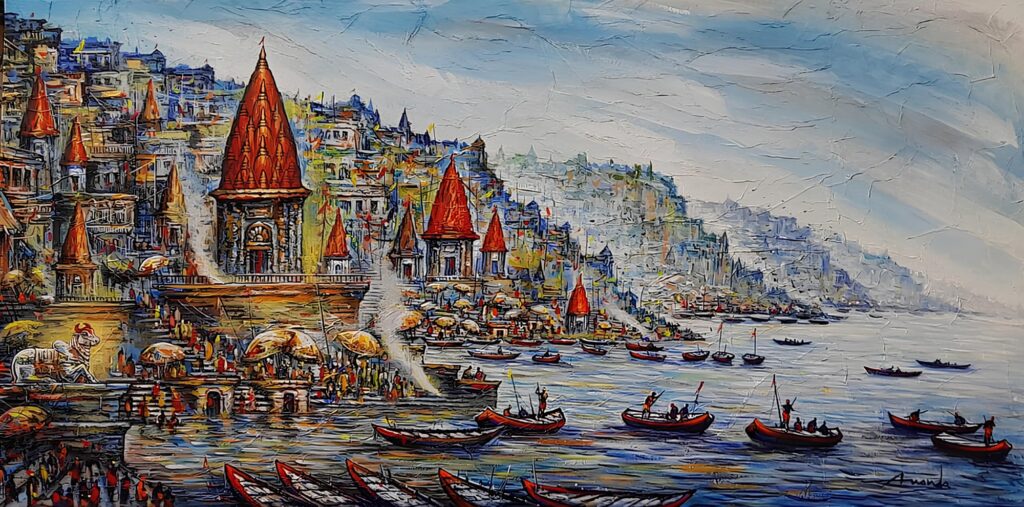
Why Contemporary Indian Landscape Paintings Matter Today
Indian nature landscape paintings have always carried cultural weight. Traditionally, landscapes were symbolic, often serving as backdrops for mythology or royal life. In contemporary practice, the landscape becomes the subject itself. Artists respond to climate, migration, urban expansion, nostalgia, and ecological loss. The result is art that feels intimate and reflective.
Buyers today are drawn to landscapes that feel lived in. They want art that mirrors personal journeys, memories of travel, or an emotional connection to place. Contemporary Indian landscape paintings offer exactly that. They bridge visual pleasure with layered meaning, making them ideal for collectors who value both aesthetics and narrative.
The Shift from Literal Views to Emotional Terrain
One of the most defining changes in modern Indian landscape art is the shift away from strict realism. Many Indian landscape artists now focus on how a place feels rather than how it looks. Colours become expressive. Forms dissolve or sharpen depending on mood. Space stretches or compresses to mirror memory.
This evolution allows landscapes to speak to a broader audience. A viewer does not need to recognise the location. They only need to feel something familiar. This is where contemporary Indian landscape paintings quietly excel. They invite interpretation without demanding explanation.
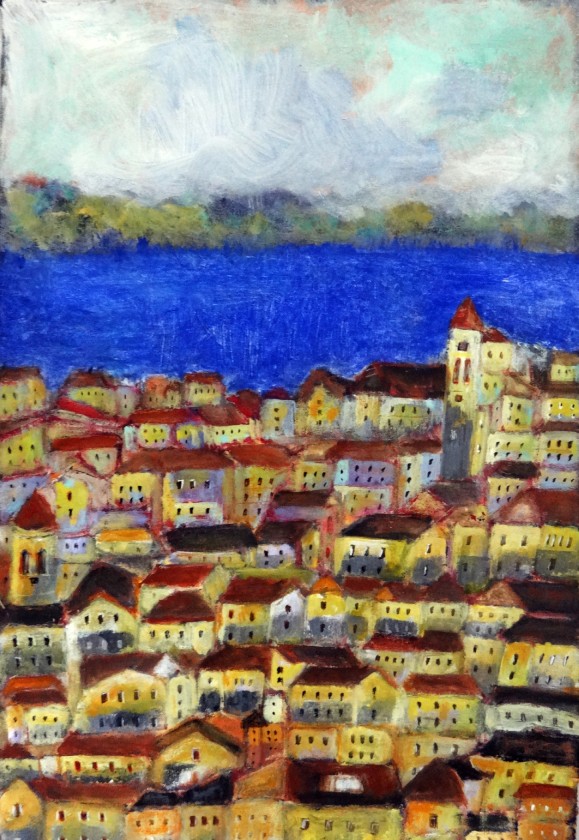
Abstract Interpretations of Nature
Some artists step away entirely from recognisable terrain. In an abstract Indian landscape painting, hills may become colour blocks, rivers turn into rhythmic lines, and skies dissolve into layered textures. These works do not describe geography. They suggest atmosphere.
Collectors who lean toward minimal or modern interiors often gravitate to abstraction. The absence of literal detail gives the artwork flexibility. It becomes meditative, almost musical. In Indian abstraction, there is often a spiritual undertone rooted in philosophy and natural cycles, which adds depth beyond surface aesthetics.
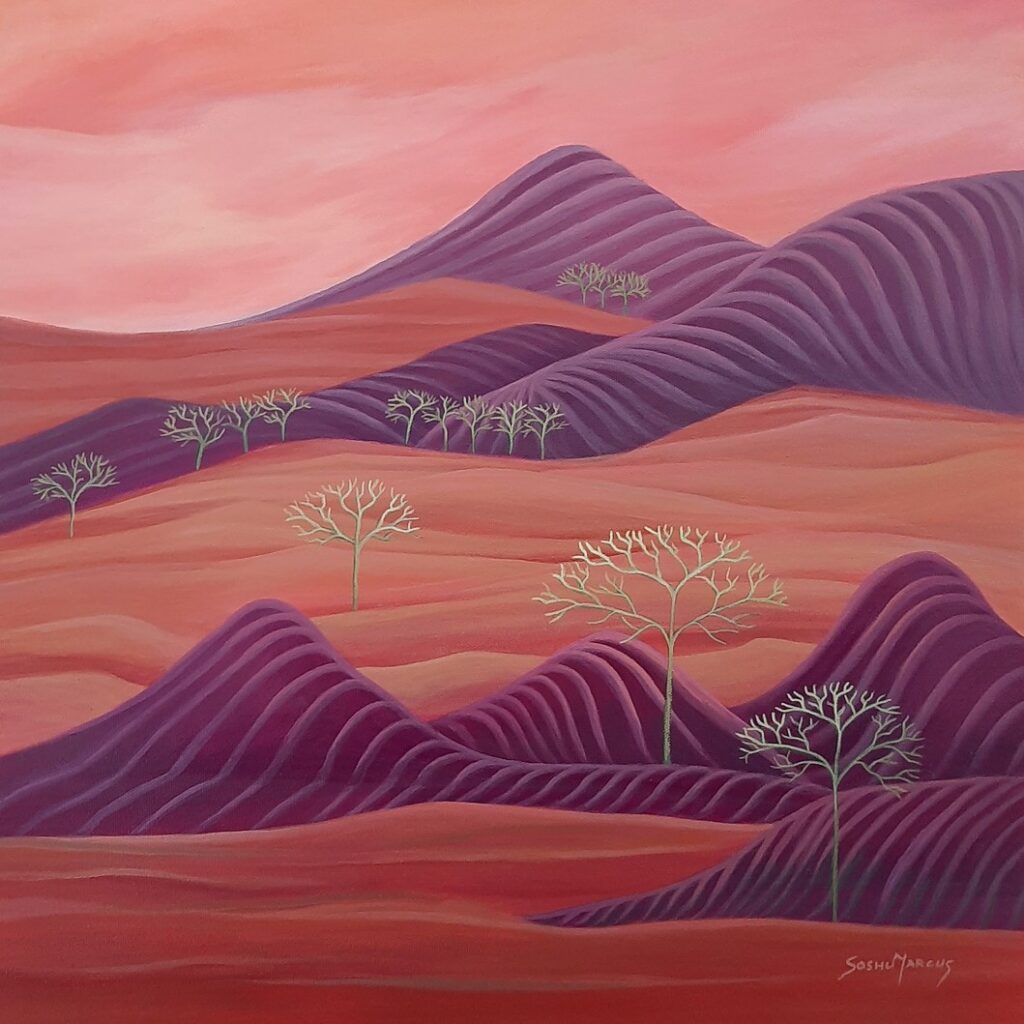
Semi-Abstract Landscapes That Balance Form and Freedom
For those who want a sense of place without full realism, semi-abstract landscape art in India offers a compelling middle ground. These paintings retain recognisable elements like trees, horizons, or pathways, but simplify them into expressive forms.
This style appeals strongly to urban collectors. It reflects how many people experience nature today in fragments through travel, memory, and fleeting moments. Semi-abstract works feel contemporary, approachable, and emotionally layered. They are among the most sought-after formats in Indian landscape painting styles today.
Impressionistic Views That Capture Light and Mood
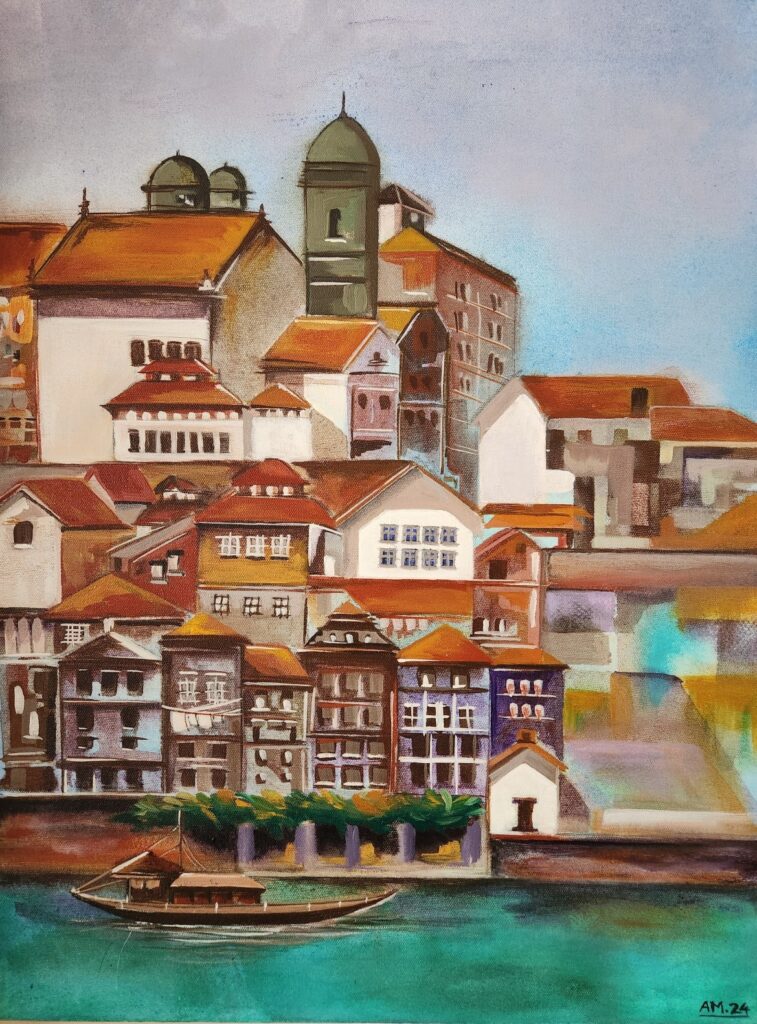
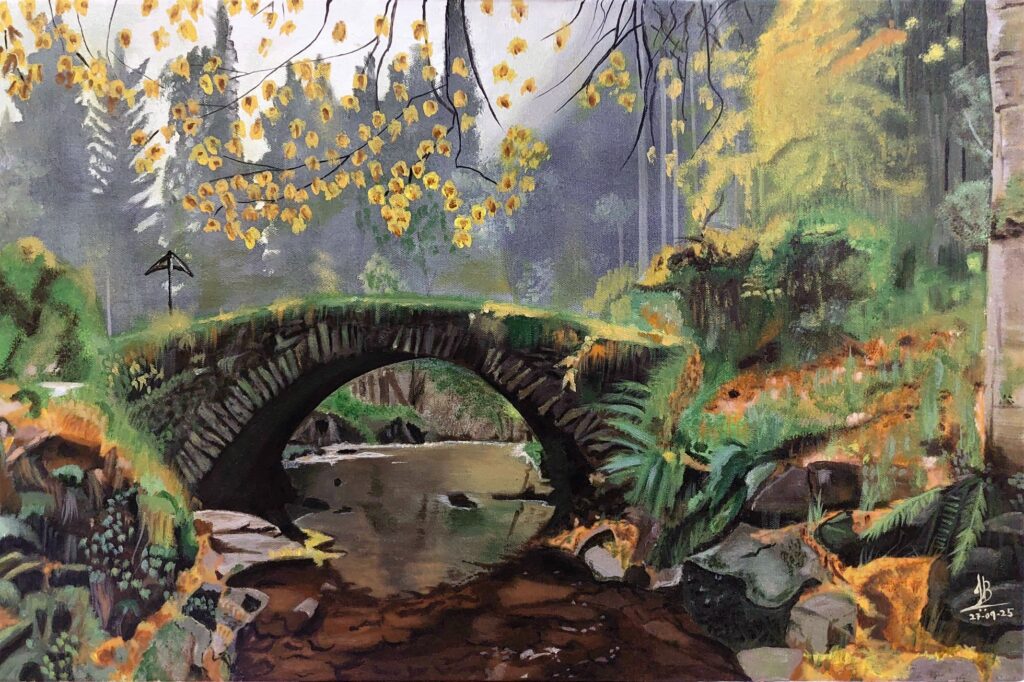
Another powerful stream within contemporary Indian landscape paintings is impressionism. Impressionistic Indian landscapes focus on fleeting moments. Light filtering through foliage, reflections on water, changing skies at dusk. Brushstrokes remain visible, adding movement and softness.
This approach resonates with buyers who value warmth and atmosphere. Impressionistic works often feel optimistic and calming. They fit naturally into homes that value comfort and emotional connection over precision. Many Indian landscape artists working in this style draw inspiration from everyday scenes rather than iconic landmarks, which makes the work feel personal and grounded.
Ambika Malhotra
Mixed Media Experiments Rooted in the Land
Innovation has also shaped Indian nature landscape paintings through material exploration. Mixed media Indian landscapes combine acrylic, charcoal, ink, collage, natural pigments, and textured surfaces. These works often reflect the physicality of land itself, cracked soil, layered rock, and worn walls.
Mixed media allows artists to speak about environmental change, erosion, and human impact without direct commentary. For collectors, these works feel tactile and immersive. They offer depth that goes beyond visual appeal, making them strong conversation pieces in both private and public spaces.
When Tradition Informs Contemporary Expression
India’s artistic heritage continues to influence modern practice. Many artists consciously work within a space of traditional meets contemporary Indian painting, where classical sensibilities inform modern composition. You may see echoes of miniature painting perspectives, folk colour palettes, or temple mural rhythms translated into contemporary landscapes.
This fusion is especially appealing to collectors who want cultural continuity. These works honour Indian history while remaining visually current. They feel timeless rather than trend-driven, which adds to their long-term appeal.
The Voices Shaping Today’s Indian Landscape Art
Indian landscape artists today come from diverse backgrounds. Some are trained in classical academies, others are self-taught, and many have global exposure through residencies and exhibitions. What unites them is a shared engagement with place.
Some artists focus on rural terrains, documenting disappearing ecosystems and agricultural rhythms. Others turn their attention to urban edges where cities meet nature. Coastal regions, deserts, mountains, and forests all find unique expression through individual voices.
This diversity ensures that contemporary Indian landscape paintings never feel repetitive. Each work carries the artist’s lived experience, making authenticity a defining feature of the genre.
Why Collectors Are Drawn to Contemporary Landscapes
From a collector’s perspective, landscapes offer emotional versatility. They can be grounding, energising, contemplative, or nostalgic. Unlike figurative art, landscapes rarely impose a narrative. They allow viewers to project their own stories.
Modern Indian landscape art also works across spaces. It suits homes, studios, offices, and hospitality settings without feeling intrusive. For first-time buyers, landscapes often feel like a safe yet meaningful entry point into collecting Indian art.
At Mojarto, we notice that buyers increasingly seek Indian nature landscape paintings that feel personal rather than generic. They want work that reflects individuality, values, and a connection to place. Contemporary landscapes deliver on all fronts.
Understanding Indian Landscape Painting Styles
Indian landscape painting styles today cannot be boxed into a single category. They range from expressive abstraction to subtle realism, from textured surfaces to fluid washes. What defines them is not technique alone but intention.
Artists are responding to climate awareness, emotional displacement, spiritual inquiry, and aesthetic exploration. This makes contemporary Indian landscape paintings dynamic and relevant. They are not static images but evolving conversations between artist, land, and viewer.
The Mojarto Perspective
As a platform dedicated to Indian art, Mojarto curates contemporary Indian landscape paintings that speak with honesty and originality. Each artwork represents a distinct voice within the broader landscape tradition. Our focus remains on quality, authenticity, and meaningful artistic expression.
We believe landscapes are not just visual backdrops. They are emotional terrains shaped by memory, culture, and change. Supporting Indian landscape artists who engage deeply with these themes helps preserve artistic integrity while introducing collectors to work that truly resonates.
A Living Tradition with a Contemporary Soul
Contemporary Indian landscape paintings continue to evolve because the land itself is changing. Artists respond instinctively to this transformation, creating work that feels immediate yet enduring. Whether through abstraction, impressionism, mixed media, or stylistic fusion, the soul of nature remains at the centre.
For collectors, this genre offers more than beauty. It offers connection. A reminder of places loved, lost, or imagined. In a fast-moving world, modern Indian landscape art allows us to pause and reconnect with the spaces that shape us.
That is the quiet power of Indian landscapes today. They do not shout. They stay with you.