
Art has always been a quiet witness to time. It listens, absorbs, adapts, and then speaks back through form, colour, and emotion. In India, this conversation between past and present has never been louder or more relevant than it is today. The fusion of folk and contemporary art is not a trend-chasing novelty. It is a cultural dialogue, one that connects generations without diluting the soul of tradition.
At Mojarto, this dialogue finds a natural home. Indian artists across regions are exploring new visual languages while staying rooted in inherited stories. The result is art that feels familiar yet unexpected, traditional yet strikingly current. This is where folk traditions in modern culture take on new meaning, not as nostalgia, but as living expression.
Where Folk Art Begins and Why It Still Matters
Indian folk art was never created for galleries or collectors. It was born in courtyards, temples, village walls, and community spaces. Madhubani, Gond, Warli, Pattachitra, Kalighat, Bhil, and countless other forms were shaped by daily life, rituals, seasons, and belief systems. Each motif carried meaning. Each colour had a purpose. Nothing was decorative without intention.
Understanding the evolution of folk art requires understanding its function. These art forms documented stories, marked transitions, celebrated harvests, and protected homes spiritually. Over centuries, styles changed organically, passed down through hands rather than textbooks. This living inheritance is what gives Indian folk art its emotional weight.
Today, artists are not abandoning this inheritance. They are translating it.
Contemporary Expression Meets Ancestral Memory
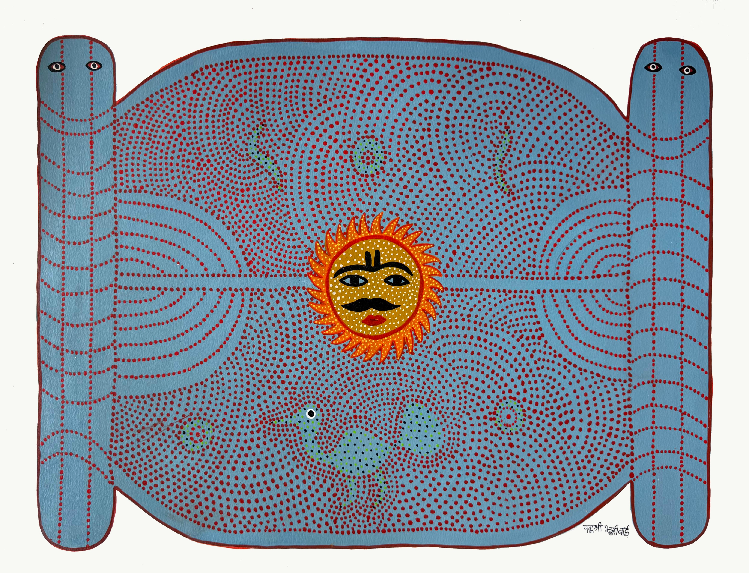
The fusion of folk and contemporary art does not replace tradition. It expands its voice. Artists trained in modern techniques are returning to folk roots with fresh curiosity. They are asking new questions while respecting old answers.
A Gond painting may now explore urban anxiety instead of forest mythology, yet the rhythmic patterns and symbolic creatures remain intact. A Madhubani-inspired work may speak of climate change, migration, or identity, but its symmetry and visual storytelling still echo centuries of practice. This is modern art inspired by tradition, not imitation, but continuation.
Such works resonate deeply because they feel honest. They acknowledge where we come from while reflecting on where we stand today.
Why This Fusion Resonates Across Generations
One of the most powerful aspects of this artistic movement is its ability to connect different age groups. Older viewers recognise the symbols, the stories, the spiritual undertones. Younger audiences connect with the themes, composition, and contemporary relevance.
This bridge is what makes these works timeless. They are not frozen in the past, nor are they detached from it. They are, in essence, timeless art forms reimagined, speaking fluently to both memory and modernity.
In homes, workspaces, and cultural conversations, such art becomes more than visual appeal. It becomes a shared language between generations who may otherwise experience art very differently.
Indian Folk Art in a Contemporary Visual World
India’s visual culture today is fast, layered, and globally influenced. Digital exposure has reshaped how we see and interpret images. In this environment, the fusion of folk and contemporary art offers grounding. It brings pause, texture, and narrative depth into a visually crowded world.
Artists are experimenting with scale, abstraction, mixed influences, and conceptual storytelling while maintaining the integrity of folk aesthetics. The result is art that feels confident, rooted, and relevant without shouting for attention.
This movement also challenges the idea that folk art belongs only to the past or rural settings. Instead, it asserts that folk traditions in modern culture are adaptable, intelligent, and deeply contemporary in spirit.
The Artist as a Cultural Translator
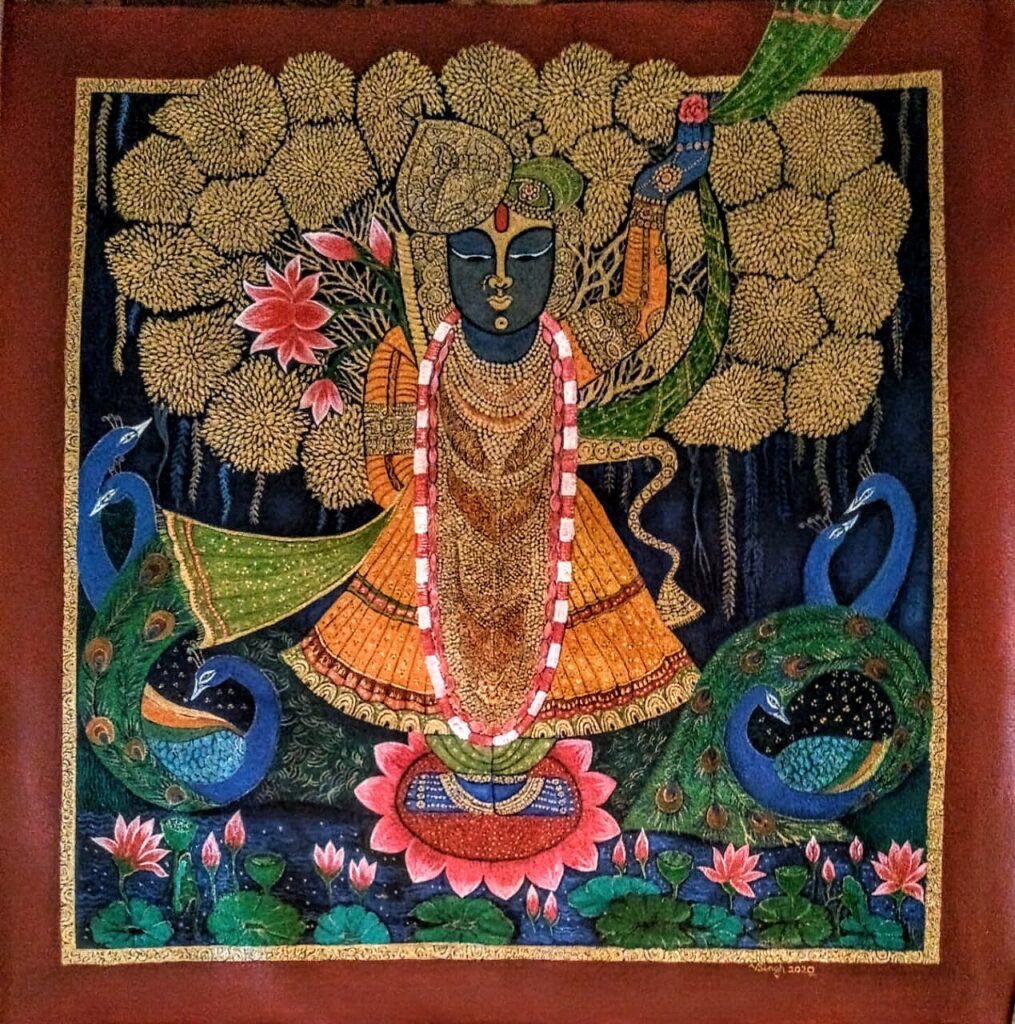
Today’s Indian artists working in this space act as translators rather than disruptors. They interpret symbols, myths, and visual codes for a changing audience. They respect the grammar of folk art while composing new sentences.
This role requires sensitivity. It is easy to aestheticise tradition without understanding it. The artists who succeed in this fusion invest time in research, dialogue, and immersion. Their work reflects lived understanding, not surface-level inspiration.
Through their practice, they participate in preserving heritage through modern art, ensuring that folk narratives continue to evolve rather than fade into archives.
Beyond Nostalgia: The Intellectual Depth of Fusion Art
It is important to recognise that this fusion is not driven by nostalgia alone. While memory plays a role, the strongest works are intellectually engaged. They question identity, displacement, ecology, gender, and social change through folk visual frameworks.
This depth is what makes such art compelling for collectors, curators, and culturally aware audiences. The work invites reflection, not just admiration. It tells stories that feel personal and collective at once.
The evolution of folk art, when guided by thoughtful contemporary voices, becomes a form of cultural resilience rather than preservation for preservation’s sake.
Regional Roots, Global Conversations
Indian folk art has always been regional in nature, shaped by geography, climate, and local belief systems. Contemporary fusion allows these regional voices to participate in global conversations without losing specificity.
A Warli-inspired composition may communicate themes of community and sustainability that resonate worldwide. A Bhil-influenced narrative may explore humanity’s relationship with nature in ways that feel universally urgent. The local becomes global, not by dilution, but by clarity.
This balance is what makes modern art inspired by tradition so powerful in today’s interconnected world.
Collecting With Consciousness
For art lovers and collectors, the fusion of folk and contemporary art offers an opportunity to engage with culture consciously. These works are not decorative fillers. They carry lineage, labour, and layered meaning.
Engaging with such art means participating in a larger cultural ecosystem. It means supporting artists who honour tradition while shaping its future. It means valuing narrative over novelty and depth over trend.
Platforms like Mojarto play a crucial role in this ecosystem by bringing visibility to artists who navigate this balance with integrity.
The Future of Folk in Contemporary India
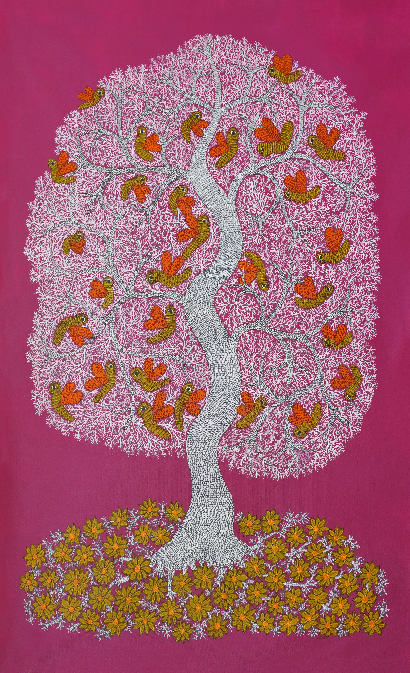
The future of Indian art does not lie in choosing between tradition and modernity. It lies in understanding how deeply interconnected they are. As more artists explore this intersection, the visual language of India continues to expand without losing its roots.
Educational exposure, digital platforms, and cultural conversations are further enabling this movement. Younger artists are growing up with access to both ancestral stories and global art discourse. Their work reflects this dual inheritance naturally.
This ongoing dialogue ensures that folk traditions in modern culture remain dynamic rather than static.
Why This Fusion Matters Now More Than Ever
In a time when speed often overrides substance, art that slows us down has special value. The fusion of folk and contemporary art reminds us that progress does not require erasure. It shows that innovation can be an act of respect.
These works hold space for memory while making room for change. They acknowledge complexity rather than simplifying identity. They are, in many ways, visual anchors in a rapidly shifting cultural landscape.
For viewers, collectors, and cultural thinkers, this art offers connection. For artists, it offers continuity. For future generations, it offers an inheritance that feels alive.
A Living Tradition, Not a Finished Story
Indian folk art has never been static. Its contemporary fusion is simply the latest chapter in a long, unfolding story. Each artist adds a verse, shaped by their time, context, and vision.
At Mojarto, this story continues to find expression through artists who understand that tradition is not something to preserve in glass, but something to carry forward with care.
The fusion of folk and contemporary art is not about blending styles for effect. It is about honouring where we come from while courageously expressing who we are becoming.
And that is what makes it truly timeless.