
Walk through any major Indian city today, and you will feel it instantly. The pulse of traffic. The half-built flyovers. The glow of mobile screens on crowded metro platforms. The quiet loneliness of high-rise balconies. Urban India is not just a backdrop anymore. It is a lived experience. And for a growing generation of artists, it has become a powerful source of expression.
At Mojarto, we see this shift every day. Collectors, curators, and new art buyers are increasingly drawn to works that reflect city life as it is truly lived. Not romanticised. Not simplified. But layered, complex, and deeply human. This is why Urban life in modern Indian art has emerged as one of the most defining narratives of our time.
This blog explores how Indian cities are shaping contemporary artistic themes, visual language, and emotional depth, and why this movement matters to serious art lovers today.
The City as Experience, Not Just a Subject
Earlier generations of Indian art often focused on mythology, rural landscapes, or idealised cultural identity. While those traditions remain vital, urban India has introduced a different kind of truth. Cities are not symbols. They are experiences. Chaotic, aspirational, exhausting, and full of contradictions.
Artists living in Mumbai, Delhi, Bengaluru, Kolkata, and Hyderabad are responding to what surrounds them daily. Long commutes. Shrinking personal spaces. Migrant lives layered over generational memories. The clash between glass towers and crumbling colonial buildings.
This lived reality has pushed artists to move beyond decorative aesthetics. Today, Urban India’s influence on contemporary Indian art is visible in both subject matter and emotional tone. Paintings feel more personal. More introspective. Often more uneasy.
Cityscapes as Emotional Landscapes
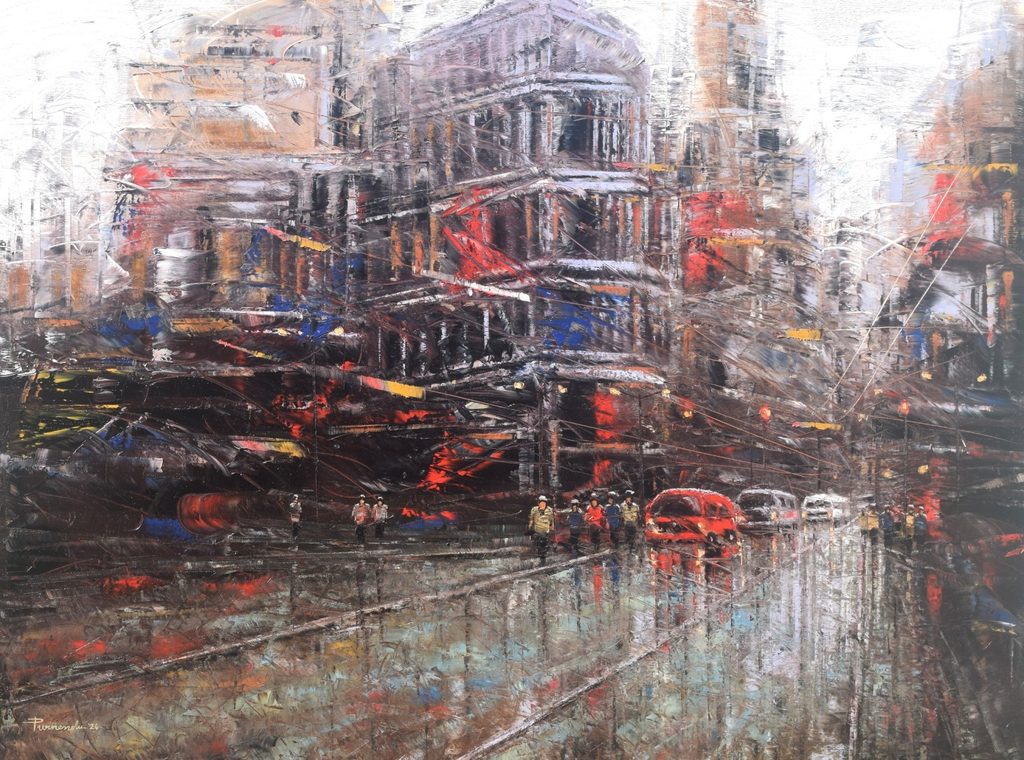
One of the most visible shifts is in Cityscapes in modern Indian painting. These are not postcard views of skylines. Instead, they reflect emotional states.
You will notice compressed compositions where buildings lean into each other. Windows repeat endlessly, suggesting anonymity. Roads stretch but seem to go nowhere. Human figures appear small, fragmented, or partially hidden.
The city becomes a psychological space rather than a geographical one. Artists are asking subtle questions. Where does individuality survive in a crowd? What does home mean in a rented city? Can ambition coexist with belonging?
For collectors, this emotional depth makes urban-themed works resonate strongly. They reflect shared realities rather than distant ideals.
Migration, Identity, and the Urban Indian Mind
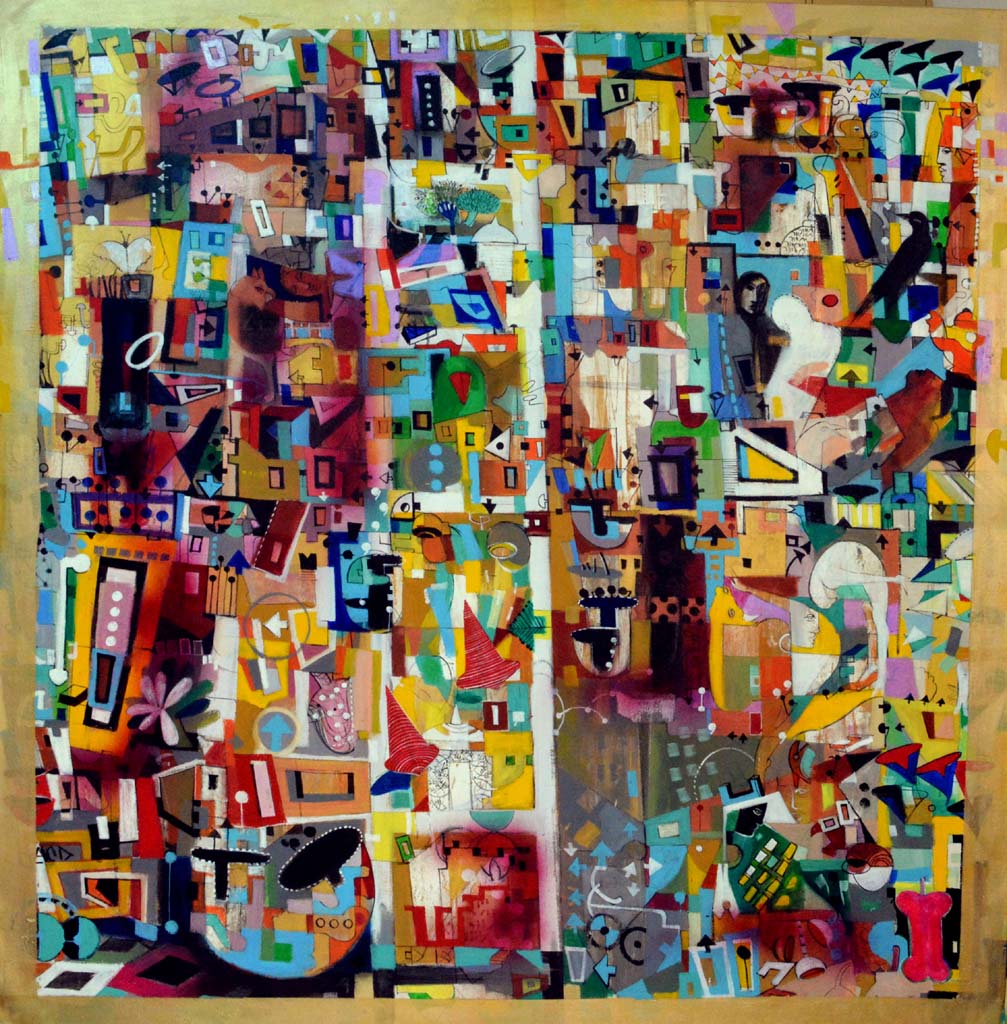
Urban India is built on movement. People arrive from towns and villages carrying memory, language, and longing. Artists who have lived this journey often channel it directly into their work.
Faces may appear layered with multiple expressions. Architecture merges with human forms. Traditional motifs quietly surface beneath modern textures. These visual choices speak to identity in transition.
This is where Metropolitan themes in Indian contemporary art become especially compelling. The city is not shown as a destination but as a process. A place where identities are negotiated daily.
At Mojarto, collectors interested in meaningful narratives often gravitate toward such works. They offer more than visual appeal. They hold stories that feel familiar, even when abstract.
Technology, Isolation, and Modern Urban Life
Another defining influence is technology. Smartphones, surveillance cameras, digital billboards, and social media have altered how urban Indians relate to one another.
Many contemporary artists reflect this through fragmented compositions or muted colour palettes interrupted by sharp lines and artificial light. Human figures may appear physically close but emotionally distant.
This quiet commentary on isolation is one of the most honest reflections of Urban life in modern Indian art today. The city is full, yet solitude persists.
These works connect strongly with younger collectors and first-time buyers who see their own experiences mirrored on canvas.
From Observation to Commentary
Modern urban-themed art is rarely neutral. Artists are no longer just observers. They are commentators.
Issues like environmental stress, housing density, inequality, and vanishing public spaces find expression through visual metaphors. A crowded skyline might suggest suffocation. A fading street corner might hint at cultural erasure.
This is where Urbanization and Indian art themes intersect most powerfully. The artwork becomes a conversation, not a conclusion. It invites the viewer to reflect, question, and engage.
For serious collectors, this adds lasting value. Art that engages with its time often grows in relevance, not just price.
Style Evolution Shaped by the City
Urban influence is not limited to themes alone. It also shapes technique and style.
Artists experiment more with mixed media, layered textures, and unconventional perspectives. The visual noise of the city translates into bold strokes, compressed spaces, and overlapping imagery.
You may notice a shift away from symmetry and polish. Imperfection becomes intentional. Much like the city itself.
This stylistic freedom is one reason urban contemporary Indian art feels so alive today. It resists easy categorisation and rewards close viewing.
Why Urban Narratives Matter to Collectors Today
Art collectors today are not just acquiring objects. They are collecting relevance. Connection. Cultural insight.
Works rooted in urban experience speak to the present moment. They document how India is changing from within. For Indian collectors, they reflect personal realities. For international audiences, they offer an authentic window into modern India beyond stereotypes.
At Mojarto, we curate with this awareness. Art that captures the rhythm of city life often attracts discerning buyers who value depth and narrative over surface appeal.
The Mojarto Perspective on Urban Contemporary Art
As a platform dedicated to Indian art, Mojarto has witnessed the growing appreciation for urban-driven narratives firsthand. Artists who engage honestly with city life consistently attract attention from collectors who seek work that feels grounded and thoughtful.
This is not about trends. It is about relevance. Urban India is shaping how artists see the world, and in turn, how audiences connect with art.
When a viewer stands before a canvas that echoes their own lived experience, the connection is immediate and lasting.
The Future of Urban Themes in Indian Art
Urban India continues to evolve, and so will its artistic expressions. Cities are expanding, identities are shifting, and new questions are emerging around sustainability, belonging, and mental well-being.
Artists will continue to respond, adapt, and challenge. And collectors who engage with this movement early are not just acquiring art. They are participating in a living cultural dialogue.
Urban life in modern Indian art is not a passing phase. It is a reflection of who we are becoming.
Closing Thoughts
Indian cities are complex, beautiful, and often overwhelming. Modern Indian artists are not trying to simplify them. They are trying to understand them.
Through cityscapes, fragmented figures, and layered narratives, contemporary art captures the emotional truth of urban living. This makes it deeply relevant to today’s audiences and collectors alike.
At Mojarto, we believe that art rooted in lived experience carries lasting meaning. Urban India is not just influencing modern Indian art. It is reshaping how stories are told, seen, and remembered.
And for those who collect with insight, that makes all the difference.