
How a new generation is rethinking privacy, personal taste, and what it means to own art.
By P Abigail Sadhana Rao
We have become accustomed to making our lives visible. We share what we read, where we travel, what we wear, what we eat, and increasingly, what we believe these choices say about us. Taste has become a language of its own, and the internet gives us an audience for almost every expression of it. Art, too, has found its place in this economy of visibility. Paintings appear in social media feeds, gallery visits become carefully composed photographs, and collecting can become another way of communicating who we are. Yet art has always offered something that resists this impulse to explain ourselves.
A painting can mean something to us that we cannot quite put into words. Its significance might lie in a memory it brings back, an emotion we recognise but cannot name, or the strange familiarity of encountering something we have never seen before. Its meaning can change as we change. What moves us today might mean something entirely different to us five years from now. The experience is personal precisely because it does not need an audience to be complete.
This makes the findings of the 2026 Art Basel and UBS Survey of Global Collecting particularly interesting. Based on 3,100 high-net-worth collectors across 10 markets, the research examines how people acquire art, discover artists, and choose to share their collections. One statistic stands out, 39% of Gen Z collectors restricted in-person viewing of their collections to their household or close family and friends. Another 36% kept online content about their collections within private circles.
Here is a generation that has grown up with unprecedented opportunities to share its life, yet some of its collectors are choosing to keep their art close. It is tempting to interpret this as a generational preference for privacy. But perhaps the more interesting question is what this tells us about art itself; discovering art is a social experience, but owning it can be deeply personal.
The Collector Who Does Not Follow Rules
The traditional image of an art collector can feel rather intimidating. It brings to mind auction houses, established galleries, expensive paintings, and people who seem to know precisely what they are looking at. But collecting can begin much more quietly through a wide range of channels, from social media and online galleries to artist studios and international art fairs.
Gen Z’s influence on the art market is becoming harder to overlook. The survey found that they spent an average of US$347,460 on fine art in 2025, an increase of 19% over the previous year. This was more than twice the average expenditure of any older generation surveyed.
The figure is striking, but context matters. These are wealthy collectors, not a representative sample of young adults. The average does not describe what an ordinary young person can afford, nor does it suggest that most Gen Z buyers are purchasing expensive paintings. Nevertheless, the findings reveal a generation with considerable influence at the upper end of the market. Its collecting habits deserve attention, particularly because spending is only one part of the story and also what interests me more than the spending, however, is the possibility of collecting without following a prescribed idea of what a collection should look like.
The survey also found that 48% of Gen Z collectors considered uniqueness or rarity important to ownership, compared with 38% of baby boomers. This points towards an interest in possessing something distinctive rather than relying exclusively on established approval. What makes an artwork desirable, then, may not be limited to its price or the prestige of its creator. It might also be the feeling that the work is difficult to substitute, that it expresses something personal, or that the collector has discovered something others have yet to appreciate.
Buying an artwork, or buying into a story?
A painting is never simply an image on a wall. It carries the circumstances of its creation, the experiences of its artist, and the interpretations viewers bring to it. The growing interest in uniqueness raises an important question: does art need external validation to feel valuable? The attraction might be an artist’s engagement with their cultural heritage, an unconventional use of materials, or a painting that captures an experience the collector recognises in their own life.

I have come to believe that art does not always give us answers. The way I see it, its value lies in allowing us to remain with a question of what it evokes us to think, transport or to even feel something as it leaves room for our own associations, memories and experiences. Is that not beautiful? To have the piece of art become a part our lives in how we experience or remember things, people or a time where it allowed us to understand ourselves. Yet the art market often asks us to translate this experience into a language of price, provenance, prestige, and desirability. These are legitimate considerations, but they cannot fully account for why a work matters to someone. Perhaps this is why the survey’s finding that Gen Z collectors place particular importance on uniqueness is worth considering.
There is a difference between collecting to demonstrate knowledge of the art world and collecting because art makes the world more interesting to you. Of course, the two can overlap. Collectors can care about provenance, investment, rarity, and reputation while also being moved by a painting. The problem begins when these external measures become the only language through which a work is valued. What these new generations of art collectors are teaching us is that collection does not have to prove its owner’s taste to be worth having. Nor does a painting need to be expensive, celebrated, or widely understood to become an important part of someone’s life.
Discovery begins on a screen
The journey towards owning art is changing. Collectors increasingly move between art platforms, social media, artist websites, digital tools, galleries, and art fairs before deciding. What began as a fleeting encounter becomes a small investigation.
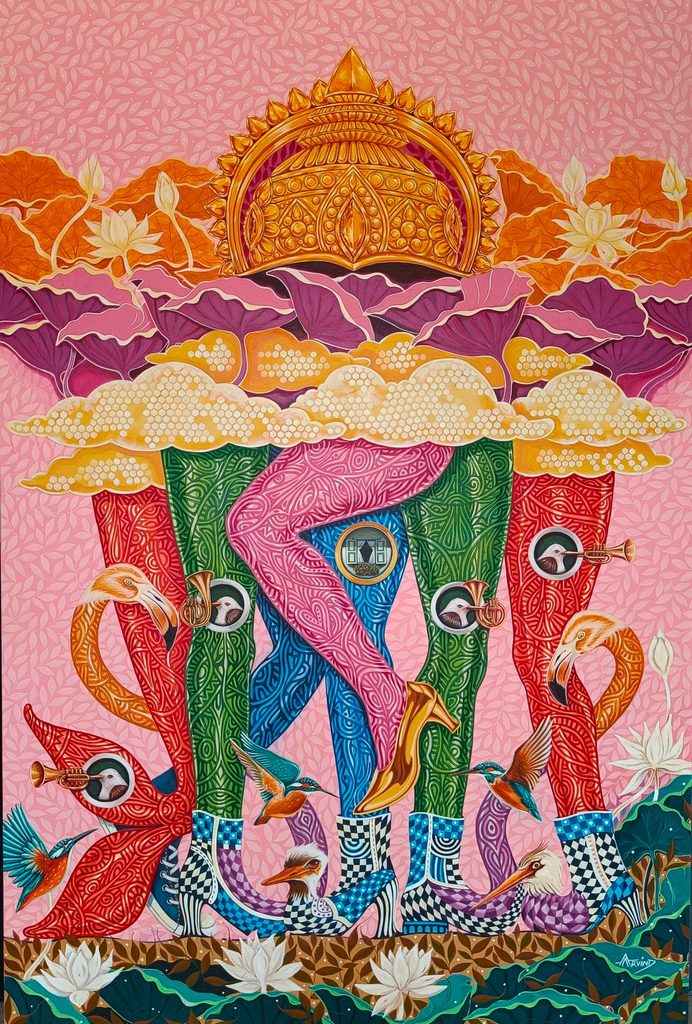
According to the report, 80% of Gen Z collectors conducted moderate or significant independent research before purchasing art, compared with 72% of the surveyed collectors overall. An artist might first appear in a social media post. The collector then explores the artist’s practice, reads interviews, examines previous exhibitions, and investigates available works.
Eventually, an online encounter may lead to a studio visit or a direct conversation with the artist. Direct purchasing is becoming increasingly important, too. The survey found that 69% of collectors had bought directly from artists, more than double the proportion recorded in 2024. This can create a closer relationship with the person behind the work and provide greater insight into its creation. It can also help collectors discover artists outside the traditional gallery circuit.
But the internet also changes the conditions under which art is encountered. A painting appears among advertisements, photographs, videos, and an endless stream of competing images. We may give it a few seconds before moving on. We may save it, share it, or forget it entirely. Art, however, often asks for something that digital culture makes difficult to sustain: attention without an immediate reward.

Viewing an artwork may need time. Its significance might not be apparent in a photograph. Its textures, scale, and relationship with the surrounding space may be impossible to appreciate fully through a screen. Even its emotional effect may depend on returning to it more than once. Digital discovery can bring us to art. It cannot guarantee that we will spend time with it. And perhaps this distinction matters more than the technology itself. The challenge is not whether young collectors discover art online or in galleries. It is whether the encounter remains open enough for the work to mean something beyond the instant in which it captures our attention.
The unexpected side of a generation that shares everything
Perhaps the most intriguing finding in the report concerns what collectors choose not to share. The survey found that 39% of Gen Z collectors restrict in person access to their collections to their household or close family and friends. Online, 36% keep collection related content within private circles, while 42% use restricted or invitation only sharing groups, the highest proportion among the generations surveyed. These figures do not establish why young collectors prefer privacy. They do, however, reveal that greater digital engagement does not automatically translate into greater public disclosure.
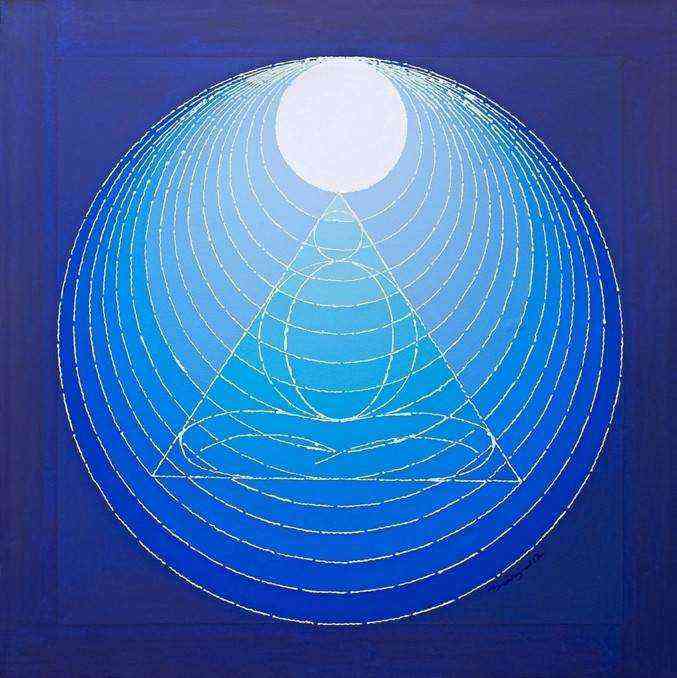
What is even more astonishing is that only 10% sought wide recognition as collectors. There are several possible explanations. Collectors may wish to keep the value of their possessions private, protect their homes and personal information, or simply enjoy their collections without turning ownership into a performance. For others, sharing art with a small circle of trusted people may feel more rewarding than broadcasting it to a wider audience.
Privacy might offer an alternative, although we should be careful not to romanticise it. A private collection can still be a status symbol. Exclusivity can increase desirability, and restricting access can itself communicate privilege. The survey does not establish that Gen Z collectors are rejecting status or consumerism.
The Freedom to Keep Something for Ourselves
But privacy does not necessarily mean a rejection of community, nor does it mean withdrawing from the world. It may be a way of choosing the terms on which one participates. The distinction is particularly interesting in a culture where taste can become a form of personal branding. An artwork might communicate something about its owner, but the owner does not have to make that communication explicit. An art collection or a painting can remain meaningful without becoming content.
Ever since I quit Instagram for good, for the second time, I have found myself appreciating life as it happens, in the present, and choosing to share those moments with the people who are there or with those I consciously choose to share them with, whether in person or virtually. There is a certain agency in deciding how we experience life, what we choose to make visible, and whom we invite into those experiences.

Stepping away has also made me more conscious of how easily our sense of individuality gets lost in the currents of trends and the pursuit of external validation. We begin to compare, to measure our experiences against those of others, and sometimes to feel dissatisfied with lives that might otherwise have been enough for us. The questions extend beyond what we post to why we post it, how much we consume, and how that constant consumption shapes our thinking, influences our choices, and ultimately informs who we become. How often do we stop to question why we want what we want, or whether a preference is genuinely ours, rather than something we have absorbed without realising it?
Perhaps our fellow Gen Z collectors invite us to reflect on a similar question, even if unintentionally; are we choosing art because it speaks to us, or are we sometimes choosing what we want it to say about us?
Art fairs, direct sales, and the importance of trust
If online discovery and direct purchases are transforming the art market, the continued popularity of art fairs reveals another side of Gen Z’s collecting habits.
Despite the growth of artist direct sales, 73% of Gen Z collectors had purchased art at an art fair, second only to baby boomers. The figure challenges the assumption that a generation raised on digital platforms necessarily prefers to conduct every aspect of collecting online. Art fairs offer something that a screen cannot fully reproduce, the opportunity to encounter a work at scale, appreciate its material qualities, compare different artists, and speak directly with the people who represent or create the work.
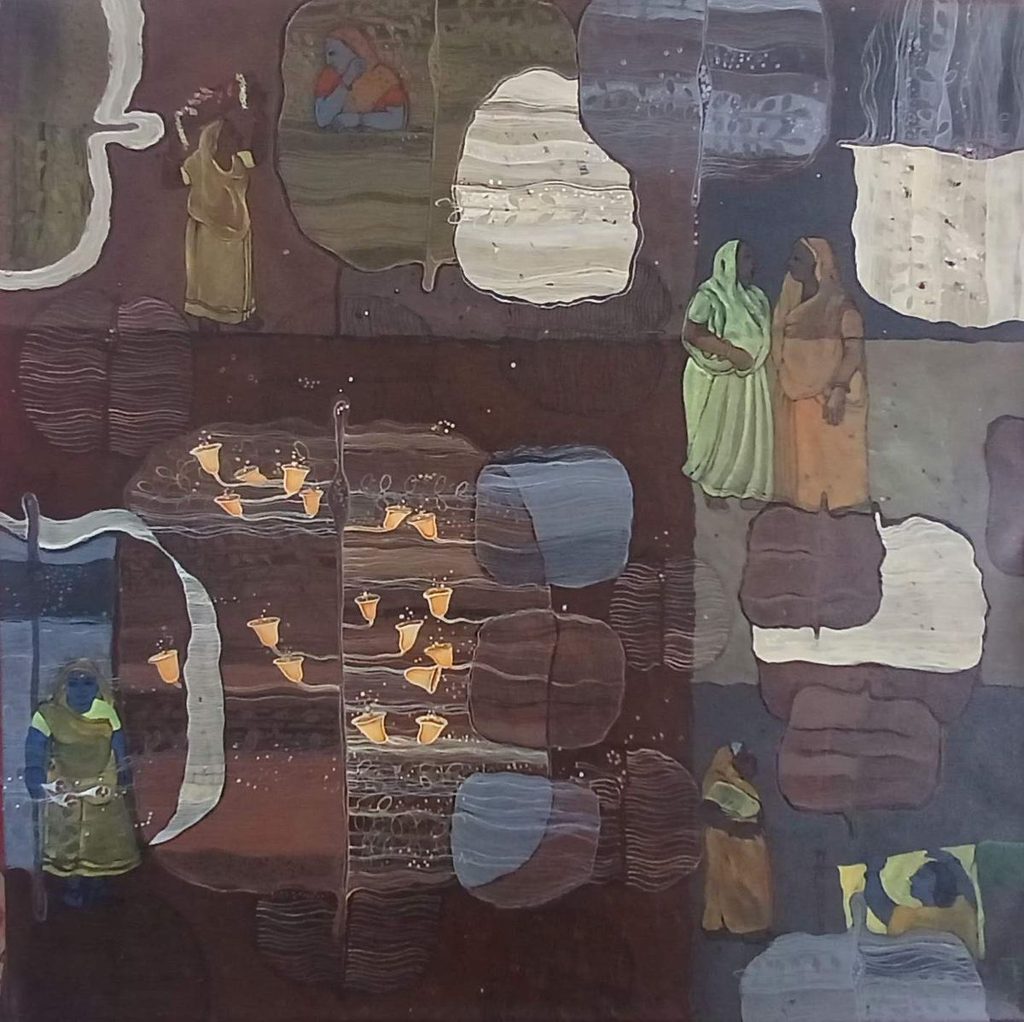
They can also turn collecting into a shared experience. A conversation with an artist, an introduction through a gallery, or a chance encounter with a painting can develop into a relationship that continues long after the fair ends.
In the Art Basel feature on Gen Z collecting, Art Basel CEO Noah Horowitz observes, “The generation raised on social media is, it turns out, the one most inclined to keep its collecting close.” Horowitz adds that young collectors are entering the market through increasingly diverse channels, but that trust remains central, built through relationships formed in person, online, and through tailored interactions throughout the year.
His observation brings an important nuance to the discussion around privacy. A preference for keeping a collection private does not necessarily mean a preference for isolation. Collectors may be comfortable discovering artists online, attending fairs, speaking with gallery representatives, and building relationships with artists while choosing not to make their own purchases public.
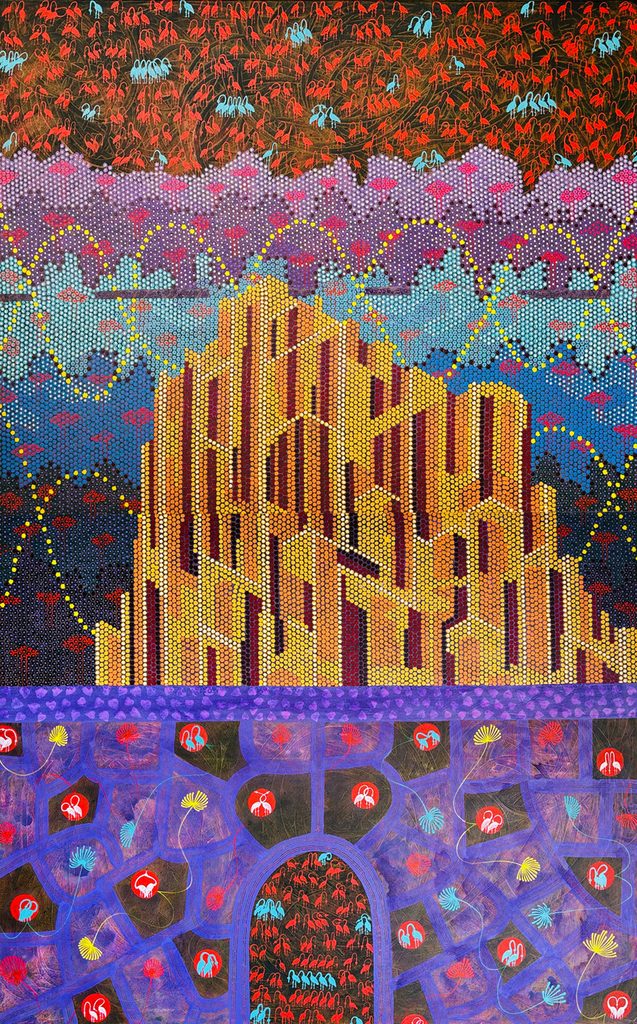
For artists, galleries, and online art platforms, the opportunity lies in connecting these experiences. Digital access can introduce a collector to an artist, an art fair can deepen that interest, and continued engagement can build the trust that turns an initial encounter into a lasting relationship. The challenge for the art market is not simply to reach a generation that lives online, but to earn the trust of collectors who want to choose how, where, and with whom they engage.
What this Means for the Art Market
Collectors are researching independently, exploring different media, and developing relationships with artists through digital channels. They may value a compelling artistic narrative, but they also need credible information about authenticity, provenance, pricing, and the purchasing process. The opportunity is not simply to make art more visible. It is to make collecting more approachable without reducing the artwork to another product competing for attention.
Clear information, accessible price points, thoughtful editorial content, and meaningful opportunities to encounter artists can help build confidence. So can creating spaces where collectors can engage with art without feeling pressured to publicise their purchases.
For emerging artists, this means building relationships that extend beyond social media metrics. An audience may generate attention, but trust, artistic integrity, and a meaningful connection with the work can help turn interest into lasting support.
For online art platforms, it means recognising that the customer who browses publicly may prefer to transact privately. Respecting that distinction can be part of building a more trustworthy collecting experience.
The survey covers wealthy collectors across 10 markets, so its findings should not be treated as a universal portrait of Gen Z. Access to art, financial resources, cultural institutions, and collecting traditions vary considerably. Even so, the research provides valuable insight into how collecting is evolving among a group with considerable purchasing power.
Beyond the price tag
Perhaps the most interesting question is not whether Gen Z will collect more paintings, digital works, or sculptures. It is whether the art market can accommodate a generation that wants to make its own judgements about value, visibility, and ownership.
The future of collecting may therefore be less about choosing between tradition and technology, prestige and purpose, or visibility and privacy. It can be about making room for all of them.
At Mojarto, we invite you to discover art that speaks to you, look beyond the price tag to consider what it means, what it evokes and make each artwork worth living with.